
Gap Insurance: What It Covers and When It's Worth Carrying

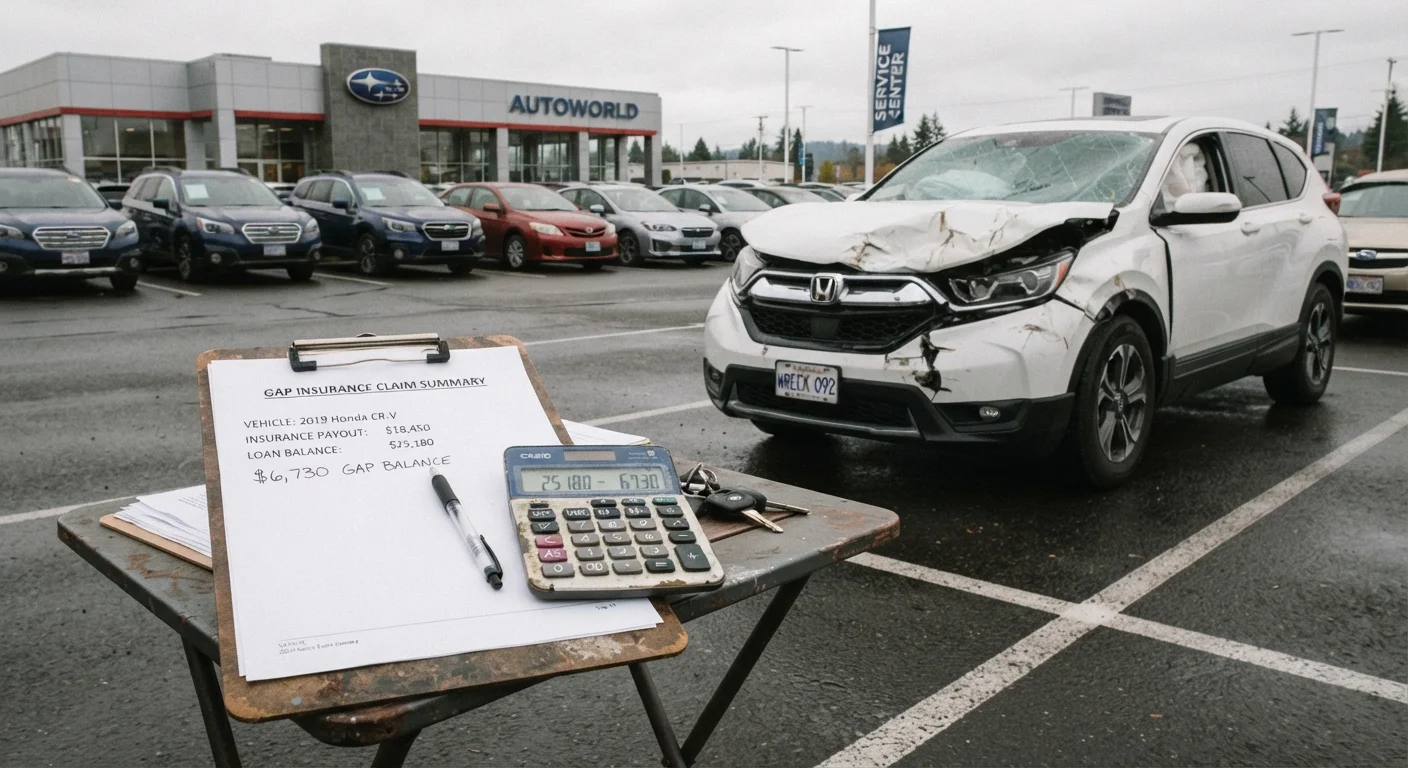
Photo: BridgeWish.com | Reliable Source Of Information editorial
Key Takeaways
- Gap insurance only pays out when your vehicle is declared a total loss - it doesn't cover repairs or partial damage.
- New cars can lose 15-25% of their value in the first year, creating a window of significant financial exposure.
- Gap coverage is most valuable when you made a small down payment, have a long loan term, or are leasing.
- You can purchase gap insurance through your lender, dealership, or your own auto insurer - often at different price points.
- Once your loan balance falls below your car's market value, gap insurance is no longer necessary.
How Gap Insurance Works
When a vehicle is totaled - whether from an accident, flood, fire, or theft - your standard auto insurer pays the car's actual cash value (ACV), meaning its fair market value at the time of the loss. The problem is that cars depreciate quickly, and your loan balance often doesn't keep pace with that drop in value.
Here's a simple illustration: you finance a $35,000 vehicle, make a modest down payment, and 18 months later the car is totaled. Your insurer determines the ACV is $26,000, but you still owe $30,000 on your loan. Without gap insurance, you'd be responsible for the $4,000 difference - out of pocket, for a vehicle you no longer have. Gap insurance pays that shortfall directly to your lender.
What Gap Insurance Does Not Cover
Gap insurance does not cover missed loan payments, mechanical breakdowns, personal property inside the vehicle, or any balance that exceeds what a typical lender would finance for the vehicle. Read your policy's exclusions carefully.
Who Should Consider Gap Insurance
Gap coverage isn't necessary for every driver. It tends to make the most financial sense in specific situations:
- Low or no down payment: If you put less than 20% down, you likely went underwater on the loan immediately due to depreciation.
- Long loan terms: 60-, 72-, or 84-month loans build equity slowly, extending the window when you owe more than the car is worth.
- Leasing a vehicle: Most lease agreements require gap coverage because the lessee is responsible for the vehicle's residual value if it's totaled.
- High-depreciation vehicles: Some models lose value faster than average - buyers of these vehicles face a larger gap for longer.
- Rolling negative equity: If you traded in a car you owed more on than it was worth, that deficit may have been folded into your new loan, worsening the gap immediately.
~20%
Average first-year vehicle depreciation
Industry estimates consistently show new vehicles lose roughly 15-25% of their value within the first 12 months of ownership.
44%
New-car buyers financing 72+ month loans
Experian's State of the Automotive Finance Market report has tracked a sustained rise in long-term auto loans among new-vehicle purchasers.
$4,000-$6,000
Typical gap exposure on a financed new car
Consumer finance analysts estimate this as a common shortfall range during the first two years of a new-vehicle loan with minimal down payment.
Where to Buy Gap Insurance - and What It Costs
Gap insurance is available from three primary sources, and the price differences can be significant:
- Your auto insurer: Adding gap coverage to an existing comprehensive and collision policy is typically the most affordable route, often running $20-$40 per year as a policy add-on.
- Your lender or bank: Credit unions and banks sometimes offer standalone gap policies at competitive rates.
- The dealership: Dealers commonly offer gap insurance at the point of sale, but it's frequently the most expensive option - sometimes $400-$900 rolled into your loan, which means you're also paying interest on it.
Compare Gap Pricing Before Accepting Dealer Terms
Understanding insurance decisions in one context - like auto coverage - often clarifies how insurance works broadly. For a look at how similar trade-offs apply in other areas, see our explainer on travel insurance coverage.
When You Can Drop Gap Insurance
Gap insurance has a natural expiration point: the moment your loan balance drops below your vehicle's current market value. At that point, your standard comprehensive or collision payout would cover the full payoff amount, and gap coverage no longer serves a financial purpose.
A practical approach is to estimate your car's current value once a year using a recognized automotive valuation tool, then compare it against your remaining loan balance. When the loan balance is the lower figure, contact your insurer to remove the coverage and reduce your premium.
If you're evaluating how different types of insurance add up across your life, it's worth understanding coverage in other areas too - including what renters insurance actually covers and how each policy type addresses a distinct financial risk.
This article is for general informational purposes only and does not constitute financial or insurance advice. Coverage terms vary by insurer and state. Consult a licensed insurance professional for guidance specific to your situation.
Frequently Asked Questions
The content on this site is for informational purposes only and is not a substitute for professional advice. Always consult a qualified professional for guidance specific to your situation.