
Building a Balanced Plate: Principles That Hold Up Across Eating Styles

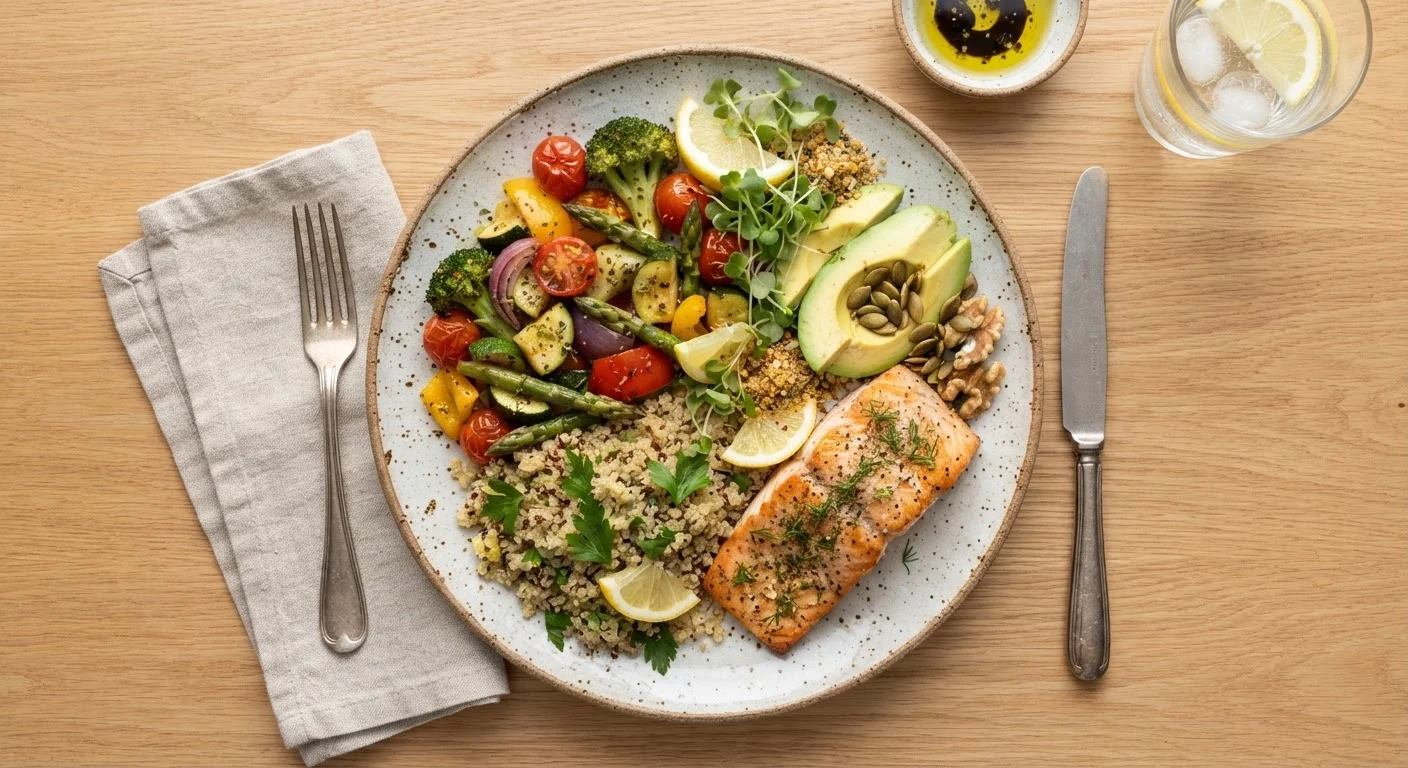
Photo: BridgeWish.com | Reliable Source Of Information editorial
Key Takeaways
- Half your plate filled with vegetables and fruit is a principle that works across virtually every eating style.
- Protein quality and variety matter as much as quantity — plants and animals both count.
- Whole grains and minimally processed carbohydrates support steadier energy than refined alternatives.
- Healthy fats are essential, not optional — the type you choose makes a meaningful difference.
- You don't need a rigid diet plan — a few consistent structural habits produce lasting results.
Why One Framework Can Serve Many Eating Styles
Mediterranean, plant-based, omnivore, low-carb — the variety of eating patterns Americans follow today is wider than ever. Yet beneath this diversity, nutritional science consistently points to a shared set of structural principles. What changes across eating styles is the source of nutrients; what stays constant is the underlying need for them.
This article focuses on those durable principles — the ones that appear across major dietary guidelines and hold up regardless of whether you eat meat, avoid gluten, or follow a cultural tradition with specific foods at its center. For a plain-language breakdown of what these proportions look like on an actual plate, see our guide to what a balanced plate actually looks like.
Think of these principles as a flexible architecture, not a strict meal plan. The goal is to make informed choices most of the time — not to achieve perfection at every meal.
Core Practices for Building Any Balanced Meal
The practices below reflect established guidance from sources including the U.S. Dietary Guidelines and mainstream nutrition research. They are intended as general educational information, not personalized medical or dietary advice. Always consult a registered dietitian or qualified healthcare provider for guidance tailored to your health needs.
Fill at least half your plate with vegetables and fruit at most meals.
Include a quality protein source at every meal, drawing from varied sources.
Choose whole or minimally processed grains over refined versions as your default.
Include healthy unsaturated fats intentionally — they are essential, not optional.
Moderate added sugars and heavily processed foods without eliminating them entirely.
Stay consistently hydrated, prioritizing water as your primary beverage.
Putting It Into Practice: Where to Start
Knowing the principles is one thing; applying them across a real week of meals is another. The good news is that even modest shifts in meal structure — adding a vegetable serving, swapping a refined grain for a whole one — compound meaningfully over time. You don't need to overhaul your kitchen overnight.
For a deeper look at applying these habits across breakfast, lunch, dinner, and snacks, the practical day-in-the-life eating framework walks through realistic scenarios. And if you want to audit your weekly meals against key nutritional bases, our weekly nutrition planning checklist offers a useful starting point.
These Principles Apply to Special Diets Too
This article is for general informational and educational purposes only and does not constitute medical or dietary advice. Speak with a qualified healthcare professional or registered dietitian before making significant changes to your eating habits, especially if you have an existing health condition.
The content on this site is for informational purposes only and is not a substitute for professional advice. Always consult a qualified professional for guidance specific to your situation.