
What a Balanced Plate Actually Looks Like

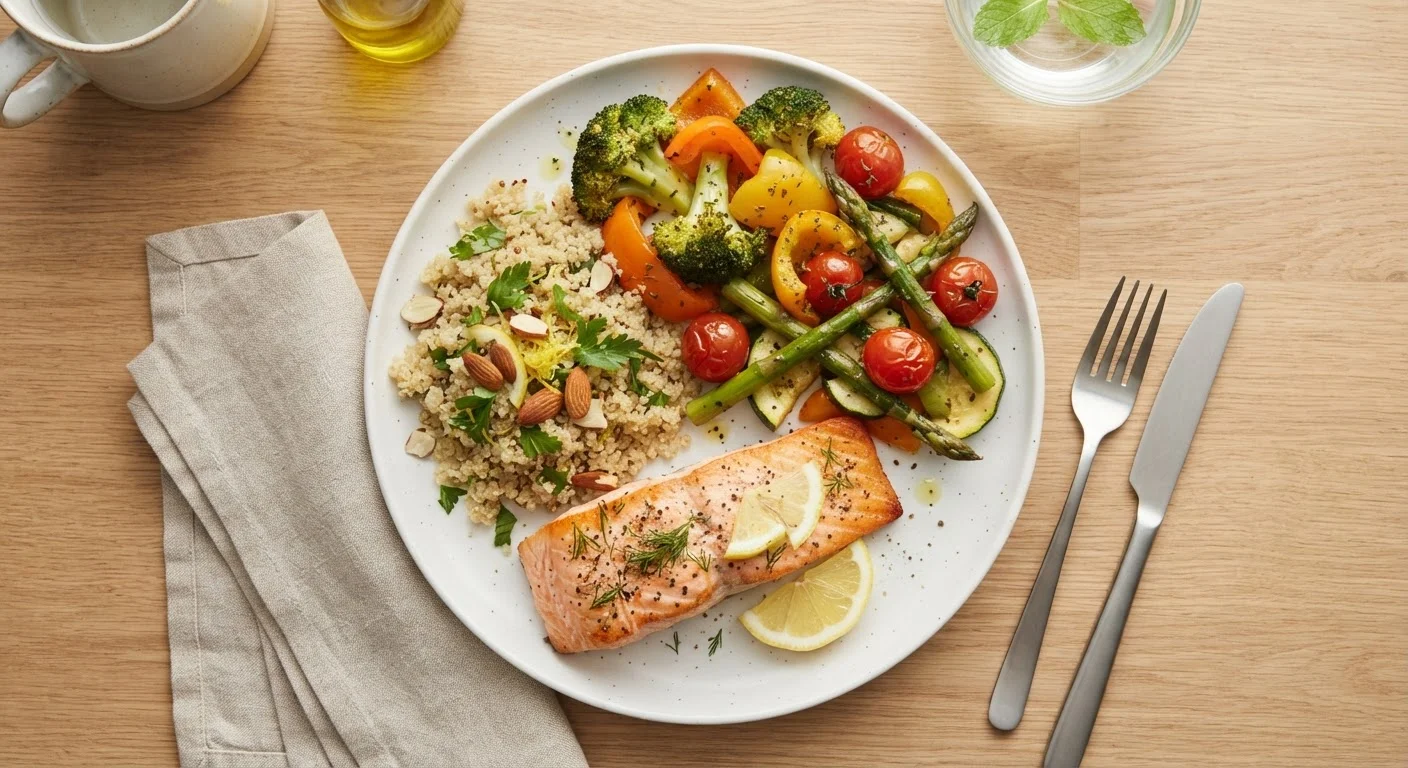
Photo: BridgeWish.com | Reliable Source Of Information editorial
Key Takeaways
- Half your plate should typically be filled with non-starchy vegetables and fruit.
- A quarter of the plate is a reasonable target for whole grains or starchy vegetables.
- The remaining quarter works well for lean protein sources like fish, legumes, or poultry.
- Healthy fats — such as olive oil or avocado — complement the plate rather than dominate it.
- No single meal needs to be perfect; the pattern across the day and week matters most.
Why a Plate Visual Works Better Than a Chart
Nutrition guidelines have gone through a lot of formats — pyramids, wheels, numbered lists — but research and public health practice have converged on one insight: most people think in meals, not nutrients. The plate model meets you where you already are.
Rather than memorizing percentages of macronutrients, you divide your plate visually. That immediacy is what makes it stick. It's the foundation behind tools like the USDA's MyPlate and Harvard's Healthy Eating Plate, both of which translate nutrition science into a format anyone can use at the kitchen table.
For a broader look at what balance really means across different dietary needs, see our guide on what a balanced diet actually means.
Proportions Are a Guide, Not a Rule
The Four Elements of a Balanced Plate
A well-constructed meal generally draws from four areas:
- Vegetables and fruit (about half the plate): Non-starchy vegetables — leafy greens, broccoli, peppers, cucumbers — should dominate. Fruit works well here too, though it's often eaten separately. This portion delivers fiber, vitamins, and minerals with relatively few calories.
- Whole grains or starchy vegetables (about a quarter): Brown rice, whole wheat bread, oats, quinoa, or starchy vegetables like sweet potatoes provide sustained energy through complex carbohydrates and additional fiber.
- Lean protein (about a quarter): Fish, poultry, eggs, legumes, tofu, or low-fat dairy fill this section. Protein supports muscle maintenance, satiety, and numerous metabolic functions.
- Healthy fats (a complement, not a section): Olive oil for cooking, a few slices of avocado, or a handful of nuts add essential fatty acids and help the body absorb fat-soluble vitamins. These don't need their own plate section — they're worked into the meal.
For guidance on applying these principles across different eating styles, the article on building a balanced plate across eating styles offers practical frameworks.
~50%
Plate portion recommended for vegetables and fruit
Both the USDA's MyPlate and Harvard's Healthy Eating Plate suggest vegetables and fruit should fill roughly half the plate at most meals.
9 in 10
Americans not meeting vegetable intake recommendations
According to CDC dietary data, the vast majority of U.S. adults fall short of federal vegetable intake guidelines — making the plate model a practical corrective tool.
What This Looks Like in Real Meals
Abstract portions become clearer with concrete examples. Consider a dinner of baked salmon alongside roasted broccoli and a small serving of brown rice with olive oil — that's a textbook balanced plate. A vegetarian lunch might be a large salad with chickpeas, cherry tomatoes, cucumber, and a whole-grain pita on the side.
The plate model also adapts well to mixed dishes. A stir-fry or grain bowl can be balanced: heavy on vegetables, with a moderate grain base and a protein source mixed throughout. The proportions still hold even when the food isn't physically separated.
This article is for general informational purposes only and is not a substitute for personalized nutrition advice from a registered dietitian or healthcare professional.
Frequently Asked Questions
The content on this site is for informational purposes only and is not a substitute for professional advice. Always consult a qualified professional for guidance specific to your situation.