
Envelope Budgeting: The Cash-Allocation Method Explained

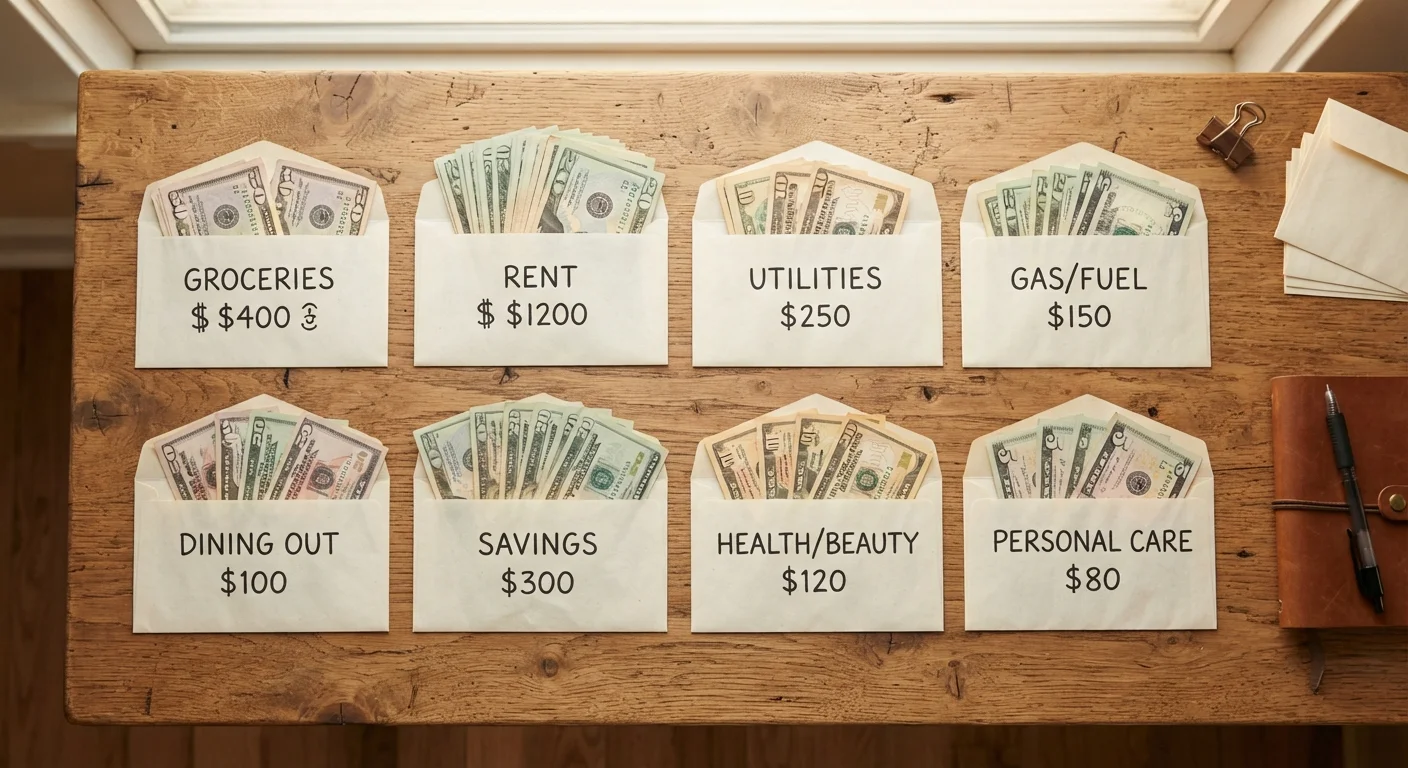
Photo: BridgeWish.com | Reliable Source Of Information editorial
Key Takeaways
- Envelope budgeting assigns cash to specific spending categories before the month begins.
- Once an envelope runs out, you stop spending in that category - no exceptions.
- The method works best for variable expenses like groceries, dining, and entertainment.
- Digital apps can replicate the envelope system without physical cash.
- Overspending in one category requires consciously moving money from another envelope.
- The system builds spending awareness faster than many other budgeting approaches.
How Envelope Budgeting Works
The mechanics are straightforward. At the start of each month - after receiving your paycheck - you calculate your take-home income and decide how much belongs in each spending category. You then place that exact dollar amount into a labeled envelope for groceries, gas, entertainment, clothing, and so on.
Throughout the month, you spend only from the relevant envelope. Buy groceries? Pull from the grocery envelope. Want to grab dinner out? Use the dining envelope. When an envelope hits zero, spending in that category is done for the month - full stop.
This hard boundary is what separates envelope budgeting from looser tracking methods. There is no mental math or rationalizing; the physical limit is the limit. For a solid grounding in the vocabulary behind this approach, the budgeting terms glossary explains concepts like discretionary spending and net income in plain language.
Start With Your Biggest Problem Categories
Which Expenses Belong in Envelopes
Not every bill fits neatly inside an envelope. The system works best for variable expenses - costs that change month to month based on behavior. Think groceries, gas, dining out, entertainment, clothing, and personal care. These are the categories where spending tends to drift without a visible cap.
Fixed expenses - rent, mortgage, car payments, insurance premiums - are better handled by scheduling automatic payments or setting aside the exact amount separately. Trying to stuff a rent payment into a physical envelope adds complexity without much benefit, since the dollar amount doesn't change.
Once you've identified your variable categories, keep the list manageable. Starting with five to eight envelopes is enough for most households. Too many categories leads to decision fatigue and increases the chance you'll abandon the system.
Irregular Monthly Expenses Need Planning
The Case for Going Digital
Physical cash isn't practical for everyone. Online bill payments, debit card purchases, and direct deposit make an all-cash household unusual. Fortunately, the envelope concept translates cleanly to digital tools.
Some budgeters use separate checking or savings accounts for each major category. Others rely on budgeting apps that replicate the envelope structure virtually - assigning balances to categories and subtracting from them in real time as transactions come in.
The trade-off with digital envelopes is reduced friction. With physical cash, you feel the depletion. With an app, the barrier to overspending is just a tap. If you choose the digital route, committing to checking balances before every non-essential purchase preserves the system's discipline.
1 in 3
US adults who follow a formal budget
Surveys from the National Foundation for Credit Counseling have consistently found that fewer than half of American adults maintain a detailed budget, suggesting significant room for structured methods like envelope budgeting.
~$1,500
Average monthly discretionary spending per US household
Bureau of Labor Statistics Consumer Expenditure data shows a substantial portion of household spending falls into variable categories - precisely where envelope budgeting applies most directly.
Strengths, Limitations, and When It Fits
Envelope budgeting has a strong track record for people who overspend in specific categories and need a hard stop rather than a soft nudge. The visibility is its main advantage - you know exactly how much you have left at any moment without opening a spreadsheet.
Its limitations are real, though. Managing physical cash is inconvenient, especially for households that rely on credit cards for fraud protection or rewards. The system also demands discipline at the start of each month to allocate funds correctly. Skipping that step means the envelopes are meaningless.
If you want to compare this approach against other frameworks, our article on zero-based budgeting vs. the 50/30/20 rule walks through how different systems handle the same income differently. For a broader view of building a system around your actual life, see Building a Budget That Actually Reflects Your Life.
Once you've run the system for a month or two, pair it with a monthly budget audit to spot patterns and fine-tune your envelope amounts before small misalignments become habits.
This article is for general informational purposes only and does not constitute personalized financial advice. Consult a qualified financial professional for guidance specific to your situation.
Frequently Asked Questions
The content on this site is for informational purposes only and is not a substitute for professional advice. Always consult a qualified professional for guidance specific to your situation.