
What Happens to Debt When You Don't Pay: A Stage-by-Stage Look

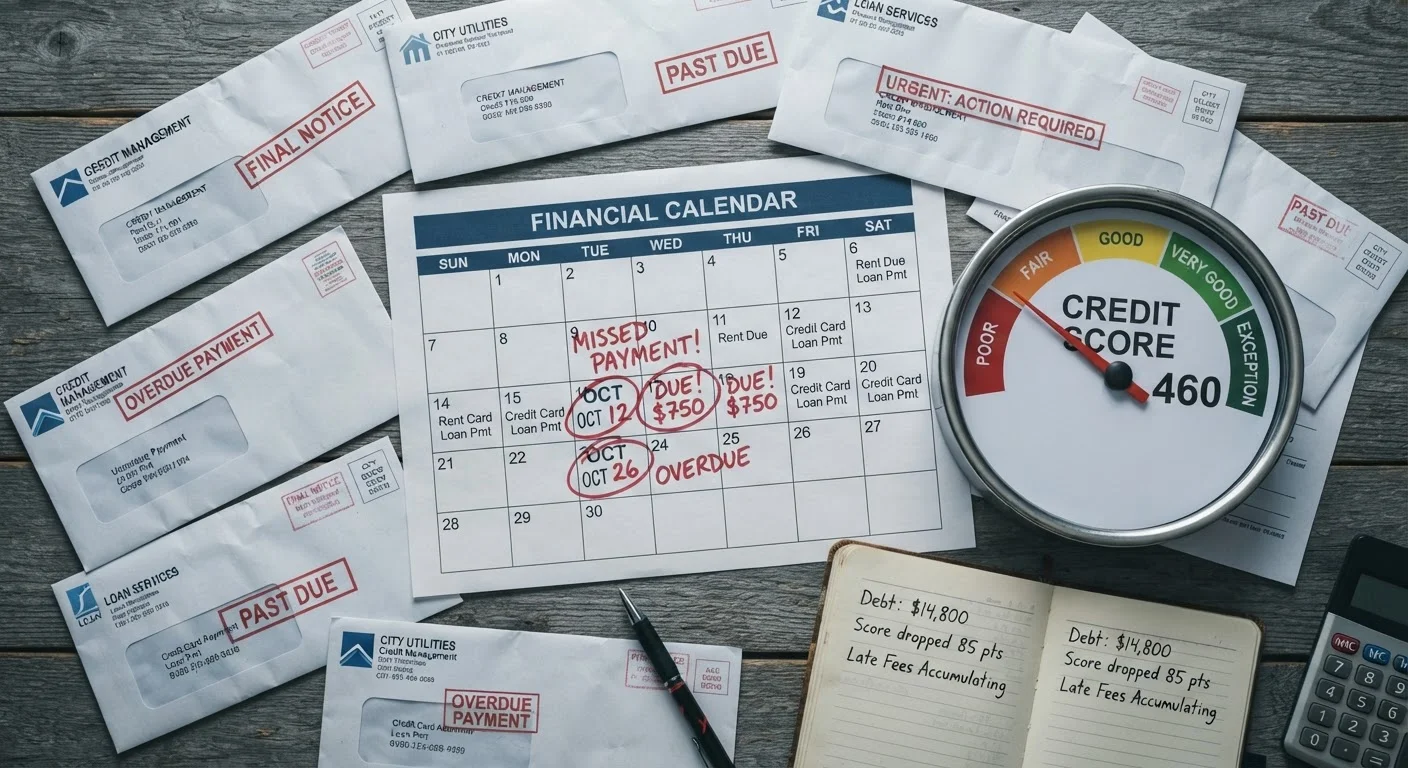
Photo: BridgeWish.com | Reliable Source Of Information editorial
Key Takeaways
- Missing one payment starts a chain of events that becomes harder to reverse the longer it continues.
- Creditors typically charge off accounts after 180 days of non-payment, but the debt remains legally collectible.
- A debt collection account can stay on your credit report for up to seven years from the original delinquency date.
- Collectors must follow federal rules under the FDCPA - you have rights even when you owe money.
- Legal action, including wage garnishment, is a real possibility after prolonged non-payment.
- Engaging with creditors early - even when you can't pay in full - can limit long-term damage.
Stage 1: The Missed Payment (Days 1-30)
A single missed payment is the first domino. Most lenders don't report a payment as late to the credit bureaus until it's at least 30 days past due, so a payment missed by a few days may go unreported - though late fees typically kick in immediately.
Once 30 days pass without payment, the creditor can report the delinquency to the major credit bureaus (Equifax, Experian, and TransUnion). A 30-day late mark can noticeably lower your credit score, particularly if your credit history was strong beforehand. The higher your starting score, the larger the drop tends to be.
At this stage, contact with your lender is still your strongest move. Many issuers offer hardship programs or payment deferrals that can prevent further damage. If you're just starting to understand how credit works, our credit and debt foundation guide explains how payment history factors into your overall credit health.
Act Before 30 Days Pass
Stage 2: Growing Delinquency (Days 31-180)
As your account moves to 60 days, then 90 days past due, the consequences compound. Creditors report each milestone to the bureaus - 60-day and 90-day lates are progressively more damaging to your credit profile. Interest and fees continue to accumulate on the outstanding balance.
At the 90-day mark, many creditors will escalate collection efforts internally - phone calls, written notices, and sometimes a settlement offer at a reduced amount. The account may also be moved to the lender's internal collections department.
7 Years
How long a collection account stays on your credit report
Under the Fair Credit Reporting Act, most negative marks including collections remain on your credit file for seven years from the original delinquency date.
~180 Days
Typical timeline to charge-off for credit card debt
The Consumer Financial Protection Bureau notes that most credit card issuers charge off accounts after approximately six months of missed payments.
30 Days
Minimum delinquency before credit bureau reporting
Federal guidelines allow creditors to report a payment as late only after it is at least 30 days past the due date, giving a brief window to catch up without a credit hit.
By day 120 to 150, the creditor begins preparing to write the debt off. This is also when some lenders sell the debt to a third-party collection agency, even before a formal charge-off. From a practical standpoint, managing multiple debts simultaneously makes this stage harder to navigate - see debt payoff frameworks that may help for structured approaches.
Stage 3: Charge-Off and Collections (Around Day 180)
A charge-off occurs when the original creditor formally writes the balance off its books as uncollectible - typically around the 180-day mark. This is a significant negative event on your credit report and signals the most serious stage short of legal action.
Crucially, a charge-off does not erase the debt. The creditor can either continue pursuing repayment internally, or sell the account to a debt collection agency. If sold, the collection agency becomes your new point of contact and has the legal right to collect the balance.
A Charge-Off Isn't Forgiveness
Collection agencies are bound by the FDCPA, which prohibits harassment, false statements, and unfair practices. You have the right to request written verification of the debt within 30 days of first contact. Collectors cannot call at unreasonable hours, threaten violence, or make false legal threats.
Stage 4: Legal Action and Judgments
If a debt remains unpaid through the collections stage, the creditor or collection agency may escalate to a civil lawsuit. If they win, the court issues a judgment against you - a legal declaration that you owe the debt. Judgments open the door to wage garnishment, bank account levies, or liens on property, depending on what your state permits.
Each state sets its own statute of limitations on debt - the window during which a creditor can sue. This period varies widely, typically ranging from three to ten years depending on the debt type and state. After this window closes, the debt is considered "time-barred" and suing to collect becomes legally problematic - though collectors may still attempt to contact you.
It's worth noting that making any payment or acknowledging a time-barred debt in writing can reset the statute of limitations in some states, so proceed carefully. Consulting a licensed financial counselor or attorney before responding to old debt collection attempts is advisable. If your debt repayment plan has already stalled before reaching this stage, here's why that happens and how to course-correct.
This article is for general informational purposes only and does not constitute legal, financial, or tax advice. For guidance specific to your circumstances, consult a qualified financial adviser or licensed attorney.
Frequently Asked Questions
The content on this site is for informational purposes only and is not a substitute for professional advice. Always consult a qualified professional for guidance specific to your situation.