
The Biggest Myths About Healthy Eating, Corrected

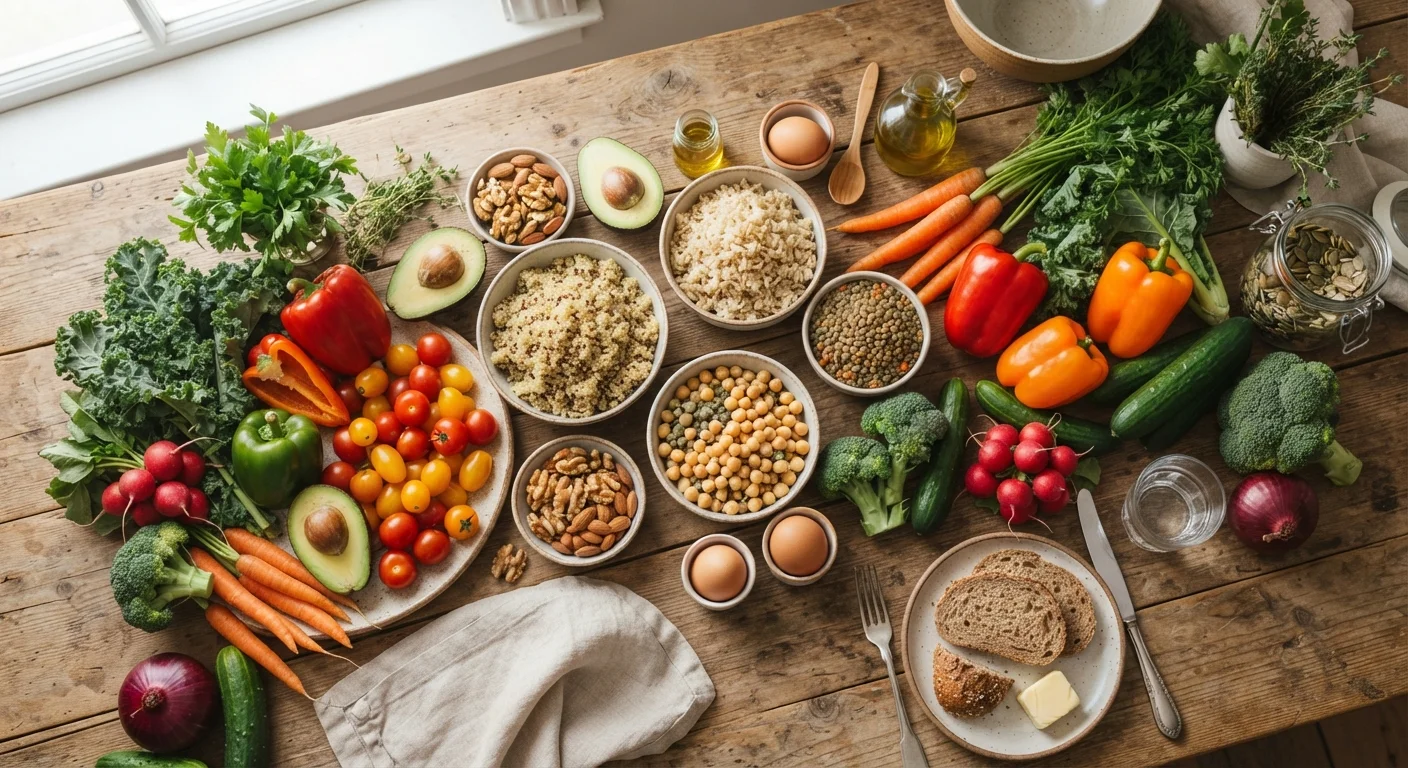
Photo: BridgeWish.com | Reliable Source Of Information editorial
Key Takeaways
- Carbohydrates are not inherently fattening; food quality and overall intake patterns matter more.
- Dietary fat is essential for health — the type of fat consumed makes the biggest difference.
- Skipping meals does not reliably speed weight loss and can disrupt hunger regulation.
- Eating late at night is not automatically harmful; total daily calories matter most.
- Organic produce is not nutritionally superior to conventional; both support a healthy diet.
Why Nutrition Myths Are So Hard to Kill
Nutrition advice travels fast — through social media, well-meaning relatives, and magazine covers. The problem is that food folklore spreads far more quickly than the careful, peer-reviewed research that often contradicts it. Most persistent myths contain a grain of truth that has been stretched far beyond what the evidence supports.
Understanding where these myths come from makes them easier to correct. Many originate from early, small-scale studies that were later refined or overturned, while others reflect marketing rather than science. For a broader look at how stubborn food misconceptions resist correction, see our in-depth fact-check of common nutrition myths.
The myth-and-fact pairs below address the most widespread misconceptions, grounded in current dietary guidance from established nutrition science.
Myth
Carbs are bad for you and should be avoided to stay healthy.
Fact
Carbohydrates are the body's primary fuel source; the type and quality of carbs consumed is what matters most.
Lumping all carbohydrates together as harmful ignores enormous differences in food quality. Whole grains, legumes, fruits, and vegetables are carbohydrate-rich and consistently linked to reduced risk of chronic disease in large-scale dietary studies. Refined carbohydrates — white bread, sugary beverages, pastries — are the foods associated with poorer health outcomes, largely because processing strips out fiber, vitamins, and minerals.
The Dietary Guidelines for Americans recommend that roughly 45–65% of daily calories come from carbohydrates, with an emphasis on fiber-rich, minimally processed sources. Cutting carbs entirely means cutting some of the most nutrient-dense foods available.
Myth
Eating fat makes you fat and should be minimized at all costs.
Fact
Dietary fat is essential for hormone production, brain function, and vitamin absorption; unsaturated fats actively support heart health.
The low-fat dietary movement of the 1980s and 1990s led many people to equate dietary fat with body fat — a conflation that nutrition research has since thoroughly challenged. Fat is calorie-dense (9 calories per gram versus 4 for carbs and protein), so portion size matters, but fat itself is not the enemy.
Unsaturated fats — found in olive oil, avocados, nuts, and fatty fish — are associated with reduced cardiovascular risk. Trans fats (now largely removed from the food supply) and excess saturated fats are the types worth limiting. Replacing fat with refined carbohydrates, as many low-fat products did, often produced no benefit and sometimes worsened metabolic health markers.
Myth
Skipping meals is an effective way to lose weight faster.
Fact
Skipping meals frequently disrupts hunger hormones, can lead to overeating later, and is not a reliable long-term weight-management strategy.
When you skip a meal, blood glucose drops and hunger hormones — particularly ghrelin — rise. By the next eating opportunity, appetite is often intense enough to override portion awareness, making it easy to consume more calories than the skipped meal would have contained.
Structured intermittent fasting approaches, which involve deliberate eating windows rather than erratic meal-skipping, have been studied more formally — with mixed but generally modest results for weight management. These approaches work differently from simply skipping breakfast because you're rushed. If you're considering any structured fasting approach, discussing it with a registered dietitian or physician is worthwhile, especially if you have diabetes, a history of disordered eating, or other health conditions.
Myth
Eating after 8 p.m. automatically causes weight gain.
Fact
Weight gain is driven by total calorie intake relative to expenditure; meal timing alone is not the primary factor for most people.
The idea that the body stores food as fat after a certain hour oversimplifies how metabolism works. Your body does not flip a metabolic switch at 8 p.m. Total daily energy balance — calories consumed versus calories burned — is the dominant factor in weight change over time.
That said, late-night eating habits can indirectly contribute to excess intake: evening snacking is often driven by boredom or stress rather than hunger, and the foods chosen tend to be calorie-dense. So the behavior associated with late-night eating is often the issue, not the clock time itself. Paying attention to hunger cues and keeping nutritious options accessible in the evening is more useful than a blanket time restriction.
Myth
Organic food is significantly more nutritious than conventionally grown produce.
Fact
Current evidence does not consistently show that organic produce is more nutritious; both organic and conventional vegetables and fruits support a healthy diet.
Organic farming restricts the use of certain synthetic pesticides and fertilizers, which is why many consumers choose it — often for environmental or personal preference reasons. However, multiple systematic reviews, including a widely cited 2012 analysis published in Annals of Internal Medicine, found no strong evidence that organic foods deliver significantly higher levels of vitamins, minerals, or other nutrients compared to conventionally grown counterparts.
Eating more vegetables and fruit — organic or not — is far more impactful for health than the farming method. If cost is a barrier to buying produce, conventional options are nutritionally sound. Prioritize eating a variety of plant foods over worrying about the organic label.
Putting It All Together: What Healthy Eating Actually Looks Like
Once you clear away the noise, a consistent picture of healthy eating emerges from decades of research: prioritize vegetables, fruits, whole grains, lean proteins, and healthy fats; limit ultra-processed foods, added sugars, and excess sodium; and eat in portions that suit your energy needs. No single food is a villain or a cure.
87%
US adults not meeting vegetable intake recommendations
According to CDC dietary data, the overwhelming majority of American adults fall short of the recommended daily vegetable intake, regardless of which specific diet they follow.
~57%
Of US calories from ultra-processed foods
Research published in BMJ Open estimated that ultra-processed foods account for roughly 57% of energy intake in the average American diet — a pattern consistently linked to poorer health outcomes.
Patterns matter more than individual choices. A diet built mostly on whole, minimally processed foods — with flexibility for enjoyment — is far more sustainable than any rigid rulebook. For foundational guidance on building that pattern, explore our Nutrition Basics hub.
If you're curious how these same myth-busting principles apply to related areas, our fitness myths fact-check covers equally persistent misconceptions in the exercise world.
This article is for general informational and educational purposes only and is not a substitute for personalized medical or dietary advice. Consult a registered dietitian or qualified healthcare professional for guidance suited to your individual health needs.
The content on this site is for informational purposes only and is not a substitute for professional advice. Always consult a qualified professional for guidance specific to your situation.