
Why Your Lower Back Hurts After Sitting All Day—and What Movement Can Do

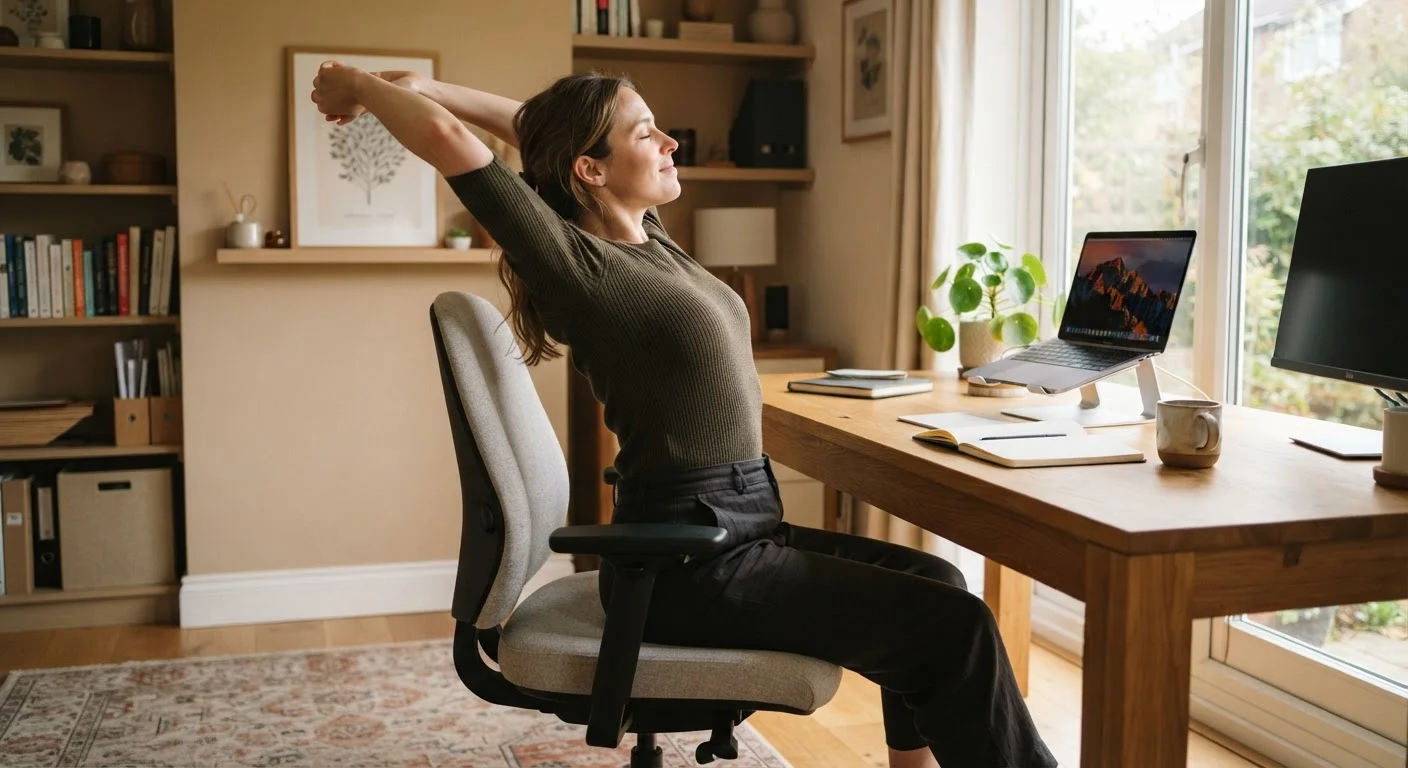
Photo: BridgeWish.com | Reliable Source Of Information editorial
Key Takeaways
- Sitting for long stretches compresses lumbar discs and fatigues the muscles that stabilize your spine.
- Hip flexor tightening and weakened glutes are key contributors to lower back discomfort from sitting.
- Regular movement breaks — even short ones — meaningfully reduce spinal load and muscle tension.
- Posture matters, but no single 'perfect' sitting position eliminates the risk of sitting too long.
- Persistent or radiating pain warrants evaluation by a qualified healthcare professional.
What Happens to Your Spine When You Sit for Hours
Your lumbar spine — the five vertebrae in your lower back — is designed for movement. When you settle into a chair and stay there, several things happen simultaneously that can add up to real discomfort.
First, the discs between your vertebrae absorb increased compressive load, especially when you slouch or lean forward slightly, as most people naturally do over time. Second, the muscles responsible for stabilizing your spine — including the deep core muscles and the glutes — gradually reduce their activity because sitting allows them to disengage. Third, your hip flexors, the muscles connecting your thighs to your lower spine, remain in a shortened state for the entire time you are seated. Over hours, they can tighten significantly.
The result is a spine that is under consistent load, supported by less active musculature, and attached to tightened hip flexors that pull on the lumbar vertebrae. That combination is a reliable recipe for aching and stiffness by the end of a workday.
No Single Posture Is Perfect All Day
The Role of Muscle Imbalance in Desk-Worker Pain
Lower back pain from sitting is rarely just about posture in the moment — it reflects a pattern of muscle imbalance that builds over weeks and months of sedentary work.
When hip flexors are chronically tight, they tilt the pelvis forward (called an anterior pelvic tilt), which increases the curve in the lumbar spine and places additional stress on the vertebral joints and discs. At the same time, glutes and core stabilizers that are underused become progressively weaker, making the spine more reliant on passive structures — ligaments, joint capsules, and discs — to bear load. These structures are not designed to work as primary stabilizers.
~80%
Americans who experience lower back pain
According to the National Institute of Neurological Disorders and Stroke, approximately 80% of Americans will experience lower back pain at some point in their lives.
6–8 hrs
Average daily sitting time for US adults
Research published in health and epidemiology journals consistently estimates that US adults spend six to eight hours per day seated, with desk workers often exceeding this range.
40%
Increased lumbar disc pressure when sitting vs. standing
Biomechanical research, including foundational studies by Nachemson, demonstrated that intradiscal pressure in the lumbar spine is substantially higher in a seated posture than when standing upright.
This cycle is self-reinforcing: pain leads to further inactivity, which deepens the imbalance. Understanding this helps explain why movement — not just a better chair — is a central part of addressing the problem.
Movement Habits That Can Make a Genuine Difference
The most evidence-supported intervention for sitting-related lower back pain is straightforward: move more frequently throughout the day, and strengthen the muscles the sitting habit has been neglecting.
Frequent Breaks
Standing up and walking for even two to three minutes every 30 to 60 minutes meaningfully reduces sustained spinal load. Setting a recurring timer or using a reminder app can make this habit easier to maintain. The goal is reducing the duration of uninterrupted sitting, not eliminating sitting altogether.
Hip Flexor Stretching
A kneeling lunge stretch — where one knee is on the floor and the opposite foot is forward — gently lengthens the hip flexors on the rear leg. Holding for 20 to 30 seconds on each side after long sitting sessions can help counteract tightening. This is general information; consult a physical therapist if you are unsure about technique or have existing pain.
Glute and Core Activation
Exercises like glute bridges, bird-dogs, and dead bugs are commonly recommended by physical therapists to rebuild the stabilizing muscles weakened by prolonged sitting. These are low-impact movements that most healthy adults can perform without equipment.
Build Movement Into Your Existing Routine
This article is for general informational purposes only and is not a substitute for professional medical advice. If you are experiencing persistent, severe, or radiating lower back pain, please consult a qualified healthcare provider before beginning any new exercise program.
Frequently Asked Questions
The content on this site is for informational purposes only and is not a substitute for professional advice. Always consult a qualified professional for guidance specific to your situation.