
Meditation vs. Deep Breathing: Which Calming Practice Fits Your Needs?

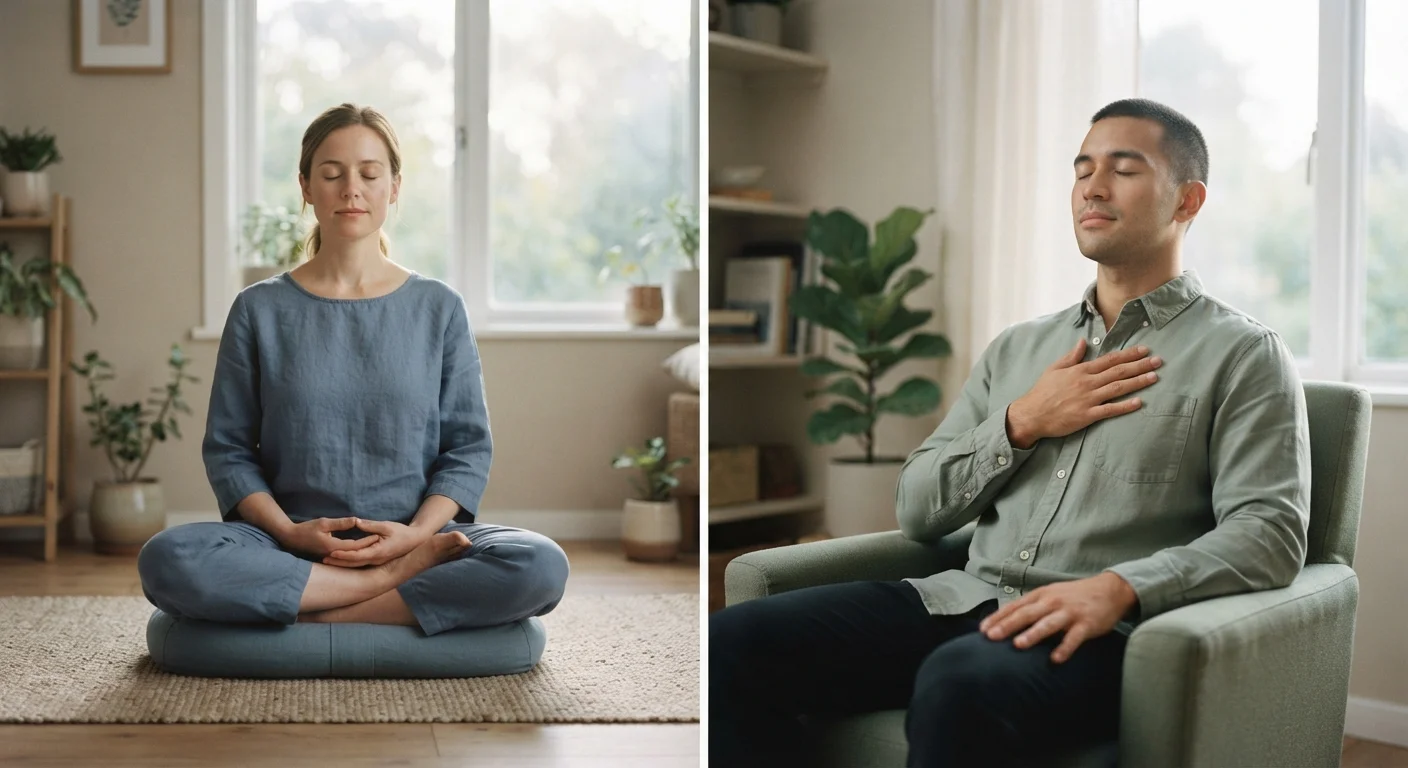
Photo: BridgeWish.com | Reliable Source Of Information editorial
Key Takeaways
- Meditation builds long-term mental resilience by training focused, non-reactive awareness over time.
- Deep breathing activates the parasympathetic nervous system quickly, reducing physiological stress within minutes.
- Both practices have solid scientific support for reducing anxiety and improving overall wellbeing.
- Deep breathing requires no prior experience and can be done discreetly almost anywhere.
- Meditation typically requires consistent daily practice before significant benefits become noticeable.
- Many people use both — deep breathing for immediate relief and meditation for ongoing mental wellness.
How Each Practice Works
Meditation and deep breathing are often mentioned together as stress-reduction tools, but they engage your mind and body through different mechanisms. Understanding these differences helps you match the right practice to your actual situation.
Meditation is an umbrella term for a range of mental training practices. The most widely studied form — mindfulness meditation — involves deliberately directing attention to present-moment experience (often the breath, body sensations, or sounds) and noticing when the mind wanders without judgment. Over time, this builds what researchers describe as "attentional control" — a measurable ability to regulate attention and emotional responses. It typically requires a quiet environment, a willingness to sit with discomfort, and consistent practice across days and weeks before effects accumulate.
Deep breathing, by contrast, works primarily through physiology. Slow, controlled breathing — especially techniques that emphasise a longer exhale — directly stimulates the vagus nerve and activates the parasympathetic nervous system, sometimes called the "rest and digest" system. This produces rapid, measurable changes: heart rate slows, blood pressure may drop, and cortisol (a key stress hormone) levels begin to decrease. Effects can appear within a single session, even on the very first try.
For a broader view of how these approaches fit into everyday mental wellness, see our comprehensive mental wellness guide.
| Criterion | Meditation | Deep Breathing |
|---|---|---|
| Primary mechanism | Attentional and emotional training | Physiological nervous system response |
| Time to noticeable effect | Weeks of consistent practice | Minutes, even on first attempt |
| Session length | Typically 10–45 minutes daily | 2–10 minutes as needed |
| Learning curve | Moderate — requires guidance initially | Low — simple techniques, quick to learn |
| Best suited for | Long-term resilience building | Acute stress or anxiety relief |
| Environment needed | Quiet, dedicated space preferred | Anywhere, including public settings |
| Scientific evidence base | Extensive, especially for anxiety and depression | Strong, especially for acute stress response |
What the Research Shows
Both practices are among the better-studied non-pharmaceutical approaches to stress and anxiety. Here's where the evidence is most solid.
For meditation: Decades of research — including numerous randomised controlled trials — support mindfulness meditation's effectiveness for reducing symptoms of anxiety, depression, and chronic stress. A landmark analysis published in JAMA Internal Medicine found moderate evidence that mindfulness programs improved anxiety, depression, and pain. Structural brain imaging studies suggest that long-term meditators show differences in areas linked to attention and emotional regulation, though the clinical significance of these findings is still being explored.
For deep breathing: Research consistently shows that slow-paced breathing (generally around 5–6 breath cycles per minute) significantly reduces perceived stress and physiological markers such as heart rate variability and blood pressure. A 2023 study published in Cell Reports Medicine found that five minutes of daily cyclic sighing — a specific deep breathing pattern — produced greater improvements in mood and reductions in anxiety compared to mindfulness meditation in a short-term comparison. Researchers caution this doesn't establish one as universally superior; context and duration matter greatly.
47%
Reduction in anxiety symptoms
A meta-analysis in JAMA Internal Medicine found mindfulness meditation programs produced roughly a 47% reduction in anxiety symptoms compared to control conditions across multiple studies.
~5 min
Daily breathing practice for mood benefit
A 2023 study in Cell Reports Medicine found five minutes of daily cyclic sighing meaningfully improved mood and reduced anxiety over a one-month period.
8 weeks
Typical duration of evidence-based meditation programs
Most well-studied mindfulness interventions, such as MBSR, are structured as eight-week programs with daily practice requirements.
It's worth noting that most meditation studies examine sustained programs of eight weeks or more, while deep breathing studies often assess shorter intervention windows. Neither practice is a substitute for professional mental health care. If you're managing a diagnosed condition, always work with a qualified healthcare provider.
Physical movement is another evidence-backed approach to mood support — see our article on exercise and mental health for context on how activity fits into this picture.
Practical Differences: Time, Access, and Commitment
For many people, the deciding factor isn't the science — it's what's actually sustainable in daily life.
A Note on Combining Both Practices
Meditation generally asks more upfront investment. Most evidence-based programs (such as Mindfulness-Based Stress Reduction, or MBSR) involve daily sessions of 20–45 minutes. Shorter sessions of 10–15 minutes can still be beneficial, particularly for beginners, but consistency over weeks is key. Meditation requires a relatively quiet space and mental bandwidth to sit with wandering thoughts — which can feel frustrating at first. Many people find guided audio or app-based sessions helpful as scaffolding when starting out.
Deep breathing is immediately accessible with no equipment, no prior training, and minimal time. A simple technique like box breathing (inhale for 4 counts, hold for 4, exhale for 4, hold for 4) or diaphragmatic breathing can be practiced discreetly at a desk, in a car before an appointment, or during a brief break. This low barrier to entry makes it easier to build into an existing routine without overhauling your schedule.
Both practices can complement each other well — and neither exists in isolation from broader lifestyle habits. For an overview of evidence-informed approaches to managing chronic stress, visit our guide on sustainable stress management.
This article is for general informational purposes only and is not a substitute for professional medical or mental health advice. Always consult a qualified healthcare provider before starting or changing any health practice, particularly if you have a diagnosed condition.
The content on this site is for informational purposes only and is not a substitute for professional advice. Always consult a qualified professional for guidance specific to your situation.