
Therapy, Counseling, and Psychiatry: Understanding the Differences

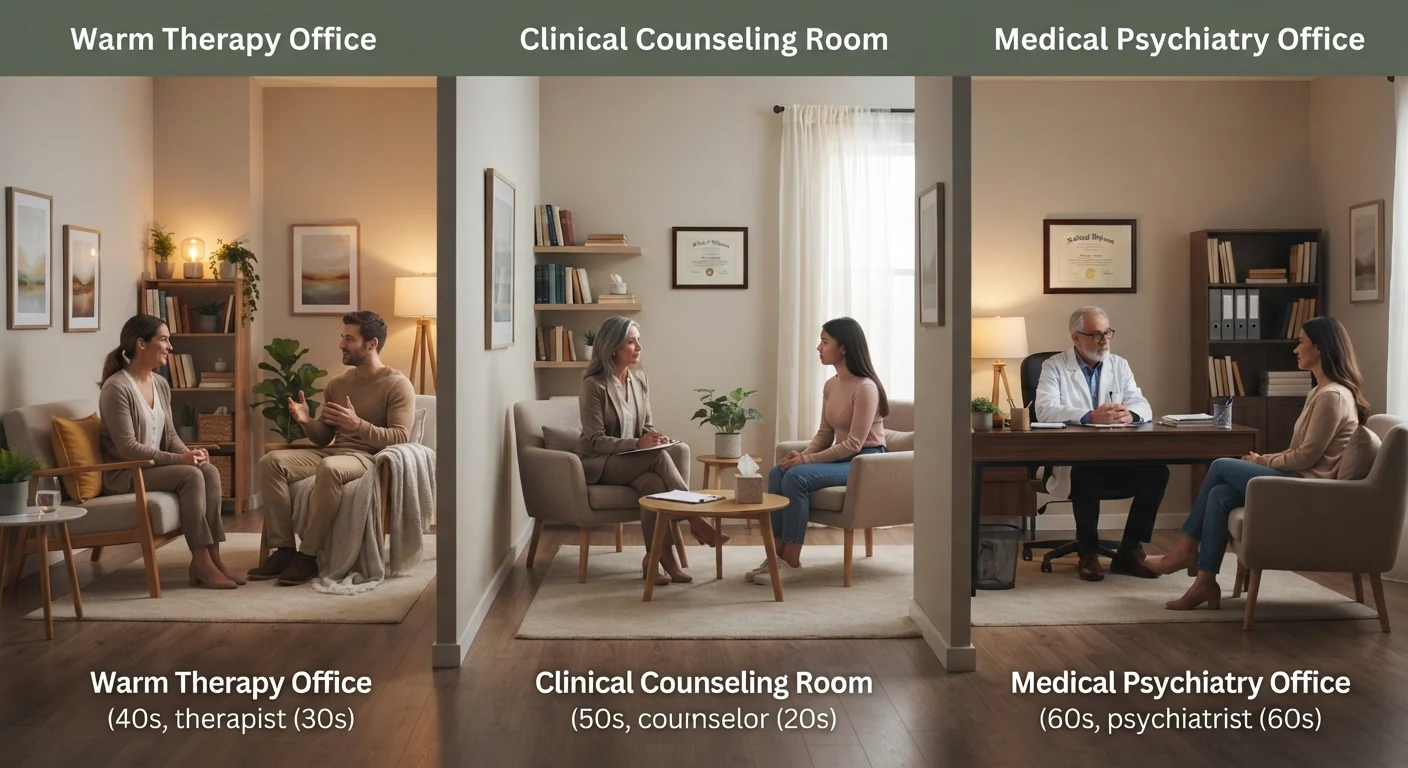
Photo: BridgeWish.com | Reliable Source Of Information editorial
Key Takeaways
- Therapists, counselors, and psychiatrists have different training, scopes, and treatment tools.
- Only psychiatrists — as licensed medical doctors — can prescribe psychiatric medications in most U.S. states.
- Therapists typically address deep-rooted emotional patterns through structured, ongoing talk-based treatment.
- Counselors often focus on specific, shorter-term challenges like grief, stress, or relationship issues.
- Many people benefit from a combination of approaches, such as therapy alongside psychiatric medication management.
Why the Distinctions Matter
When you decide to seek mental health support, the sheer number of professional titles can feel overwhelming. Therapist, psychologist, counselor, psychiatrist — these terms are often used interchangeably in casual conversation, but they represent meaningfully different roles, training backgrounds, and treatment capabilities.
Understanding the differences isn't just academic. Seeing the right type of professional for your specific needs can make care more effective and help you get the right kind of support sooner. If you're not sure whether you're ready to reach out at all, our article on signs it may be time to talk to a mental health professional can help you reflect on where you stand.
This article is general health information and education, not medical or clinical advice. Always consult a qualified healthcare professional for decisions about your own mental health care.
Therapists and Psychotherapists: Going Deeper
The term therapist (or psychotherapist) typically refers to a licensed mental health professional who provides structured, talk-based treatment aimed at exploring and shifting thought patterns, emotional responses, and behaviors. Common credentials include Licensed Clinical Social Worker (LCSW), Licensed Professional Counselor (LPC), Licensed Marriage and Family Therapist (LMFT), and psychologist (PhD or PsyD).
Therapists use evidence-based approaches — such as Cognitive Behavioral Therapy (CBT), Dialectical Behavior Therapy (DBT), or psychodynamic therapy — to help people work through conditions like depression, anxiety disorders, trauma, and more. Treatment tends to be ongoing, often spanning months or years, depending on the individual's goals. For a closer look at how different therapy models compare, see our guide on Cognitive Behavioral Therapy vs. mindfulness-based therapy.
Don't Overlook Psychologist Testing
Psychologists (PhD/PsyD) can conduct psychological testing and assessments — a capability that sets them apart from many other therapists and can be especially valuable when diagnosing complex conditions.
Counselors: Focused, Practical Support
Counseling shares significant overlap with therapy, and the terminology varies by state and context. In general usage, counselors — often holding a master's degree and a state license such as LPC or Licensed Mental Health Counselor (LMHC) — tend to focus on specific, present-centered challenges rather than long-term psychological restructuring.
Common areas include grief and loss, relationship difficulties, career transitions, stress management, and substance use (through addiction counselors). Sessions are often shorter in duration — weeks to a few months — and goal-oriented. That said, many licensed counselors are also trained to provide ongoing psychotherapy, so the boundaries between counselor and therapist roles can blur in practice.
If you're new to mental health care and want to understand more terminology, our plain-English glossary of mental health terms is a useful companion resource.
Psychiatrists: Medical Expertise and Medication
A psychiatrist is a medical doctor (MD or DO) who has completed specialized residency training in psychiatry after medical school. This medical background is the critical distinction: psychiatrists can diagnose mental health conditions and prescribe medications — something therapists and counselors generally cannot do in most U.S. states.
Psychiatrists are most commonly involved when a condition may have a biological component, when symptoms are severe or not improving with talk therapy alone, or when medication management is part of the treatment plan. Conditions like bipolar disorder, schizophrenia, severe major depression, and certain anxiety disorders often involve psychiatric care.
In practice, many psychiatrists today focus primarily on medication evaluation and management rather than ongoing talk therapy, though this varies by provider and setting.
| Therapist / Psychotherapist | Counselor | Psychiatrist | |
|---|---|---|---|
| Typical credential | LCSW, LPC, LMFT, PhD/PsyD | LPC, LMHC, master's degree | MD or DO (medical doctor) |
| Can prescribe medication | No (in most U.S. states) | No | Yes |
| Primary treatment method | Structured talk therapy | Goal-focused counseling | Medication management ± therapy |
| Typical treatment duration | Months to years | Weeks to months | Ongoing, varies by condition |
| Common focus areas | Trauma, depression, anxiety, patterns | Grief, stress, life transitions | Severe or biological mental illness |
| Can conduct psychological testing | Psychologists (PhD/PsyD) only | Generally no | Can order but not typically administer |
For a fuller picture of what your first appointment might look like with any of these professionals, see our guide to navigating mental health care for the first time.
How These Roles Work Together
In many cases, the most effective mental health care involves more than one type of professional. A common arrangement is seeing a psychiatrist for medication management while working separately with a therapist or counselor on behavioral and emotional strategies. This collaborative model is well-established for conditions like major depressive disorder and generalized anxiety disorder.
It's also worth knowing that the line between counseling and therapy isn't always sharp — many licensed counselors provide psychotherapy, and many therapists address the practical, situational challenges that counseling typically targets. For a more detailed breakdown of how coaching (a non-clinical role) fits into this picture, see our comparison of therapy, counseling, and coaching.
When you're unsure where to begin, your primary care physician can conduct an initial assessment and point you toward the most appropriate type of specialist for your situation.
The content on this site is for informational purposes only and is not a substitute for professional advice. Always consult a qualified professional for guidance specific to your situation.