
Renting vs. Buying: How to Think Through the Decision Honestly

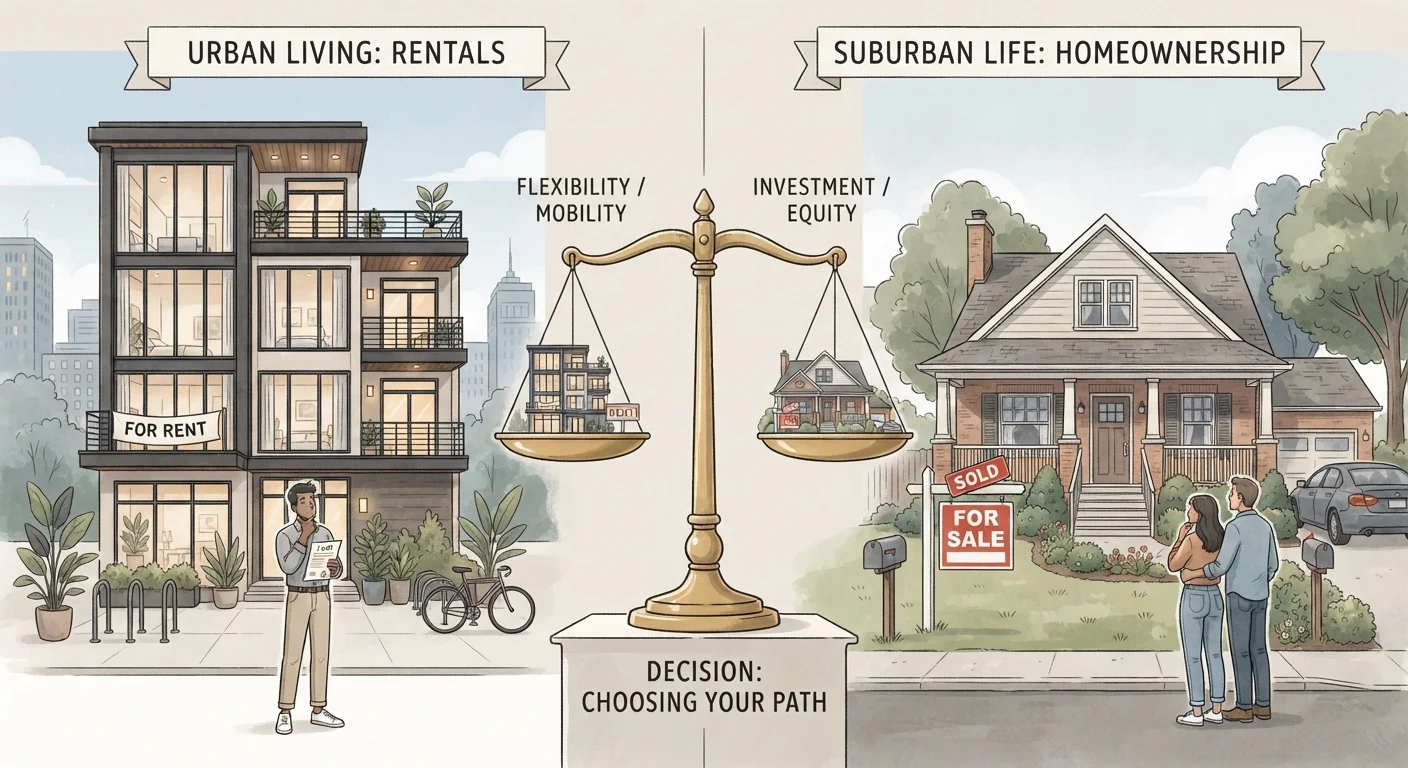
Photo: BridgeWish.com | Reliable Source Of Information editorial
Key Takeaways
- Neither renting nor buying is universally better — the right choice depends on your financial situation and lifestyle goals.
- Buying builds equity over time, but upfront and ongoing costs are significantly higher than most people anticipate.
- Renting offers flexibility and predictable monthly costs, but doesn't build ownership equity.
- The length of time you plan to stay in a location is one of the most important factors in this decision.
- Local housing market conditions can significantly affect whether buying makes financial sense at a given time.
Why This Decision Isn't as Simple as the Headlines Suggest
The rent-vs-buy debate is one of the most discussed financial decisions in American life — and one of the most frequently oversimplified. Headlines alternate between "renting is throwing money away" and "buying is too risky right now," leaving everyday consumers without a clear framework for their own situation.
The honest answer is that both options have real advantages and real drawbacks. What matters is how those trade-offs align with your financial position, life stage, and goals. For a broader look at similar trade-offs in a different context, see our discussion of leasing vs. buying a vehicle, which applies some of the same thinking.
This article won't tell you what to do — it will give you a clear structure for thinking through the decision honestly.
| Criterion | Renting | Buying |
|---|---|---|
| Upfront costs | Security deposit + first/last month | Down payment + closing costs (2–5%) |
| Monthly cost predictability | Rent can increase at lease renewal | Fixed-rate mortgage is stable; taxes/insurance may rise |
| Equity building | None | Yes, with each mortgage payment |
| Maintenance responsibility | Landlord handles most repairs | Owner is fully responsible |
| Flexibility to relocate | High — move when lease ends | Low — selling takes time and money |
| Personalization | Limited by lease terms | Full control over your property |
| Market risk exposure | None | Property values can fall as well as rise |
| Best financial horizon | Short to medium term | Long term (typically 5+ years) |
The Real Financial Picture on Both Sides
Many people underestimate what homeownership actually costs. Beyond the mortgage payment, owners typically budget for property taxes, homeowner's insurance, private mortgage insurance (if their down payment is under 20%), HOA fees where applicable, and ongoing maintenance — commonly estimated at 1–2% of the home's value per year.
Renters, by contrast, pay a monthly rent plus renter's insurance (which is relatively low-cost), with no exposure to repair bills or property tax changes. What they don't accumulate is equity — the portion of a home's value that belongs to the owner as they pay down their mortgage.
2–5%
Typical closing cost range for home buyers
According to the Consumer Financial Protection Bureau, buyers should budget for closing costs on top of their down payment when purchasing a home.
1–2%
Annual home maintenance cost estimate
A widely cited rule of thumb in personal finance suggests homeowners budget 1–2% of a home's purchase price each year for maintenance and repairs.
5+ years
Typical break-even horizon for buying vs. renting
Many housing economists suggest buyers generally need to stay in a home at least five years to offset transaction costs and make buying financially advantageous over renting.
Buying also carries substantial one-time costs: closing costs alone typically run 2–5% of the purchase price. A buyer purchasing a $350,000 home might spend $7,000–$17,500 before moving in a single piece of furniture. These costs mean that buying only makes clear financial sense if you plan to stay in the home long enough to recoup them.
For a more detailed breakdown of these trade-offs, our article on the real trade-offs of renting vs. buying goes deeper on the numbers.
Lifestyle and Flexibility: The Non-Financial Variables
Money isn't everything in this decision. Lifestyle factors carry significant weight and are sometimes more decisive than the numbers.
- Mobility: Renters can relocate with relatively short notice — typically 30–60 days after a lease ends. Homeowners face a selling process that can take months and carries transaction costs. If your job, family situation, or personal goals might pull you to a different city, renting preserves your options.
- Stability: Owners enjoy the security of knowing their landlord can't raise their rent or decline to renew their lease. A fixed-rate mortgage also locks in the principal-and-interest portion of housing costs for the full loan term.
- Control: Owners can renovate, paint, landscape, and personalize their space. Renters are typically limited by lease terms and require landlord approval for changes.
- Responsibility: Owning a home means managing it. Maintenance, repairs, and dealing with contractors fall to the owner. Some people find this rewarding; others find it burdensome.
Renting Isn't 'Wasting Money'
You can explore these dynamics further in our overview on renting a home, which covers what renters need to know about leases, landlord relationships, and tenant rights.
How to Frame the Decision for Your Situation
Rather than asking "is buying better than renting?" ask a more specific set of questions:
- How long do I plan to stay? Most financial analysts suggest a minimum of five years in a home before the math of buying starts to reliably favor ownership over renting, though this varies by market.
- What are my total upfront funds? A down payment is only part of the picture — closing costs, moving expenses, and an emergency fund for repairs all need to be in place.
- How stable is my income? A mortgage is a long-term legal obligation. Job insecurity or variable income raises the stakes of taking on that commitment.
- What does the local market look like? In some US cities, price-to-rent ratios make buying a much better long-term deal; in others, renting is more cost-effective. Local data matters.
- What are my non-financial priorities? Autonomy, community roots, and the desire to customize a space are all valid reasons to weigh buying more heavily, even when the numbers aren't definitively in favor.
For a thorough look at how these questions apply across different household profiles, see our article on renting vs. buying a home in the US.
This article is for general informational and educational purposes only and does not constitute financial, legal, or real estate advice. Consult a qualified financial adviser or real estate professional for guidance specific to your circumstances.
The content on this site is for informational purposes only and is not a substitute for professional advice. Always consult a qualified professional for guidance specific to your situation.