
Smoke Alarms, Carbon Monoxide Detectors, and Fire Extinguishers: What Every Household Needs to Know

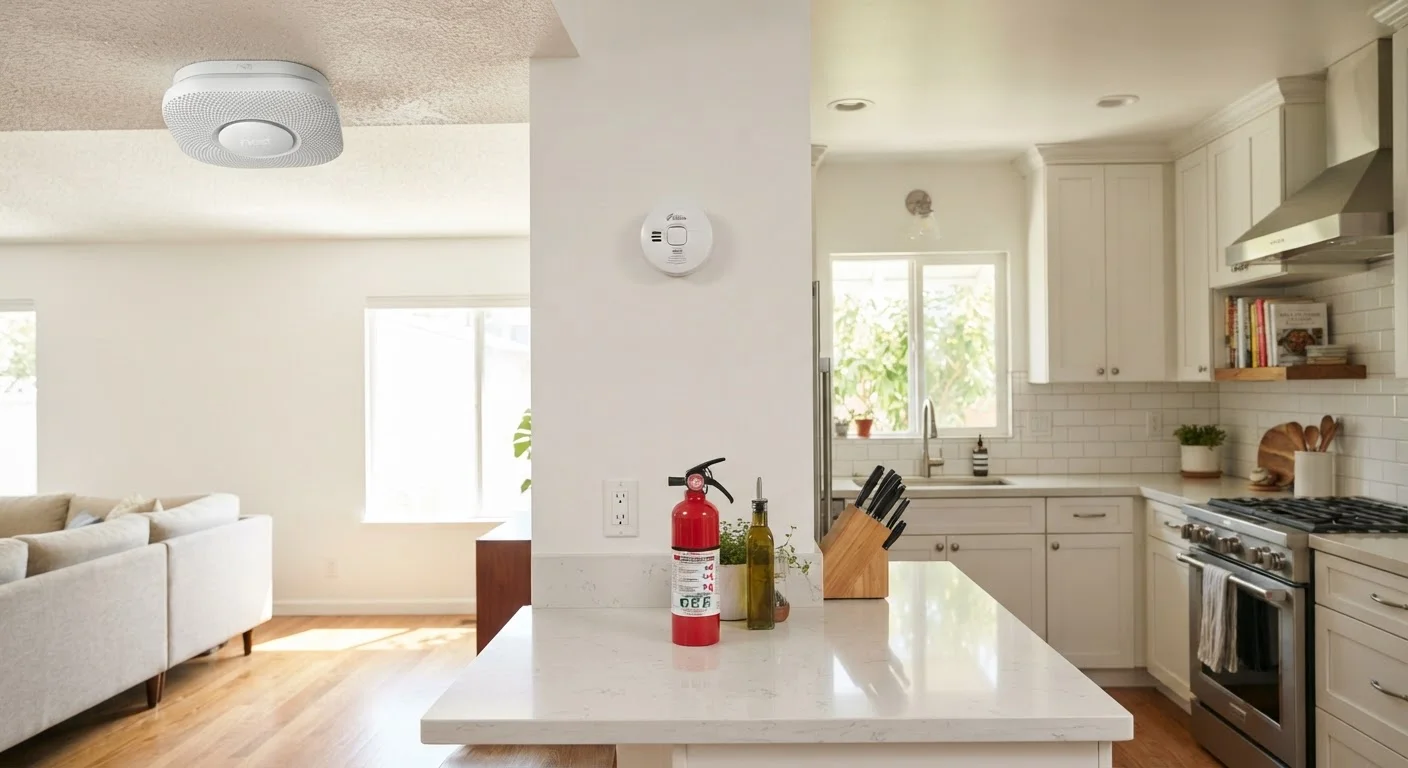
Photo: BridgeWish.com | Reliable Source Of Information editorial
Why These Three Devices Work Together
Smoke alarms, carbon monoxide (CO) detectors, and fire extinguishers each address a different threat — but they function as a system. A smoke alarm gives you time to escape. A CO detector warns you about an odorless, colorless gas that can be fatal before you notice symptoms. A fire extinguisher gives you a narrow window to suppress a small fire before it grows. No single device can do the job of all three.
Understanding what each device does — and where it falls short — is the foundation of home fire safety. This reference covers placement, testing, and replacement so you can maintain these devices with confidence. For a broader seasonal maintenance checklist, see your season-by-season home maintenance calendar.
Placement: Where Each Device Belongs
Smoke Alarms
The U.S. Fire Administration recommends installing smoke alarms inside every bedroom, outside each sleeping area, and on every level of the home including the basement. Mount alarms on the ceiling or high on a wall (within 12 inches of the ceiling). Keep them at least 10 feet from cooking appliances to reduce nuisance trips.
Carbon Monoxide Detectors
CO is slightly lighter than air and distributes fairly evenly at room temperature, so detectors can be placed at any height — though many manufacturers recommend at or near breathing height. Install at least one on every level of the home and outside each sleeping area. Placement near attached garages, furnaces, and gas water heaters is especially important. Never install a CO detector directly above a stove or in a bathroom.
Fire Extinguishers
Keep at least one extinguisher in the kitchen — the most common source of home fires — mounted in an accessible, visible location away from the stove itself. Additional extinguishers are advisable in attached garages and near fireplaces. Make sure all adults in the household know where extinguishers are and how to use them.
If your home has a gas range or other combustion appliances, review common home maintenance myths to separate fact from fiction about appliance safety.
Ionization Smoke Alarm
A type of smoke alarm that uses a small amount of radioactive material to detect fast-flaming fires. It tends to respond quickly to open flames but may be slower to detect slow, smoldering fires.
Photoelectric Smoke Alarm
A smoke alarm that uses a light beam to detect smoke particles. It generally responds earlier to smoldering, slow-burning fires than ionization models.
Carbon Monoxide (CO)
An odorless, colorless gas produced by incomplete combustion of fuels such as gas, oil, wood, and charcoal. Exposure can be life-threatening, making detection critical in any home with combustion appliances.
PASS Technique
The standard method for using a fire extinguisher: Pull the pin, Aim at the base of the fire, Squeeze the handle, and Sweep side to side. This applies to most portable extinguisher types.
Fire Extinguisher Class
A rating system that indicates which types of fires an extinguisher can suppress. Class A covers ordinary combustibles, Class B covers flammable liquids, and Class C covers energized electrical equipment. Multi-class extinguishers (e.g., ABC) are common for home use.
Testing and Maintenance Schedules
Devices that aren't maintained regularly provide false confidence. Follow these schedules:
- Smoke alarms: Test monthly using the test button. Replace batteries annually unless the unit is sealed with a 10-year battery. Vacuum the exterior gently twice a year to remove dust that can interfere with the sensor.
- CO detectors: Test monthly. Replace batteries as directed by the manufacturer. Some units have sealed batteries with a fixed lifespan — consult the label.
- Fire extinguishers: Visually inspect monthly — check that the pressure gauge needle is in the green zone, the pin and tamper seal are intact, and there's no visible corrosion or damage. Have a professional service the extinguisher annually or as required by the manufacturer.
Building these checks into a broader routine helps ensure nothing slips through the cracks. The month-by-month home maintenance cycle is a practical place to slot these tasks.
Interconnected Alarms Add an Extra Layer
Expiration and Replacement Timelines
These devices don't last forever. Using an expired device gives you a false sense of security.
3 in 5
Home fire deaths with no working smoke alarm
According to the U.S. Fire Administration, three out of five home fire deaths occur in properties with no smoke alarms or non-working smoke alarms.
~400
Annual CO poisoning deaths in US homes
The CDC estimates roughly 400 Americans die each year from unintentional CO poisoning not linked to fires, largely from malfunctioning or misused combustion appliances.
30 seconds
Time a small fire can double in size
Fire safety educators note that a small fire can grow significantly within seconds, underscoring why extinguisher access and training matter.
- Smoke alarms: Replace the entire unit every 10 years from the manufacture date printed on the back.
- CO detectors: Most units last 5–7 years; some newer models reach 10 years. Check the manufacture date on the label — not the purchase date.
- Fire extinguishers: Rechargeable units should be professionally recharged after any use and inspected every 6 years. Disposable units should be replaced every 12 years or immediately after any discharge. If the pressure gauge reads low at any point, replace or recharge immediately.
When in doubt, the manufacture date on the device — not the receipt — is the authoritative reference. Check it now if you're unsure when your devices were installed.
This article provides general home safety information for educational purposes. For emergency situations, always contact 911 or your local fire department. Consult local building codes and a licensed professional for installation requirements specific to your home.
The content on this site is for informational purposes only and is not a substitute for professional advice. Always consult a qualified professional for guidance specific to your situation.