
Cat Body Language: A Field Guide to What Your Cat Is Actually Telling You

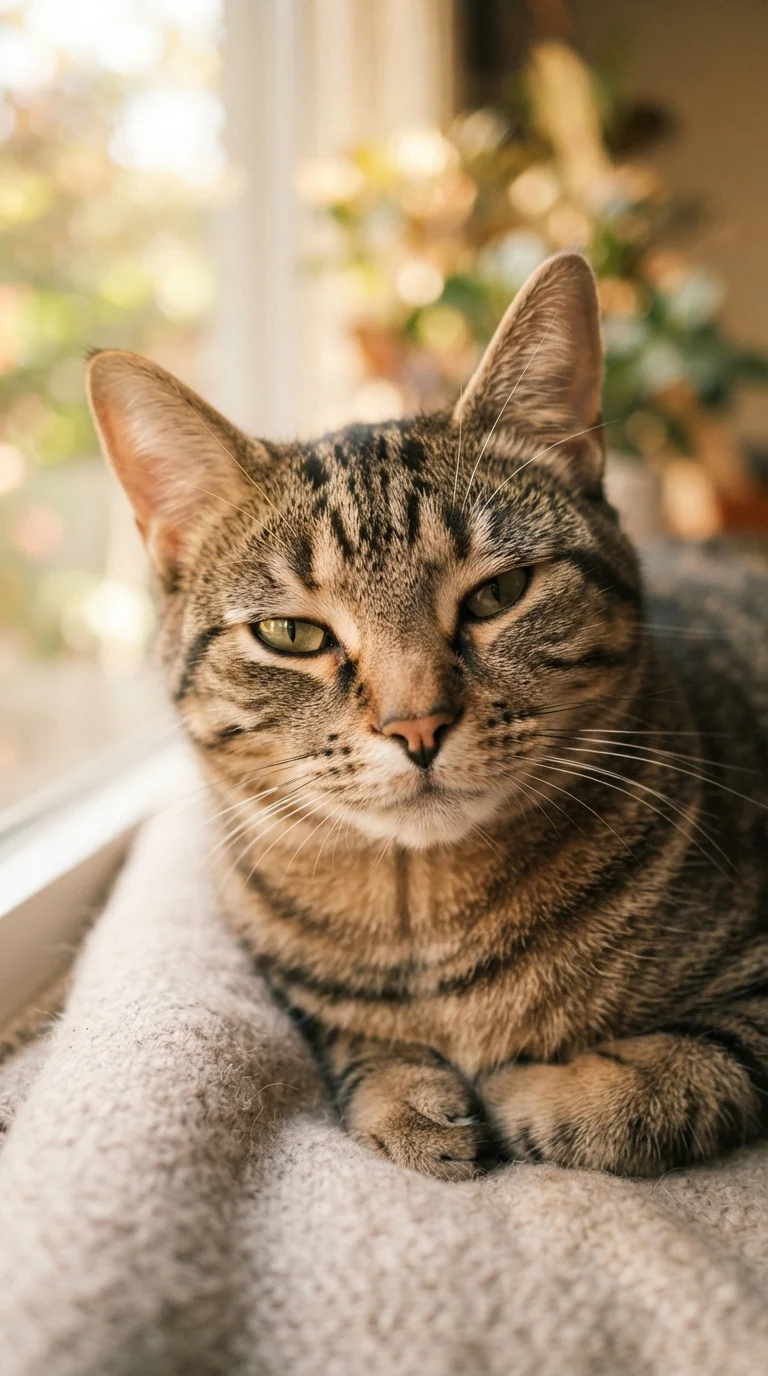
Photo: BridgeWish.com | Reliable Source Of Information editorial
Why Cats Communicate Through Body Language
Cats are not quiet creatures — they're simply speaking a language most humans haven't learned to read. While vocalizations like meows and chirps get a lot of attention, the vast majority of feline communication happens through posture, tail position, ear angle, eye contact, and facial expression. Understanding these signals transforms everyday interactions and helps owners respond to their cat's needs more accurately.
For a broader foundation in feline behavior, see our introduction to cat behavior covering kneading, slow blinks, and territory marking. And because body language shifts can sometimes indicate discomfort rather than mood, it's worth knowing how to recognize when a cat may be hiding pain.
| Primary communication mode | Body language (posture, tail, ears, eyes) |
| Number of facial muscles used for expression | Approximately 32 (similar to dogs and humans) |
| Tail positions with distinct meanings | At least 6 commonly recognized |
| Slow blink significance | Signals trust and relaxation toward a person or other animal (Supported by peer-reviewed feline behavior research) |
| Belly-up posture meaning | Trust signal — not typically an invitation to touch |
| Rapid tail lashing indicates | Agitation or overstimulation; a warning to stop interaction |
Tail Signals: The Mood Barometer
A cat's tail is one of the most expressive parts of its body. Each position carries a distinct emotional meaning:
- Tail held high, tip slightly curved: Confident, content, and friendly — often a greeting signal.
- Tail puffed (piloerection): Startled or threatened; the cat is trying to appear larger to a perceived danger.
- Tail tucked low or between legs: Fearful, anxious, or submissive.
- Slow, low tail swish: Focused concentration — common during play or hunting behavior.
- Rapid tail lashing: Agitation or overstimulation; a warning that the cat may swat or bite if handling continues.
- Tail wrapped around another cat or a person: Affection and social bonding.
Reading tail signals alongside other body cues gives the most accurate picture. A high tail paired with flattened ears, for instance, suggests conflict rather than friendliness.
Piloerection
The involuntary raising of fur along the back and tail, making the cat appear larger. It is triggered by fear, stress, or sudden alarm and is controlled by the autonomic nervous system.
Bunting
The act of a cat pressing and rubbing its head or cheek against a person, animal, or object. It deposits scent from facial glands and is a social bonding and territory-marking behavior.
Slow blink
A deliberate, unhurried closing and reopening of the eyes that cats use to signal relaxation and trust. It is widely regarded by animal behaviorists as a friendly, non-threatening gesture.
Overstimulation
A state in which repeated or prolonged physical contact exceeds a cat's tolerance threshold, causing it to shift suddenly from apparent contentment to defensive behavior such as biting or swatting.
Displacement behavior
An out-of-context action — such as grooming mid-interaction or yawning — that signals internal conflict or mild stress. It often appears when a cat is uncertain how to respond to a situation.
Ears, Eyes, and Whiskers: Reading the Face
Feline facial signals are nuanced but consistent once you know what to look for.
Ears
- Upright, forward-facing ears: Alert and engaged — curious about something in the environment.
- Ears rotated sideways ("airplane ears"): Anxious or mildly irritated.
- Ears pinned flat against the head: Fearful or highly defensive; the cat may be preparing to scratch or bite.
Eyes
- Slow blink: A classic feline signal of trust and relaxation. Returning a slow blink can reinforce the bond.
- Dilated pupils in a calm environment: May indicate excitement, playfulness, or anxiety — context matters.
- Constricted pupils with a hard stare: Assertiveness or aggression; avoid prolonged direct eye contact in this state.
- Half-closed eyes: Contentment and comfort.
Whiskers
- Whiskers fanned forward: Curious and engaged.
- Whiskers pulled back flat: Fearful or defensive.
Context Always Changes the Meaning
Posture and Overall Body Position
How a cat holds its entire body broadcasts its emotional state clearly:
- Relaxed loaf position (paws tucked under, eyes half-closed): Comfortable and at ease in the environment.
- Exposed belly: Often misread as an invitation to pet. In most cats, a belly-up posture signals trust, not a request for a belly rub — attempting one may result in a defensive grab-and-bite.
- Arched back with piloerection: Classic defensive threat posture triggered by fear.
- Crouched low, body tense: Fear or pain — a cat in this position may be preparing to flee or defend itself.
- Head-butting (bunting): A confident, affectionate greeting that deposits scent and reinforces social bonds.
- Kneading on a soft surface or person: A self-soothing behavior rooted in kittenhood, generally indicating deep comfort.
Changes in typical posture — especially sustained crouching, reluctance to jump, or a hunched appearance — can signal physical discomfort. Our guide on subtle signs your pet may be in pain covers what to watch for and when to consult a veterinarian.
This article provides general educational information about feline behavior and is not a substitute for professional veterinary advice. If you are concerned about your cat's health or behavior, consult a licensed veterinarian or a certified animal behaviorist.
The content on this site is for informational purposes only and is not a substitute for professional advice. Always consult a qualified professional for guidance specific to your situation.