
Teaching a Puppy to Stay Alone Without Anxiety

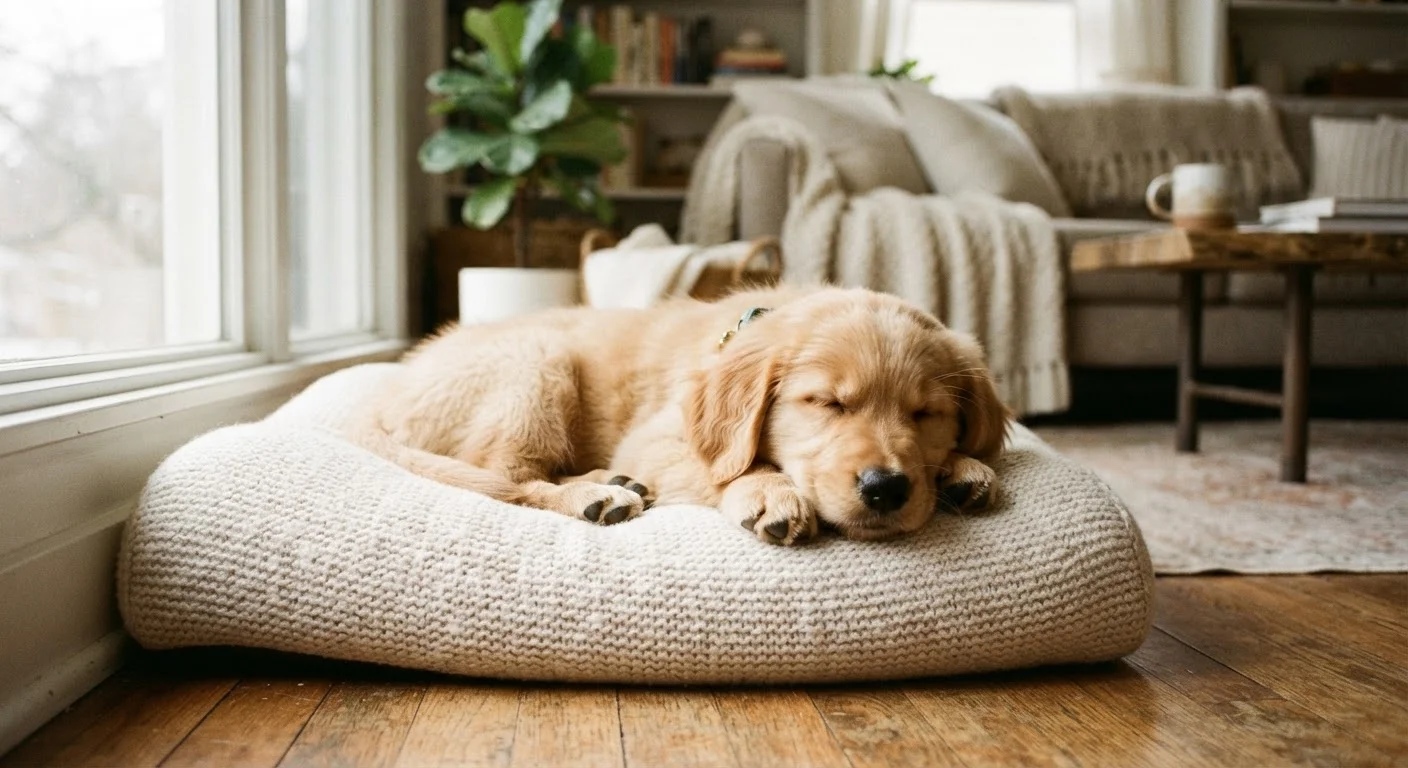
Photo: BridgeWish.com | Reliable Source Of Information editorial
Key Takeaways
- Puppies aren't born knowing how to be alone — independence is a learned skill built through gradual practice.
- Short, positive alone-time sessions repeated consistently are far more effective than long, infrequent absences.
- A calm departure and arrival routine prevents puppies from associating your leaving with distress.
- Signs of true separation anxiety — destructive behavior, non-stop vocalizing, eliminating indoors — warrant professional guidance.
- Environmental enrichment and a designated safe space can significantly reduce solo-time stress.
Why Puppies Struggle With Being Alone
Dogs are inherently social animals. In their earliest weeks, puppies are never truly alone — they're surrounded by littermates and their mother. When a puppy enters a human home, that constant companionship disappears overnight, which can be genuinely disorienting. Many of the behaviors owners interpret as naughtiness — chewing, whining, restlessness — are more accurately understood as a puppy trying to cope with an unfamiliar and uncomfortable situation.
This doesn't mean every puppy will develop separation anxiety. Most, with patient and gradual guidance, learn that being alone is safe and temporary. The key is building that understanding through experience rather than expecting a puppy to intuitively know it. For a deeper look at what true separation anxiety looks like versus typical adjustment stress, see our overview on understanding separation anxiety in pets.
What you will need
Explore more foundational guidance in our Pet Care Basics hub.
Know When to Seek Professional Help
Step-by-Step: Building Calm Independence
The following steps are designed to be introduced progressively. There's no fixed timeline — your puppy's comfort level determines the pace, not a calendar. Move forward only when your puppy is consistently relaxed at the current stage.
Crate or exercise pen
Provides a defined, safe confinement area that helps puppies feel secure during alone time.
Food-stuffed enrichment toy
Keeps the puppy positively occupied and associates alone time with something enjoyable.
Treat pouch
Keeps training treats accessible for quick, well-timed rewards during practice sessions.
White noise machine or calming music
Masks sudden environmental sounds that can startle or stress a resting puppy.
Set Up a Comfortable Safe Space
Before any alone-time training begins, establish a consistent area where your puppy will spend solo time. A crate with a soft liner, an exercise pen, or a small puppy-proofed room all work well. The goal is a space that feels predictable and calm — not punishing. See our guide on setting up a safe space for anxious or new pets for detailed setup tips.
Practice Short Departures Within the Home
Start by leaving the room for just 10–30 seconds while your puppy is calm or mildly occupied. Return before any distress escalates. The goal is to prove, repeatedly, that your absence is brief and always followed by your return. Gradually extend the duration over several days — seconds become minutes only once your puppy is consistently relaxed.
Introduce an Enrichment Toy at Departure
Just before you step away, give your puppy a food-stuffed toy (frozen versions last longer). This creates a positive association: your absence predicts something enjoyable. Over time, the puppy begins to welcome — rather than dread — the moment you leave. Rotate toys to maintain novelty and interest.
Gradually Build Duration Across Days and Weeks
Increase alone-time intervals slowly and non-linearly — some days you'll go backward, and that's normal. A rough progression might look like: 1 minute → 5 minutes → 15 minutes → 30 minutes → 1 hour, with each stage practiced multiple times before advancing. Younger puppies have a lower threshold for stress, so err on the side of shorter sessions. This patience-based approach mirrors the gradual skill-building described in our article on teaching a dog to stay.
Maintain Consistent Daily Routines
Predictability is deeply reassuring for young dogs. Feed, exercise, and practice alone-time sessions at roughly the same times each day. A puppy who knows what to expect is less likely to escalate anxiety when left alone. Mental and physical exercise before a solo period also helps — a well-exercised puppy is more likely to rest quietly.
Keep Departures and Arrivals Low-Key
Avoid Punishing Distress Behaviors
This article provides general pet care education and is not a substitute for guidance from a qualified veterinarian or certified animal behaviorist. If your puppy is showing signs of significant distress, please consult a professional.
The content on this site is for informational purposes only and is not a substitute for professional advice. Always consult a qualified professional for guidance specific to your situation.