
How Enrichment Differs From Exercise—and Why Pets Need Both

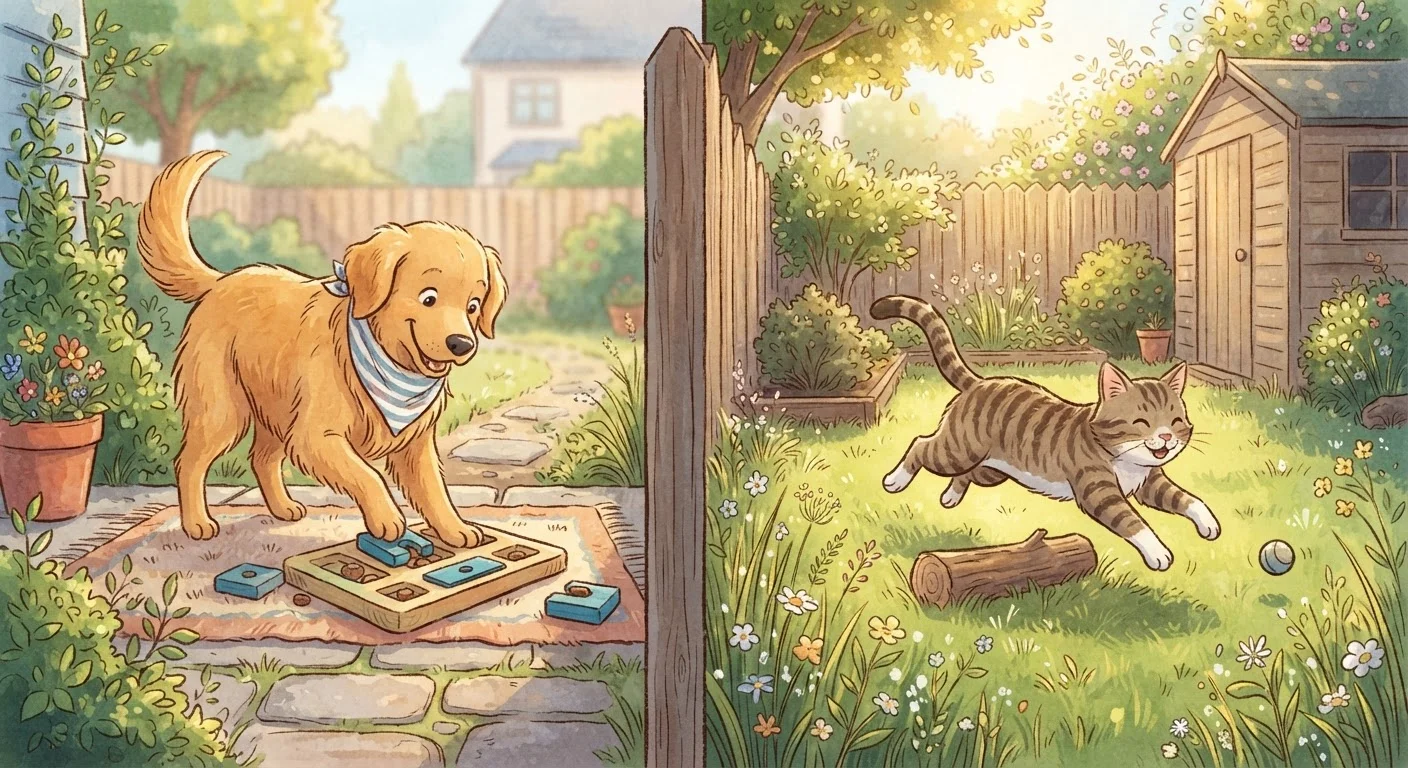
Photo: BridgeWish.com | Reliable Source Of Information editorial
Key Takeaways
- Exercise keeps bodies healthy; enrichment keeps minds engaged — both are essential for a well-balanced pet.
- A physically tired pet can still be anxious or destructive if mental needs go unmet.
- Enrichment taps into species-specific instincts like sniffing, foraging, and problem-solving.
- Simple, low-cost activities — scatter feeding, puzzle toys, new scents — count as enrichment.
- Senior and indoor pets often benefit most from deliberate enrichment routines.
Why the Distinction Matters
Most pet owners instinctively understand exercise: a dog needs walks, a cat needs play sessions, a rabbit needs time to run. Physical activity is visible, measurable, and clearly connected to health. Enrichment is subtler — and more frequently overlooked.
When a pet's mental needs go unmet, the gap shows up as problem behavior. Destructive chewing, incessant barking, repetitive pacing, excessive grooming — these are often signs of a mind with nowhere to go, not evidence of a "bad" animal. Understanding that these two needs are distinct is the first step toward addressing both intentionally.
Mental stimulation and behavior are closely connected: unmet cognitive needs are a common root cause of anxiety and destructive habits in pets of all species.
Enrichment Applies to All Species
What Enrichment Actually Looks Like
Enrichment doesn't require expensive gear or elaborate setups. At its core, it means giving your pet opportunities to do what their species is biologically wired to do.
- Sensory enrichment: New smells, textures, and sounds. A dog sniffing a patch of grass is processing information the way their brain is built to. Introducing novel scents — herbs, cardboard boxes from outside — engages this same drive indoors.
- Cognitive enrichment: Puzzle feeders, hide-and-seek games, training sessions that ask a pet to think and problem-solve. Even a few minutes of teaching a new trick counts.
- Foraging enrichment: Scatter feeding (spreading kibble across a mat or yard), stuffed food toys, and lick mats mimic the way animals naturally seek food. This slows eating and engages the brain simultaneously.
- Social enrichment: Structured interaction with familiar people or compatible animals — not forced socialization, but meaningful, low-pressure connection.
Indoor pets in particular often need deliberate enrichment built into daily routines to compensate for limited environmental variety.
Start Simple and Rotate Often
How Exercise and Enrichment Work Together
Exercise and enrichment aren't competing priorities — they're complementary ones. A sniffy, off-leash walk where a dog is allowed to follow their nose is both physical activity and sensory enrichment. A training game that involves running to targets delivers cognitive engagement alongside movement. The most effective approach layers both into a pet's day rather than treating them as separate line items.
That said, when time is limited, it helps to know which need is most acute. A dog that's been home alone all day may need mental engagement more than a sprint — their body has been resting, but their mind has been unstimulated for hours. Conversely, a high-energy breed after a rainy day indoors may need physical release before they can settle into a calm foraging activity.
Stress in pets often escalates when either physical or mental needs remain chronically unmet. Recognizing which is missing makes it much easier to respond effectively.
5 types
Core enrichment categories recognized by behaviorists
Animal behaviorists commonly classify enrichment as sensory, cognitive, social, feeding/foraging, and physical — each addressing distinct psychological needs.
~30 min
Daily enrichment recommended for most adult dogs
Many veterinary behaviorists suggest a minimum of 30 minutes of dedicated mental stimulation daily for adult dogs, separate from physical exercise.
Adapting Enrichment Across Life Stages
A pet's enrichment needs shift as they age, just as their exercise requirements do. Puppies and kittens have enormous energy for play and novelty but shorter attention spans — brief, varied sessions work better than long structured activities. Adult pets in their prime often have a strong drive for challenge and complexity.
Senior pets present a particularly important case. Physical limitations may reduce what's possible for exercise, but the cognitive need doesn't disappear. Gentle sniff walks, low-effort puzzle feeders, and calm social interaction keep aging minds engaged without overtaxing aging bodies. Caring for a senior pet involves adapting enrichment just as much as adjusting diet or veterinary monitoring.
If you're uncertain what's appropriate for your pet's age or health condition, a veterinarian or certified animal behaviorist is the right resource — especially for pets managing chronic conditions or recovering from injury.
This article is for general informational purposes only and is not a substitute for professional veterinary advice. Always consult a qualified veterinarian for guidance specific to your pet's health and behavior.
Frequently Asked Questions
The content on this site is for informational purposes only and is not a substitute for professional advice. Always consult a qualified professional for guidance specific to your situation.