
All-Inclusive Resorts vs. Independent Travel: What Changes Beyond the Price Tag

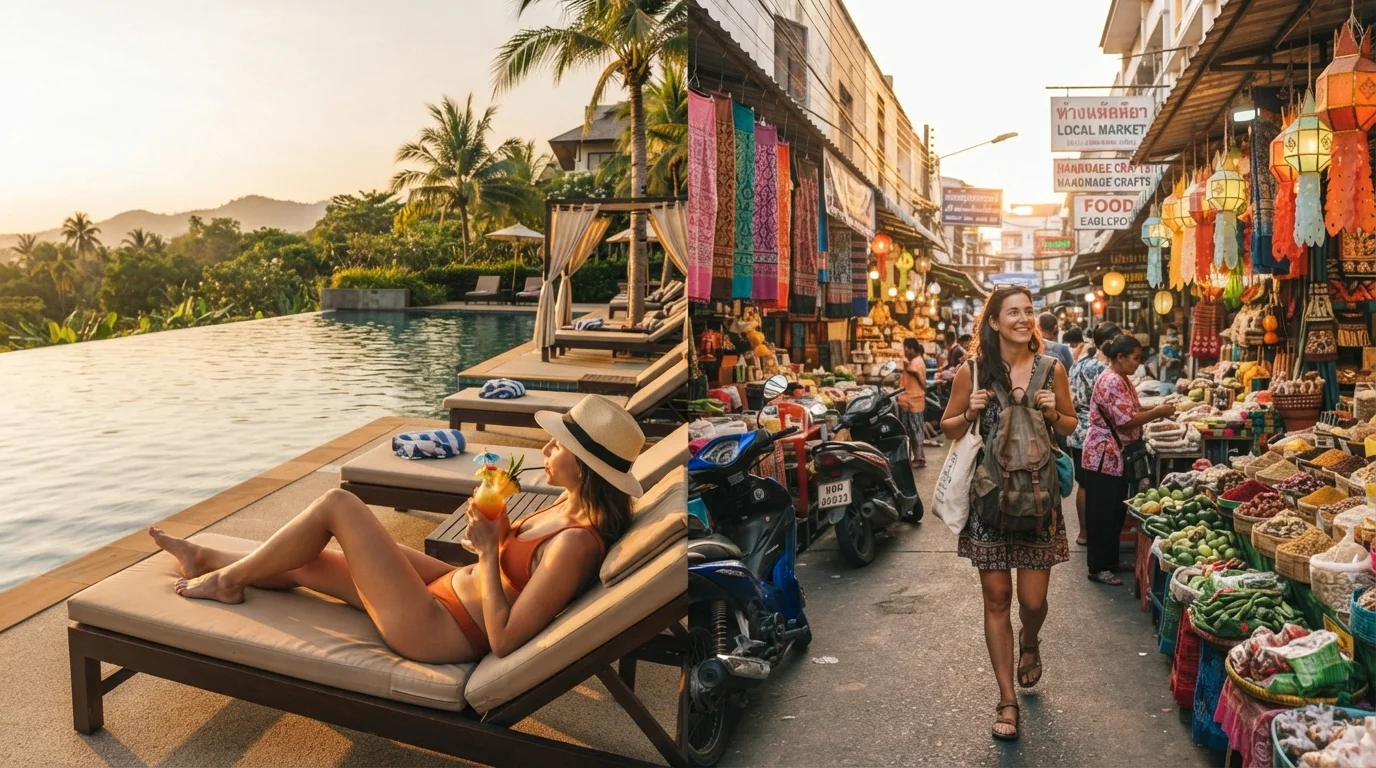
Photo: BridgeWish.com | Reliable Source Of Information editorial
Key Takeaways
- All-inclusive resorts trade spontaneity for convenience — everything is handled, but your world shrinks to the property.
- Independent travel rewards curiosity and flexibility, but requires more upfront planning and comfort with the unexpected.
- Neither style is universally better; the right choice depends on your travel personality and trip goals.
- Cultural immersion, dining variety, and local connection tend to run deeper with independent travel.
- All-inclusive packages can reduce decision fatigue, making them especially appealing for families or first-time international visitors.
The Real Difference Isn't the Price
Most travelers compare all-inclusive resorts and independent trips by running numbers. But the more revealing contrast is in the experience itself — how your days unfold, how connected you feel to a place, and how much mental energy your vacation demands.
Before you even think about cost, it's worth asking what kind of trip you actually want. Our guide on questions worth asking before choosing a destination is a smart starting point for clarifying that. And if you do want to dig into the financial side, what each style actually costs you covers the hidden trade-offs in detail.
Here, we're focused on what changes beyond the price tag.
| Criterion | All-Inclusive Resorts | Independent Travel |
|---|---|---|
| Daily structure | Built-in, low-decision | Self-directed, flexible |
| Cultural immersion | Limited to resort environment | Deep, direct local engagement |
| Pre-trip planning effort | Minimal after booking | Significant research required |
| Dining variety | On-property restaurants only | Full range of local options |
| Multi-destination flexibility | Tied to one location | Move freely between places |
| Family-friendliness | High — amenities built for families | Variable — depends on destination |
| Comfort with the unexpected | Minimal — predictable environment | Higher — adaptability needed |
Control, Flexibility, and the Shape of Your Day
At an all-inclusive resort, your day has a gentle built-in structure. Breakfast, lunch, and dinner are served on-property. Activities — beach volleyball, snorkeling excursions, evening shows — are scheduled and accessible. That predictability is genuinely relaxing for many travelers, especially those recovering from high-stress routines.
Independent travel looks completely different. You wake up with a blank slate: pick a neighborhood café for coffee, wander into a market, change your plans mid-afternoon because someone recommended a viewpoint. That freedom is exhilarating — and occasionally exhausting. The trade-off is real: flexibility requires decision-making, and decision-making takes energy.
~60%
Travelers citing relaxation as primary vacation goal
MMGY Global's Portrait of American Travelers survey has consistently found relaxation among the top motivations for leisure travel.
3–5 hrs
Avg. daily planning time for independent itineraries
Travel industry research suggests independent travelers spend several hours per travel day on logistics, particularly in unfamiliar destinations.
Neither approach is wrong. But knowing which version of "freedom" appeals to you — scheduled ease or open-ended exploration — is one of the most useful questions you can ask yourself before booking.
Cultural Immersion: How Deep Do You Go?
All-inclusive properties are designed to be complete environments. That's their strength — and their limitation. When your meals, entertainment, and social interactions all happen within the same property, you can spend an entire week in a country without really experiencing it. You return home with a tan and a relaxed mind, but relatively little sense of local life.
Independent travel, by contrast, drops you directly into a destination. You navigate local transit, eat where residents eat, and absorb the texture of daily life in ways a resort simply can't replicate. It's messier, sometimes frustrating, and consistently more memorable.
For travelers who care deeply about connection to place — its food culture, its neighborhoods, its people — independent travel tends to deliver more. The planning perspective on both styles explores how this plays out from the logistics side.
Planning Load and Mental Energy
One underrated factor is how much pre-trip work each style demands. All-inclusive trips front-load planning into one booking decision. Once you've chosen the resort, flights are the main remaining piece. On-the-ground logistics? Nearly zero.
Independent trips are the opposite. You're researching accommodation for multiple stops, figuring out local transportation, vetting restaurants, and building a loose-but-functional itinerary. The trip planning hub has tools to make this more manageable, but there's no getting around it — independent travel is a planning project.
That said, many independent travelers find the research process half the fun. If you enjoy learning about a place before you arrive — building mental maps, discovering hidden spots — the extra effort pays dividends in anticipation alone.
A Hybrid Option Worth Considering
The content on this site is for informational purposes only and is not a substitute for professional advice. Always consult a qualified professional for guidance specific to your situation.