
City Trips vs. Nature Getaways: Matching the Destination to Your Energy

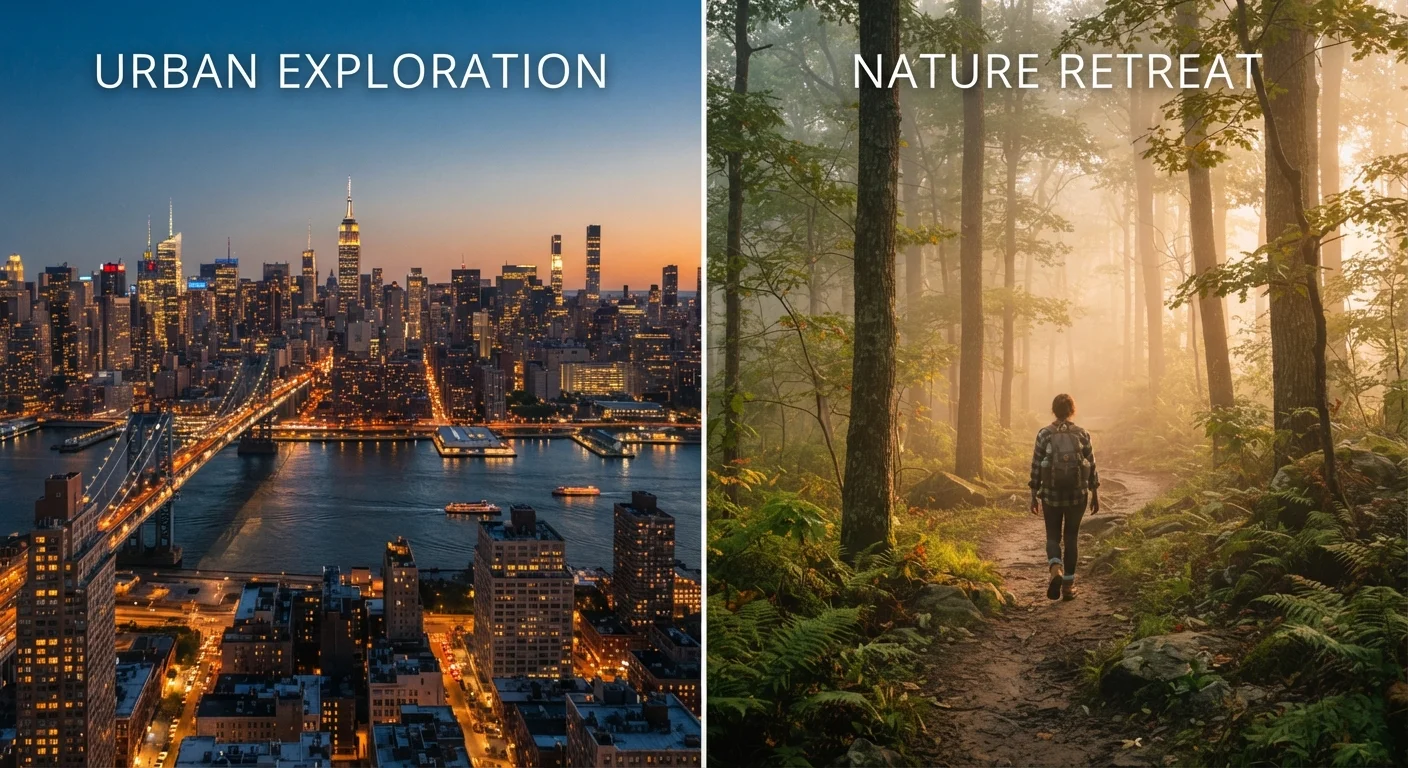
Photo: BridgeWish.com | Reliable Source Of Information editorial
Key Takeaways
- City trips energize through stimulation, culture, and social connection; nature getaways restore through quiet and physical immersion.
- Your current stress level and social battery are the most reliable guides to which trip type you need.
- Logistics, packing, and accommodation style differ significantly between urban and outdoor travel.
- Hybrid destinations — think national park gateway towns — can bridge both experiences if you're undecided.
The Real Question Isn't Where — It's How You Feel Right Now
Most trip-planning advice starts with destinations. But the more useful starting point is your current energy level. Are you running on fumes from back-to-back work weeks, craving silence and open sky? Or are you restless, eager to be swept up in something vivid and new? That honest answer does most of the decision-making for you.
City trips and nature getaways are built around fundamentally different experiences. Urban travel is additive — it piles on stimulation, options, and movement. Outdoor travel tends to be subtractive — it strips away noise and replaces it with space. Neither is inherently better. But choosing the wrong one for your headspace can leave you more depleted than when you left.
If you're still working out your broader travel priorities, these questions worth asking before choosing a destination can help you think through budget, timing, and travel style before committing.
| City Trip | Nature Getaway | |
|---|---|---|
| Primary experience | Stimulation, culture, discovery | Restoration, stillness, physical activity |
| Best energy match | Restless, curious, socially energized | Burned out, overstimulated, craving quiet |
| Typical cost range | Often higher (dining, transport, lodging) | Varies; can be lower with camping/cabins |
| Logistical complexity | Lower — services are nearby | Higher — gear and remote access required |
| Accessibility | Generally more accessible | Variable; depends on terrain and location |
| Trip length sweet spot | 2–5 days works well | 3–7 days to feel the shift |
| Solo travel suitability | Very suitable | Doable with preparation; safety planning needed |
What City Travel Actually Delivers
Urban escapes pack a lot into a short window. World-class food, architecture, museums, nightlife, live music, neighborhoods with distinct personalities — cities reward curiosity and give you more to do than you could possibly fit. That's the point. For travelers who feel most alive when they're discovering something, a city trip can feel genuinely restorative, even if it's also exhausting.
Practically speaking, city travel is often more accessible: reliable public transit, walkable neighborhoods, hotels at every price point, and easy connections to medical care or other services if needed. Solo travelers and those with mobility limitations frequently find urban destinations more manageable for this reason.
Build Downtime Into City Itineraries
The downside is cost — major cities can be expensive quickly — and overscheduling. It's tempting to cram in every museum, restaurant, and landmark. Leaving genuine white space in a city itinerary is a skill worth developing. For a deeper look at matching destination types to what you actually want, see this guide to urban, beach, mountain, and rural travel.
What Nature Travel Actually Delivers
Outdoor getaways — whether that's a national park road trip, a lakeside cabin stay, or a multi-day hiking trail — trade density for depth. There's less to do in the traditional sense, and that's precisely what makes them effective for people who are genuinely overtaxed. Research in environmental psychology consistently points to time in natural settings as supportive of stress recovery and mental restoration, though individual results vary considerably.
Nature travel also tends to be more physically active by default, which suits travelers who want their body involved in the experience. And costs can run lower: camping, renting a cabin with a group, or exploring public lands involves fewer of the incidental urban expenses like dining out for every meal.
The trade-off is logistical complexity. Remote destinations require more planning around gear, safety, cell coverage, and access. Packing strategies for outdoor trips differ substantially from urban ones — the margin for error is smaller when you're hours from the nearest town.
74%
Americans who say nature improves their mood
According to an American Psychological Association survey, the majority of U.S. adults report that spending time in nature has a positive effect on their mental state.
2–3 days
Typical time to feel mentally restored in nature
Research published in the journal Frontiers in Psychology suggests that a multi-day nature immersion can meaningfully reduce cortisol levels compared to short urban breaks.
When Neither Fits Neatly — and What to Do About It
If you genuinely can't decide, or if different people in your travel group need different things, hybrid destinations are worth considering. Gateway towns near national parks, coastal towns with a real downtown, or mountain resort villages offer a mix of structured amenities alongside natural access. You get walkable coffee shops and comfortable beds and a trailhead ten minutes away.
Destination type is also just one variable. Your accommodation choice shapes the experience as much as the location itself — a cabin in a city's metro area feels entirely different from a downtown hotel, even if they're geographically close. Comparing vacation rentals and hotels side by side is a useful next step once you've landed on a destination direction.
Still feeling stuck at the very beginning? This framework for choosing a destination from scratch walks through trip length, climate preference, and budget without overwhelming you with options.
The content on this site is for informational purposes only and is not a substitute for professional advice. Always consult a qualified professional for guidance specific to your situation.