
Fixed vs. Variable Expenses: Understanding the Difference Changes How You Budget

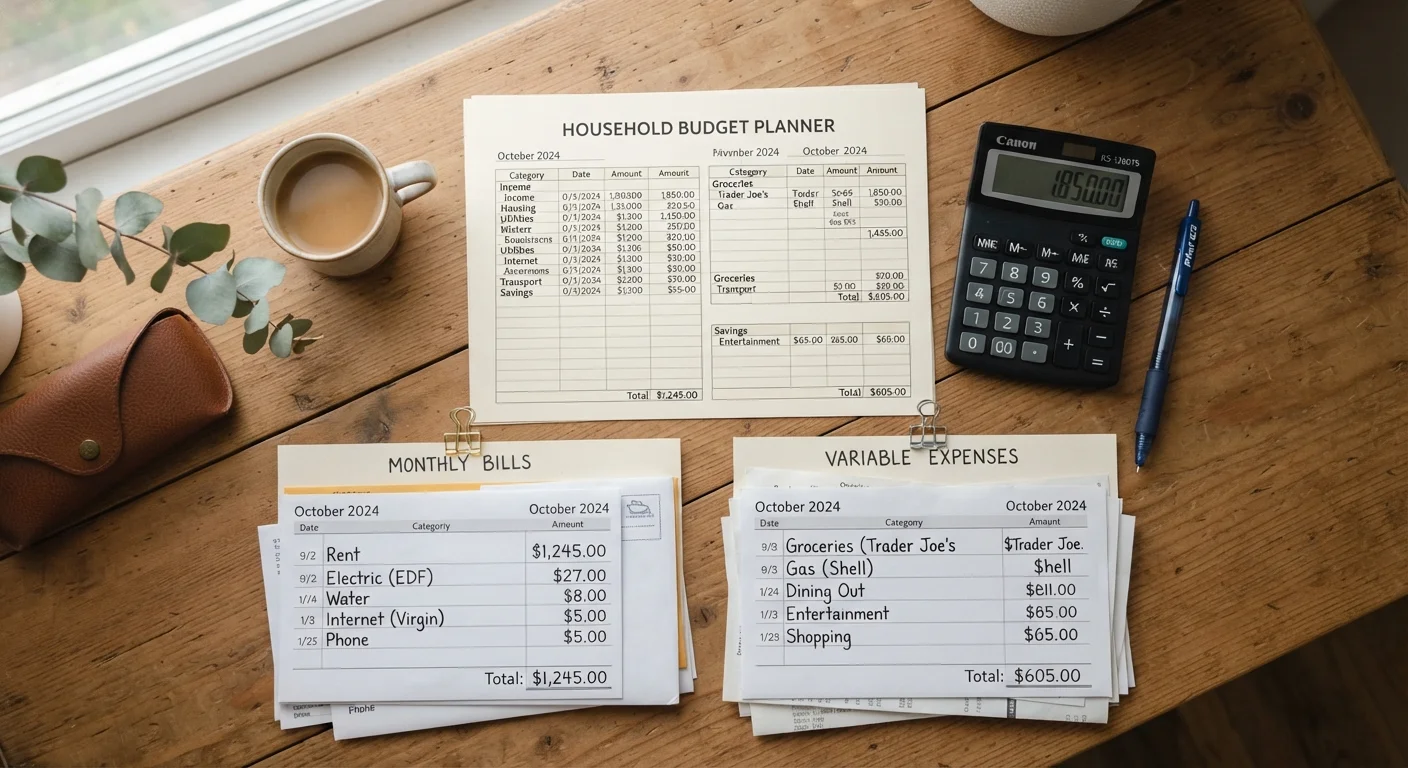
Photo: BridgeWish.com | Reliable Source Of Information editorial
Key Takeaways
- Fixed expenses stay the same each billing cycle; variable expenses fluctuate based on usage or choices.
- Fixed costs form your budget's floor - the minimum you must spend every month.
- Variable expenses are where most people find room to cut spending without major lifestyle changes.
- Some expenses are semi-variable, blending a fixed base charge with usage-dependent costs.
- Understanding this distinction makes it easier to build a realistic, flexible monthly budget.
What Makes an Expense Fixed or Variable?
Every dollar you spend each month falls into one of two fundamental categories. Fixed expenses are costs that don't change - the same amount is due at the same time every billing cycle, regardless of how much you use a service or how your month unfolds. Variable expenses shift depending on your choices, usage, or circumstances.
Common fixed expenses include rent or mortgage payments, car loan installments, insurance premiums, and subscription services with a set monthly fee. These are commitments you've already made - the amount is locked in until the contract or lease changes.
Variable expenses include groceries, gas, dining out, utilities (in most cases), clothing, and entertainment. What you spend in these categories depends largely on behavior: how much you cook at home, how far you drive, how often you eat out.
For a broader look at how these terms fit into the full budgeting vocabulary, see Budget Terms Every Consumer Should Know.
| Criterion | Fixed Expenses | Variable Expenses |
|---|---|---|
| Amount each month | Stays the same | Changes based on use or behavior |
| Predictability | High - easy to plan around | Low to moderate - requires estimation |
| Examples | Rent, car loan, insurance | Groceries, gas, dining out |
| Flexibility to reduce | Low - contract-bound | High - behavior-driven |
| Primary budget role | Sets the spending floor | Where savings opportunities live |
| Impact of income drop | Highest risk - still owed in full | Can be reduced to adapt |
Why the Distinction Matters for Real Budgeting
Most people approach budgeting by looking at total monthly spending without separating what's fixed from what's flexible. That's a problem - because the two types of expenses require completely different strategies.
Your fixed expenses set your budget's floor: the minimum amount you must spend before you have any say in the matter. If your fixed costs consume a large share of your take-home pay, your financial flexibility is limited by design. That's why personal finance guidance generally recommends keeping fixed obligations - housing, car payments, insurance - well within a manageable share of monthly income. Consult a qualified financial adviser to determine what ratio makes sense for your specific situation.
Variable expenses, by contrast, represent your margin. This is where decisions happen. Cutting a streaming service, cooking at home three extra nights a week, or reducing discretionary shopping are all variable expense adjustments - and they add up faster than most people expect.
33%
Average share of income spent on housing
The U.S. Bureau of Labor Statistics Consumer Expenditure Survey consistently shows housing as the largest single fixed expense for American households.
$3,000+
Annual grocery spend for average household
USDA food expenditure data shows wide variation based on household size and food choices - illustrating how variable this common expense truly is.
60-70%
Typical share of budget that is fixed
Many household budgets have a majority of spending locked into fixed obligations before any discretionary decisions are made, according to general personal finance research.
Understanding this framework also helps when unexpected expenses hit. A car repair or medical bill temporarily spikes variable spending. If you've already trimmed variable costs down, you have less cushion. But if your fixed costs are controlled, you have more room to absorb shocks without derailing your entire plan.
To see how this connects to saving toward specific targets, explore short-term vs. long-term savings goals.
Semi-Variable Expenses: The Middle Ground
Not every cost fits neatly into one category. Semi-variable expenses (sometimes called mixed costs) have both a fixed component and a variable one. Your electricity bill, for example, may carry a fixed service charge each month regardless of usage - but the bulk of the bill fluctuates based on how much power you consume. Cell phone plans with a set base rate but variable data overage charges work the same way.
Watch Out for Creeping Fixed Costs
When budgeting for semi-variable expenses, a practical approach is to estimate based on your recent average - check the past three to six months of statements and use a slightly conservative figure as your working number. This prevents both over-budgeting and being caught short.
For a full breakdown of how these categories interact with the rest of your household spending plan, categorizing every dollar you spend walks through a practical classification method.
This article is for general informational and educational purposes only and does not constitute personalized financial advice. Consult a licensed financial professional for guidance specific to your situation.
The content on this site is for informational purposes only and is not a substitute for professional advice. Always consult a qualified professional for guidance specific to your situation.