
The Pros and Cons of Strict Budgeting

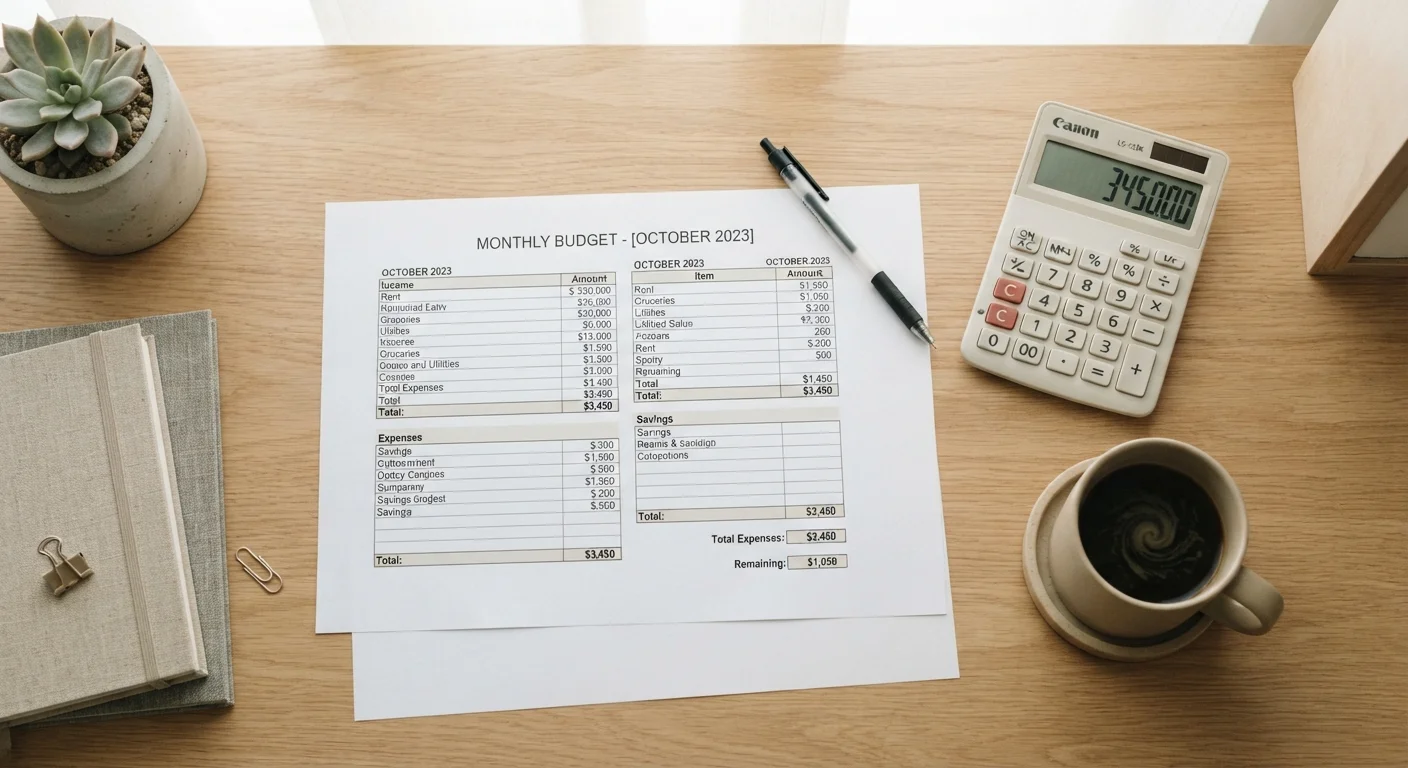
Photo: BridgeWish.com | Reliable Source Of Information editorial
Key Takeaways
- Strict budgeting gives you precise visibility into where every dollar goes each month.
- It can accelerate debt payoff and savings goals faster than looser approaches.
- The time commitment and rigidity can make it unsustainable for many households.
- Unexpected expenses are the biggest challenge to maintaining a strict budget.
- A hybrid approach - strict in some categories, flexible in others - often works better long-term.
Full visibility into every dollar spent
Assigning limits to each category forces you to confront exactly where your money is going, eliminating the vague sense that money is 'just disappearing' each month.
Accelerates debt payoff and savings goals
By eliminating unplanned spending, strict budgets free up more cash for debt payments or savings contributions - often meaningfully more than people expect.
Reduces financial anxiety over time
Knowing your bills are covered and your spending is on track tends to lower day-to-day money stress, even though the initial setup feels demanding.
Builds lasting spending awareness
Even if you eventually loosen the structure, the category-thinking and tracking habits developed during strict budgeting tend to stick, leading to better long-term financial decisions.
Exposes spending patterns you can't see otherwise
Subscription creep, eating out more than you realized, and high utility bills become immediately obvious when every category is tracked against a pre-set limit.
Time-intensive to set up and maintain
Categorizing every transaction and reconciling accounts regularly can take several hours a month - a real barrier for busy households.
Irregular expenses can break the system
Car repairs, medical bills, or seasonal costs don't fit neatly into monthly categories, and without a buffer fund built in, one surprise can throw the whole budget off.
Rigidity can cause budgeting burnout
Constantly saying no to small pleasures or feeling like every purchase requires justification wears on people over time, leading many to abandon the budget entirely.
Doesn't adapt well to variable income
Freelancers, gig workers, or anyone with fluctuating paychecks find fixed monthly category limits difficult to apply consistently without constant revision.
Can create an unhealthy relationship with money
Overly strict adherence - particularly around food or social spending - can generate guilt, shame, or anxiety that does more harm than the budget does good.
What 'Strict Budgeting' Actually Means
A strict budget assigns a specific dollar amount to every spending category before the month begins - groceries, gas, dining out, utilities, entertainment, and so on. Every expense is tracked against those limits, and you adjust your behavior when you hit a ceiling. This is different from a general awareness of your spending or a rough monthly target. Strict budgets leave little room for improvisation.
Common frameworks that lean strict include zero-based budgeting, where every dollar of income is assigned a job, and envelope-style systems where cash or digital allotments cap each category. If you want to compare these approaches in depth, see how zero-based budgeting compares to the 50/30/20 rule.
The key characteristic is intentionality. A strict budget doesn't just record what you spent - it dictates what you're allowed to spend in advance.
The Advantages of a Tight Budget
There's a reason financial counselors frequently recommend detailed budgets to households trying to climb out of debt or build savings from zero. The structure creates accountability that looser approaches simply can't match.
Full visibility into every dollar spent
Assigning limits to each category forces you to confront exactly where your money is going, eliminating the vague sense that money is 'just disappearing' each month.
Accelerates debt payoff and savings goals
By eliminating unplanned spending, strict budgets free up more cash for debt payments or savings contributions - often meaningfully more than people expect.
Reduces financial anxiety over time
Knowing your bills are covered and your spending is on track tends to lower day-to-day money stress, even though the initial setup feels demanding.
Builds lasting spending awareness
Even if you eventually loosen the structure, the category-thinking and tracking habits developed during strict budgeting tend to stick, leading to better long-term financial decisions.
Exposes spending patterns you can't see otherwise
Subscription creep, eating out more than you realized, and high utility bills become immediately obvious when every category is tracked against a pre-set limit.
74%
Americans without a detailed monthly budget
According to Gallup polling, roughly three in four Americans do not maintain a detailed household budget, suggesting the discipline required is a real barrier for most.
~$1,000
Median emergency savings for many US households
Federal Reserve research on household economics has consistently found that a large share of US adults could not cover a $400 unexpected expense without borrowing - highlighting why structured saving matters.
Beyond the numbers, strict budgeting often changes spending habits at a psychological level. When you're tracking every category, small impulsive purchases become visible in a way they aren't when you're just checking your bank balance once a week. That visibility is one of the most practical benefits any budgeting method can offer.
The Drawbacks You Should Know About
Strict budgeting has real costs - in time, flexibility, and sometimes stress. Understanding these tradeoffs upfront helps you decide whether the approach fits your life or whether a lighter framework would serve you better.
Time-intensive to set up and maintain
Categorizing every transaction and reconciling accounts regularly can take several hours a month - a real barrier for busy households.
Irregular expenses can break the system
Car repairs, medical bills, or seasonal costs don't fit neatly into monthly categories, and without a buffer fund built in, one surprise can throw the whole budget off.
Rigidity can cause budgeting burnout
Constantly saying no to small pleasures or feeling like every purchase requires justification wears on people over time, leading many to abandon the budget entirely.
Doesn't adapt well to variable income
Freelancers, gig workers, or anyone with fluctuating paychecks find fixed monthly category limits difficult to apply consistently without constant revision.
Can create an unhealthy relationship with money
Overly strict adherence - particularly around food or social spending - can generate guilt, shame, or anxiety that does more harm than the budget does good.
Strict Budgeting Isn't the Only Path
None of these drawbacks mean strict budgeting is a bad idea - they mean it requires honest self-assessment before you commit. For a foundational look at how to build a budget that won't collapse under pressure, see building a budget that actually reflects your life.
How to Make Strict Budgeting More Sustainable
The households that stay with strict budgeting long-term typically make one important adjustment: they build flexibility into the system. That means including a small "miscellaneous" or "buffer" category, treating occasional overruns as data rather than failure, and reviewing category limits monthly rather than locking them in permanently.
Choosing the right tracking method also matters. A system that feels like a chore will get abandoned. Whether you prefer paper or a digital spreadsheet is worth thinking through - the comparison at paper budget vs. digital spreadsheet covers the real trade-offs. Apps offer automation; paper offers simplicity. Neither is inherently better.
Start with two or three categories where overspending is costing you the most, then expand the system as the habit builds. A strict budget doesn't have to be all-or-nothing from day one.
This article is for general informational and educational purposes only and does not constitute personalized financial advice. For guidance specific to your situation, consult a qualified financial professional.
The content on this site is for informational purposes only and is not a substitute for professional advice. Always consult a qualified professional for guidance specific to your situation.