
Paper Budget vs. Digital Spreadsheet: Which Tracking Method Fits Your Life?

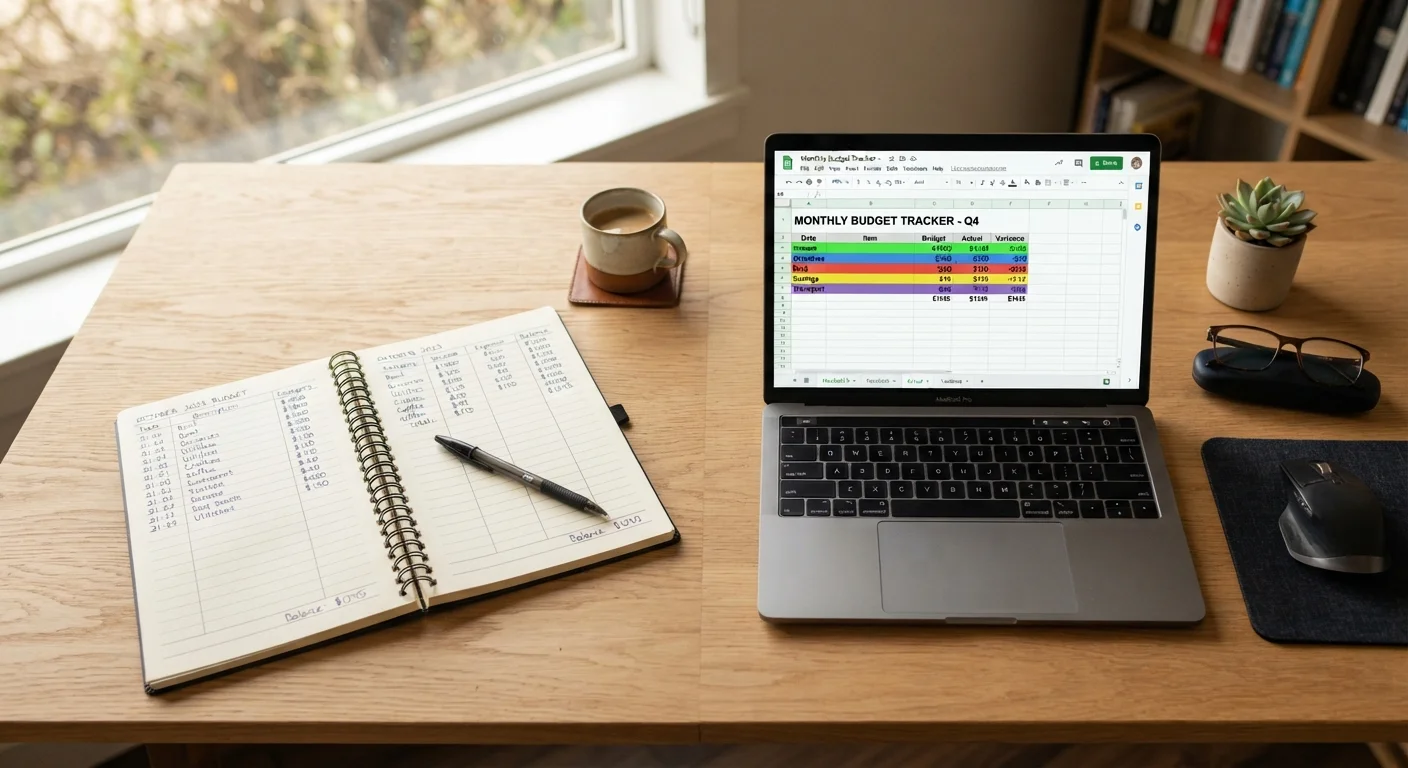
Photo: BridgeWish.com | Reliable Source Of Information editorial
Key Takeaways
- Paper budgets work well for hands-on learners who benefit from physically writing down numbers.
- Digital spreadsheets handle math automatically and scale easily as your finances grow more complex.
- Neither method is objectively superior - the one you'll actually use consistently is the right choice.
- Switching methods is always an option; a hybrid approach works for many households.
Why Format Actually Matters
Most budgeting advice focuses on the numbers - income, expenses, savings rate. Far less attention goes to the format you use to track those numbers. That's a gap worth closing, because the format shapes whether you'll stick with a budget at all.
The choice between pen-and-paper and a digital spreadsheet isn't cosmetic. It affects how often you engage with your budget, how easy it is to catch errors, and whether reviewing your finances feels like a chore or a routine. Before committing to either, it helps to understand what each method actually demands from you. See also why consistent tracking is the foundation of any budget before deciding on a format.
The Case for Paper Budgeting
Writing by hand slows you down - and that's a feature, not a bug. Research in cognitive psychology consistently shows that manual writing reinforces memory and comprehension more than typing the same information. When you write out a grocery total or a utility bill, you're forced to confront it in a way that a cell entry doesn't always replicate.
Paper budgets also have zero technical barriers. No app to learn, no spreadsheet formulas to debug, no account to log into. A notebook and a pen are universally accessible and work when your phone battery is dead or your Wi-Fi is out.
The limitations are real, though. Addition errors creep in. Updating a paper budget after an unplanned expense means erasing or crossing out. Month-to-month comparison requires flipping back through pages. And if you lose the notebook, that data is gone.
Starting Simple Beats Starting Perfect
Paper works especially well as an entry point. If you've never tracked spending before, starting with a simple ruled notebook removes every possible excuse to delay. Practical tracking methods for different lifestyles covers how to keep things simple regardless of which format you choose.
The Case for Digital Spreadsheets
A spreadsheet's core advantage is that math is automatic. Once formulas are in place, every new entry updates your totals, category balances, and variance from your plan instantly. That removes a significant source of error and saves time over a full month of tracking.
Spreadsheets also scale. A single tab can handle a straightforward monthly budget; additional tabs can layer in annual summaries, debt payoff timelines, or irregular expense planning - all linked together. For households with variable income or multiple income streams, that flexibility is genuinely valuable.
The trade-off is setup cost and engagement. A blank spreadsheet requires either building a template from scratch or adapting someone else's - both take effort upfront. And because entry is fast and frictionless, it's easy to log a number without absorbing what it means. If you find yourself entering figures on autopilot, the behavioral advantage of paper may outweigh the technical advantages of software.
| Paper Budget | Digital Spreadsheet | |
|---|---|---|
| Setup time | Minutes - just grab a notebook | Longer - formulas and layout required |
| Math accuracy | Manual - prone to errors | Automatic - formulas eliminate errors |
| Flexibility for changes | Limited - crossing out is messy | High - edit any cell instantly |
| Engagement / mindfulness | High - writing reinforces awareness | Moderate - fast entry can feel passive |
| Month-to-month comparison | Cumbersome - requires manual review | Easy - multiple tabs or charts |
| Accessibility | Works offline, no tech needed | Requires a device and basic software skills |
| Risk of data loss | High - no backup if lost | Low - cloud saves protect data |
For a broader look at how spreadsheets stack up against dedicated budgeting apps, this honest comparison of spreadsheets vs. budgeting apps covers the trade-offs in detail.
Choosing Based on Your Actual Habits
Behavioral research on habit formation points to one consistent finding: the method that gets used regularly outperforms the theoretically superior method that gets abandoned. Ask yourself honest questions before choosing:
- Do you carry a notebook anyway? If yes, paper has a natural home in your routine.
- Are you comfortable with basic spreadsheet formulas? If not, the setup friction can derail early momentum.
- Do you have irregular income or expenses? Spreadsheets handle variable inputs far more cleanly.
- Have you tried budgeting before and quit? The method you abandoned might not have fit your working style - switching formats is worth a genuine trial.
A hybrid approach - paper for daily spending, a spreadsheet for monthly review - works well for many people. The goal isn't purity; it's a consistent, honest accounting of where your money goes. A monthly budget audit checklist can help you build a review habit regardless of which format you use day-to-day.
For more on constructing a budget that holds up to real-life complexity, see building a budget that actually reflects your life.
This article is for general informational and educational purposes only and does not constitute personalized financial advice. Consider consulting a qualified financial professional for guidance specific to your situation.
The content on this site is for informational purposes only and is not a substitute for professional advice. Always consult a qualified professional for guidance specific to your situation.