
Tracking Your Spending: The First Step Toward Financial Clarity

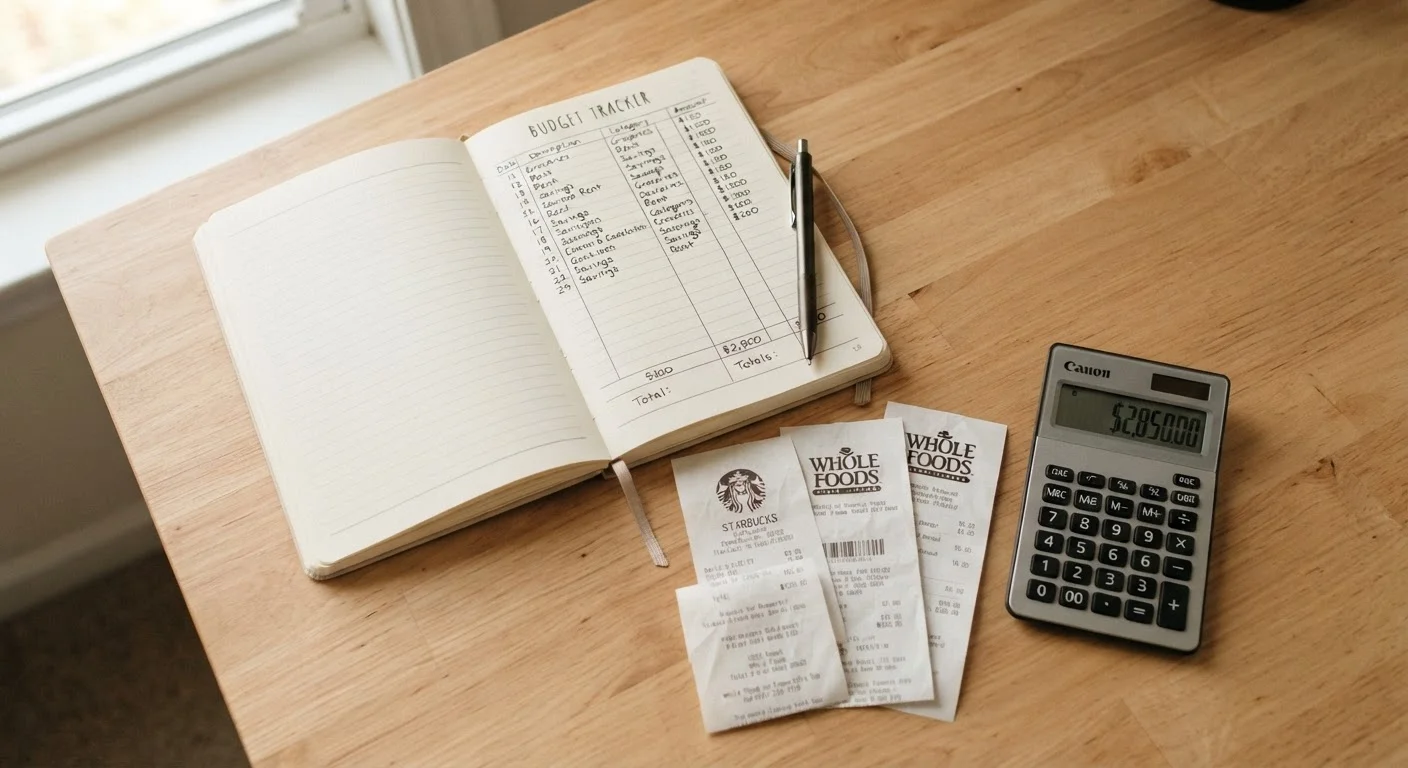
Photo: BridgeWish.com | Reliable Source Of Information editorial
Key Takeaways
- Tracking spending before budgeting reveals where money actually goes versus where you think it goes.
- A consistent 30-day tracking period gives you enough data to spot real patterns.
- You don't need an app - a notebook or spreadsheet works just as well if used consistently.
- Categorizing expenses into fixed and variable groups makes it easier to find adjustable spending.
- Spending data is the raw material for building a realistic, first-time monthly budget.
Why Tracking Comes Before Budgeting
Most people who try to build a budget start by guessing how much they spend on groceries, dining, and entertainment. Those guesses are almost always wrong - often by a wide margin. Research on financial self-perception consistently shows a gap between what households believe they spend and what they actually spend, particularly in discretionary categories like food and subscriptions.
Tracking first closes that gap. It converts an assumption into a fact. Once you have a month of real data, setting spending limits becomes grounded in reality rather than optimism. This matters because a budget built on inaccurate baselines tends to fail quickly, which erodes confidence and makes people less likely to try again.
The connection between financial clarity and broader well-being is also worth noting. Much like the way a journaling practice builds emotional clarity, writing down your spending creates a structured record that makes patterns visible and easier to act on.
What you will need
Ready to build a savings habit once your spending is clear? The Saving & Goals hub covers goal-setting strategies for everyday financial milestones.
This Is Education, Not Personal Financial Advice
What to Do With Your Spending Data
Once you have 30 days of categorized transactions, patterns emerge quickly. You may discover that your actual grocery bill is 40% higher than your mental estimate, or that five separate streaming subscriptions add up to a number you'd never consciously approved. These are not failures - they're findings.
Use Your Bank Statements as a Backup
Focus your attention on variable expenses first. Fixed costs like rent and car payments are largely unchangeable in the short term, but variable spending - particularly in dining, shopping, and entertainment - is where most households have real room to make deliberate choices. Understanding your credit and debt obligations alongside your spending can also reveal whether debt service is consuming a disproportionate share of your income.
One concept worth exploring alongside your tracking results is automating savings before discretionary spending reaches your wallet. What paying yourself first actually looks like in practice explains the mechanics behind this approach.
Don't Skip the Full 30 Days
The steps below lay out a straightforward process. It requires no special tools and no prior experience with personal finance.
Notebook or journal
Manual daily log of every transaction - low-tech, always available, no login required.
Spreadsheet (e.g., Google Sheets or Excel)
Organizes transactions into categories and automatically totals spending by group.
Bank and credit card statements
Provides a complete, verifiable record of transactions to cross-check your manual log.
Expense-tracking app
Automates transaction import and categorization for readers who prefer a digital workflow.
Choose your tracking method
Pick one tool and commit to it for at least 30 days. Options range from a pocket notebook to a spreadsheet to a dedicated app - none is inherently better. What matters is consistency. If you lose your phone regularly, a paper log may be more reliable. If you hate handwriting, a spreadsheet wins.
For a broader comparison of approaches, see practical tracking methods for different lifestyles.
Log every transaction the day it happens
Record the amount, where you spent it, and a brief description (e.g., $4.50 - coffee shop, Tuesday commute). Include cash purchases - these are the most commonly overlooked and the most revealing. Don't wait until the weekend to catch up; memory fades fast.
Categorize your spending
At the end of each week, sort your transactions into two broad groups: fixed expenses (rent, loan payments, insurance - costs that don't change month to month) and variable expenses (groceries, dining, entertainment, gas - costs that fluctuate). Within variable expenses, create subcategories that reflect your actual life rather than a generic template.
Complete a full 30-day cycle before drawing conclusions
Resist the urge to judge or adjust your spending mid-month. The goal of this phase is data collection, not behavior change. Let the full 30 days play out so you capture subscriptions, irregular purchases, and the natural ebb and flow of a real calendar month.
Total each category and compare against your income
Add up every category. Then subtract total spending from your take-home pay. A positive number means you spent less than you earned. A negative number means you overspent. Neither result is a verdict - it's a starting point. Look for the two or three variable categories that account for the largest share of your spending; those are where adjustments will have the most impact.
Use your data to build a real budget
Your 30-day spending record is the raw material for a first monthly budget. You now have actual figures instead of guesses. For a guided walkthrough of what to do with this data next, see building your first monthly budget from scratch.
This article is for general informational and educational purposes only and does not constitute personalized financial advice. Consult a licensed financial professional for guidance tailored to your individual circumstances.
The content on this site is for informational purposes only and is not a substitute for professional advice. Always consult a qualified professional for guidance specific to your situation.