
Credit Myths That Keep People From Improving Their Scores

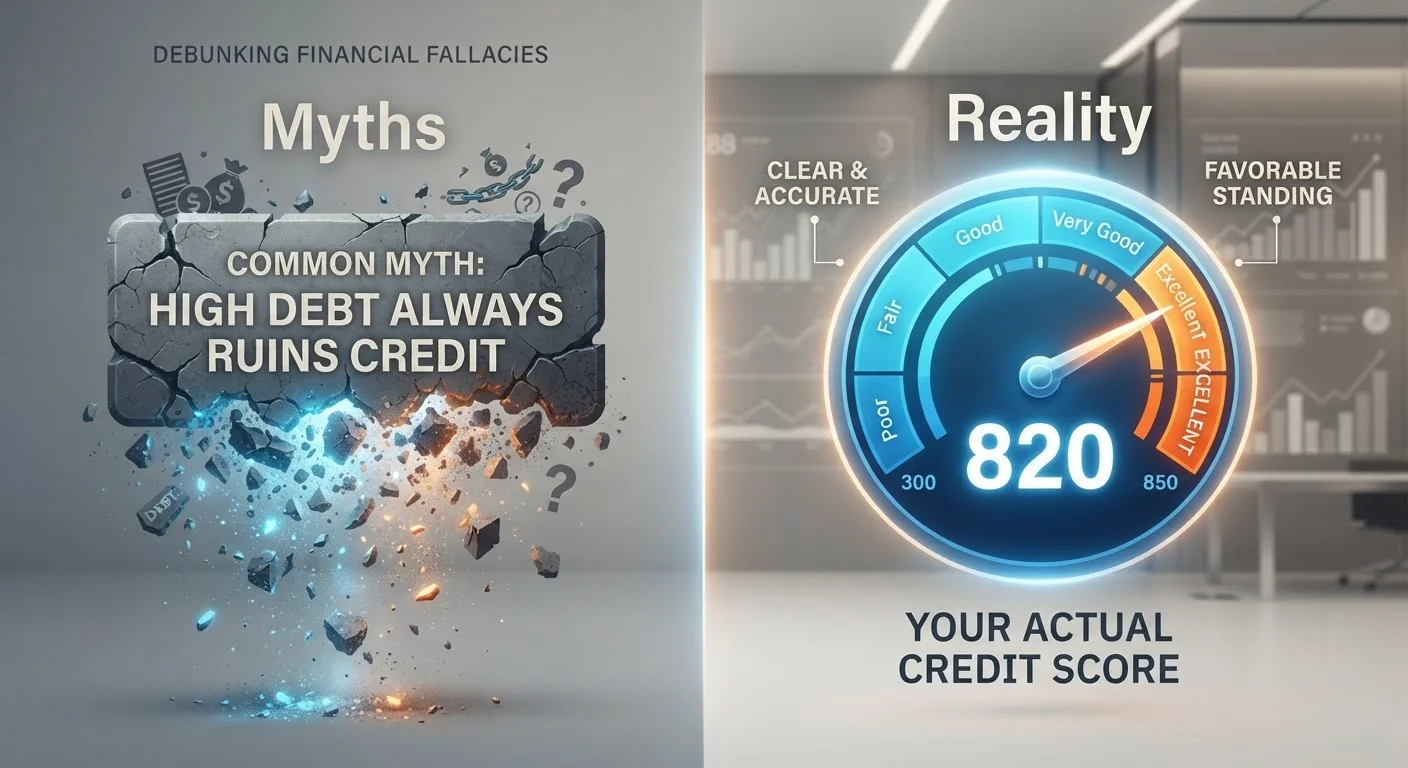
Photo: BridgeWish.com | Reliable Source Of Information editorial
Key Takeaways
- Carrying a credit card balance does not build credit and costs you unnecessary interest.
- Checking your own credit score is a soft inquiry and never lowers your score.
- Closing old accounts can actually hurt your score by reducing available credit history.
- Multiple hard inquiries for the same loan type within a short window typically count as one.
- Income is not a factor in credit scoring models - only borrowing and repayment behavior matters.
Why Credit Myths Are So Persistent
Credit scoring is genuinely complex, and most consumers were never taught how it works. That knowledge gap gets filled by half-truths passed down from family members, misread forum posts, or advice that once contained a grain of truth but lost its context along the way. The result: millions of people make decisions - carrying balances, closing cards, avoiding score checks - that actively work against them.
The five myths below are among the most widely repeated. Each one has a clear, evidence-backed correction. Understanding them is foundational to making smarter moves with your credit. For a broader grounding in how credit and debt interact, see Credit & Debt From the Ground Up.
Myth
You need to carry a balance on your credit card to build credit.
Fact
Paying your balance in full each month builds credit just as effectively - and saves you from paying interest.
This is one of the most costly myths in personal finance. Credit scoring models - including FICO and VantageScore - reward you for using credit and paying it back responsibly. They do not reward you for paying interest. Carrying a balance simply means the card issuer earns interest revenue from you; it does nothing positive for your score. In fact, a lingering balance raises your credit utilization ratio, which is the share of your available revolving credit that you're using. High utilization can lower your score. Paying in full by the due date is the financially optimal move on both fronts.
Myth
Checking your own credit score will lower it.
Fact
Checking your own score or report is a soft inquiry and has zero impact on your credit score.
Credit inquiries fall into two categories. A hard inquiry occurs when a lender pulls your credit to make a lending decision - applying for a mortgage, auto loan, or new credit card. Hard inquiries can cause a modest, temporary dip. A soft inquiry occurs when you check your own report, when an employer runs a background check, or when a card issuer does routine account monitoring. Soft inquiries do not affect your score at all. You can check your reports at AnnualCreditReport.com without any scoring consequence. Regular monitoring is actually recommended - it's the best way to spot errors or signs of identity theft early. See Credit Reports and Credit Scores: Two Different Things for more on how these tools work together.
Myth
Closing a credit card you no longer use will help your score.
Fact
Closing an account typically reduces your available credit and can shorten your credit history, both of which may lower your score.
When you close a credit card, two things happen that can hurt your score. First, your total available revolving credit drops, which immediately increases your utilization ratio if you carry any balances on other cards. Second, if the closed card was one of your older accounts, it may eventually reduce the average age of your credit history - a factor that scoring models weigh. There are valid reasons to close an account, such as a card with a high annual fee you can't justify. But closing a no-fee card simply because you rarely use it rarely benefits your score and often harms it.
Myth
Shopping around for a loan will multiply hard inquiries and tank your score.
Fact
Scoring models are designed to recognize rate-shopping behavior and typically treat multiple inquiries for the same loan type within a short window as a single inquiry.
FICO's scoring model groups mortgage, auto, and student loan inquiries made within a 45-day window into a single inquiry for scoring purposes. Older FICO versions use a shorter 14-day window. VantageScore applies a similar approach. This design exists specifically to encourage consumers to comparison shop without penalty. Getting quotes from several lenders for a mortgage or car loan is a sound financial practice - and the credit system is built to accommodate it. The myth discourages borrowers from finding better terms, which serves no one except lenders who avoid competition.
Myth
A higher income means a higher credit score.
Fact
Income is not a factor in any major credit scoring model. Scores are based entirely on your borrowing and repayment behavior.
FICO and VantageScore do not consider income, employment status, net worth, or assets when calculating your score. The factors that matter are payment history, amounts owed (including utilization), length of credit history, credit mix, and new credit inquiries. A high earner who misses payments and maxes out cards will have a lower score than someone with a modest income who pays on time and keeps utilization low. Lenders do consider income separately - during the underwriting process - but that is distinct from your credit score. Building Credit from Scratch explains how even those with limited income history can establish a solid credit profile.
What These Corrections Mean in Practice
Correcting these myths isn't just about feeling informed - it translates directly into behavior changes that move your score in the right direction. Paying your balance in full each month eliminates interest and keeps your utilization low. Monitoring your own reports regularly helps catch errors early; the dispute process is more straightforward than most people assume. Learn how it works at Disputing an Error on Your Credit Report.
~35%
Share of FICO score tied to payment history
According to FICO, payment history is the single largest factor in its scoring model, underscoring why consistent on-time payments matter more than any other action.
~30%
Share of FICO score tied to amounts owed
FICO reports that amounts owed - including credit utilization - is the second-largest scoring factor, explaining why carrying high balances can meaningfully drag down a score.
Keeping older accounts open, rate-shopping for loans within a short window, and focusing on consistent on-time payments are all moves grounded in how scoring models actually function. For a closer look at how utilization specifically affects your number, see Credit Utilization: The Ratio That Quietly Moves Your Score. And if you're ready to build on accurate fundamentals, Habits That Support a Strong Credit Profile Over Time covers the consistent practices that produce long-term results.
Missing a Payment Has Lasting Consequences
This article is for general informational and educational purposes only and does not constitute personalized financial or credit advice. Consult a qualified financial professional for guidance specific to your situation.
The content on this site is for informational purposes only and is not a substitute for professional advice. Always consult a qualified professional for guidance specific to your situation.