
Credit Utilization: The Ratio That Quietly Moves Your Score

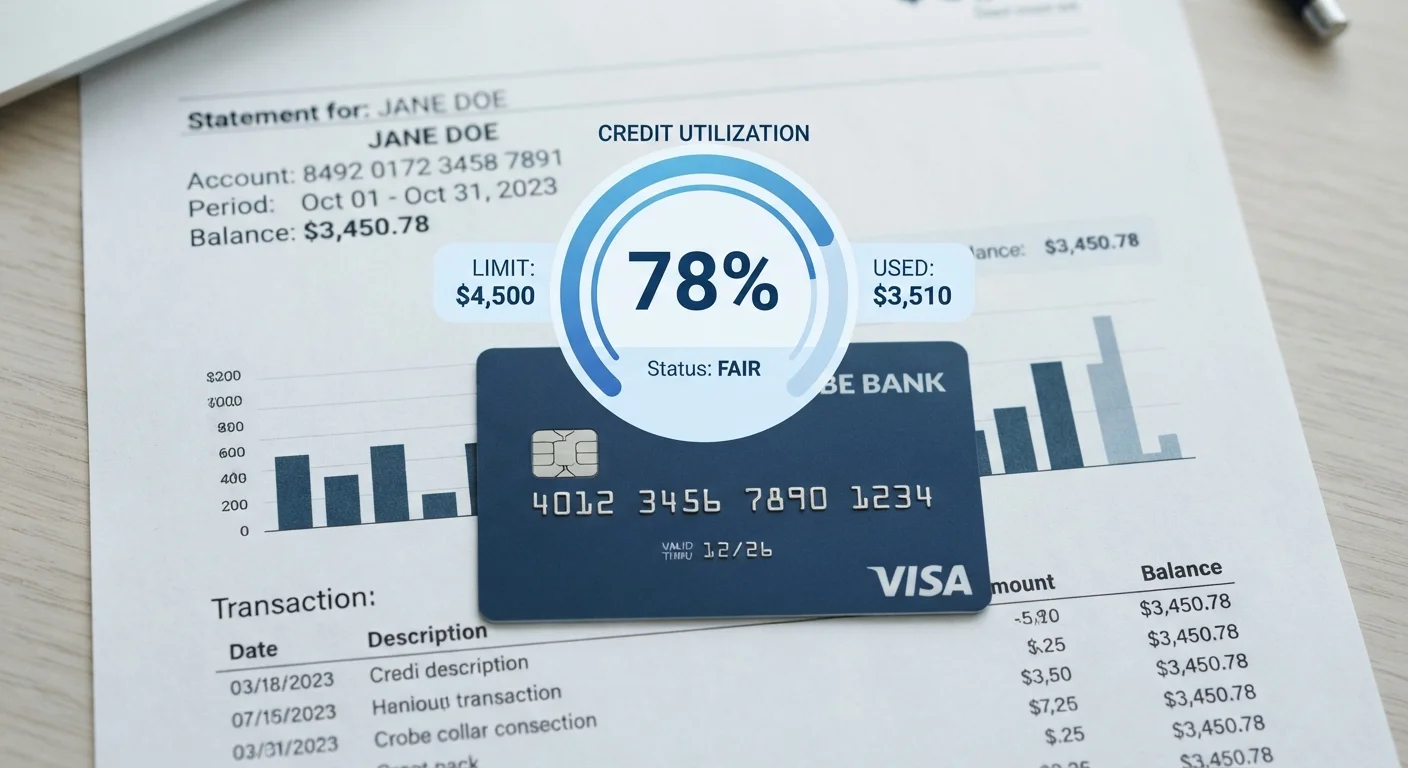
Photo: BridgeWish.com | Reliable Source Of Information editorial
Key Takeaways
- Credit utilization typically accounts for roughly 30% of a FICO score - second only to payment history.
- Keeping utilization below 30% is a widely cited guideline; consumers with top scores often stay under 10%.
- Utilization is recalculated each billing cycle, so it can move your score faster than most other factors.
- Both your overall utilization and the rate on each individual card affect your score.
- Paying down balances or requesting a credit limit increase can lower your utilization ratio.
How Credit Utilization Is Calculated
The math behind utilization is straightforward: divide the balance you owe on revolving accounts by the total credit limit across those accounts, then multiply by 100 to get a percentage.
Example: Three credit cards with limits of $3,000, $4,000, and $3,000 give you a combined limit of $10,000. If your balances are $800, $600, and $100, your total balance is $1,500 - and your utilization rate is 15%.
What's less obvious is that scoring models also evaluate per-card utilization. A card sitting at 85% of its limit is a red flag to scoring algorithms even if your aggregate rate looks fine. This is why spreading balances across multiple cards - rather than concentrating debt on one - can help, as explained in our breakdown of the five scoring factors.
~30%
Share of FICO score tied to credit utilization
FICO's published scoring framework identifies amounts owed - heavily driven by utilization - as the second-largest scoring factor after payment history.
<10%
Utilization rate common among consumers with top scores
Analyses of high-scoring consumers consistently show very low revolving utilization, well below the often-cited 30% guideline.
30%
Widely cited utilization threshold to stay under
Credit educators broadly recommend keeping total utilization below 30% as a baseline for maintaining healthy credit scores.
Why Utilization Moves Your Score So Quickly
Most credit factors are slow-moving. Payment history builds over years. The age of your accounts only grows with time. Credit utilization is different: it's a live snapshot. When your card issuer reports your current balance to the bureaus - typically around your statement closing date - that number directly recalculates your utilization ratio and can shift your score within the same billing cycle.
This responsiveness cuts both ways. Running up balances on a card for a large purchase can temporarily ding your score even if you plan to pay it in full. Conversely, aggressively paying down a card before the statement closes can produce a visible score improvement the following month.
Time Your Payments Strategically
For a broader look at how utilization fits alongside payment history, credit age, and other variables, see what your credit score is actually measuring.
Common Misconceptions About Utilization
One persistent myth is that carrying a small balance each month signals responsible credit use and boosts your score. It doesn't. Scoring models reward low utilization, not the presence of a balance. Paying interest each month costs you money with no credit benefit - a point thoroughly examined in why carrying a balance won't help your credit score.
Another misconception: that utilization is a permanent record. Because it's calculated from a current snapshot rather than a historical average, consumers who reduce their balances see near-immediate improvements. This differs from late payment history, which lingers on your credit report for up to seven years.
Utilization also gets conflated with credit reports themselves. Your utilization ratio is a scoring input derived from the balance and limit data on your report - the two aren't the same thing. Credit reports and credit scores serve different purposes, and understanding the distinction helps you target the right lever when you want to improve your number.
Practical Ways to Manage Your Utilization Ratio
Because utilization responds to current balances and limits, there are two levers available: reduce what you owe, or increase the credit available to you.
- Pay before the statement closes. A mid-cycle payment reduces the balance your issuer reports to the bureaus, lowering your reported utilization even if you use the card regularly.
- Request a credit limit increase. If your issuer raises your limit and your spending stays flat, your utilization ratio drops automatically. Issuers sometimes run a hard inquiry for this, so weigh the short-term impact.
- Distribute balances strategically. If you have multiple cards, avoid maxing out any single one. Keeping each card well under its individual limit protects both per-card and aggregate utilization.
- Be cautious about closing old accounts. Eliminating an account removes that card's limit from your total available credit, which can raise your utilization instantly if you carry balances elsewhere.
This is general financial information - individual results vary, and a licensed financial adviser can help you evaluate strategies based on your specific situation.
Frequently Asked Questions
The content on this site is for informational purposes only and is not a substitute for professional advice. Always consult a qualified professional for guidance specific to your situation.