
What Your Credit Score Is Actually Measuring

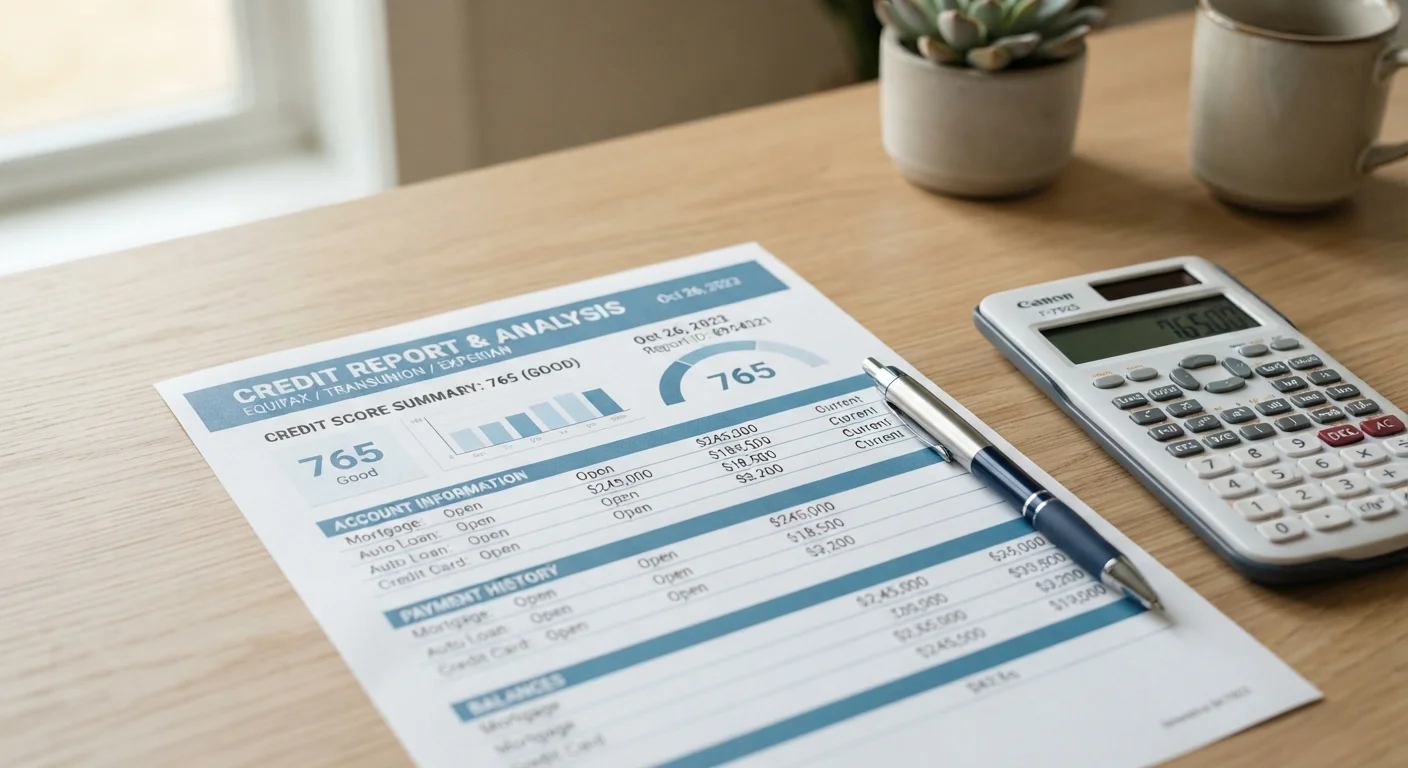
Photo: BridgeWish.com | Reliable Source Of Information editorial
Key Takeaways
- Your credit score is a risk signal, not a measure of wealth or income.
- Payment history is the single heaviest factor, accounting for roughly 35% of your FICO Score.
- Credit utilization - how much of your available credit you use - is the second most influential factor.
- Closing old accounts or applying for several new cards in a short period can lower your score.
- Soft inquiries (like checking your own score) do not affect your number; hard inquiries do.
What a Credit Score Is Actually Trying to Answer
A credit score is not a judgment of your character or a measure of your bank balance. It answers one narrow question for lenders: how likely are you to repay a debt on time? That's it. Everything else - income, savings, net worth - falls outside the score's scope entirely.
The number is generated by statistical models that analyze your credit file, which is the record of your borrowing history held by the three major credit bureaus: Equifax, Experian, and TransUnion. Most US lenders rely on FICO Scores, though VantageScore is also common. Both models translate your credit file into a number between 300 and 850.
Understanding what feeds that number is the first step toward managing it intentionally. As a broader look at credit score mechanics shows, the score is built from five distinct categories of behavior, each weighted differently.
The Five Factors - and How Much Each One Counts
The FICO model publicly discloses the approximate weight of each category. That transparency makes it one of the most actionable scoring frameworks available to consumers.
35%
Weight of payment history in FICO Score
According to FICO's publicly disclosed scoring model breakdown, payment history is the single largest factor in your score.
30%
Weight of credit utilization in FICO Score
FICO discloses that amounts owed - primarily your revolving credit utilization - is the second most influential scoring category.
~200M
Americans with a FICO Score
FICO has reported that its scores cover the vast majority of credit-active US consumers, making it the dominant model in US lending decisions.
- Payment history (≈35%): Whether you pay on time. A single missed payment - especially one 30 days or more late - can meaningfully drop your score. This factor carries more weight than anything else.
- Amounts owed / credit utilization (≈30%): How much of your available revolving credit you're using. Using more than 30% of your total credit limit is generally seen as a risk signal. Lower utilization typically works in your favor.
- Length of credit history (≈15%): How long your accounts have been open. Models look at the age of your oldest account, your newest account, and the average age across all accounts. Closing old cards can shorten this average and hurt your score.
- Credit mix (≈10%): Whether you have different types of credit - installment loans (like a car loan or mortgage) and revolving credit (like credit cards). A mix signals you can manage different debt structures.
- New credit / inquiries (≈10%): How recently you've applied for new credit. Each hard inquiry can cause a small, temporary dip. Multiple applications in a short window can amplify this effect.
For a deeper dive into how each factor moves your number, see this breakdown of the five scoring factors.
Monitor Your Credit File, Not Just the Score
Common Misconceptions That Cost People Points
Several widely held beliefs about credit scores are simply wrong - and acting on them can backfire.
Myth: Carrying a small balance helps your score. Paying your full balance each month does not hurt your score. In fact, maintaining a low or zero balance on revolving accounts keeps your utilization rate down, which generally helps.
Myth: Closing unused cards cleans up your credit. Closing an old card reduces your total available credit (raising your utilization rate) and may shorten your average credit age. Both effects can lower your score.
Myth: Your income or savings are factored in. Standard credit scoring models do not include income, assets, or employment status. A high earner with a history of missed payments can have a lower score than someone with a modest income who has never missed a payment.
Scores Vary Between Bureaus
The practical implication: most score improvements come from behavior changes over time - consistent on-time payments and keeping balances low - rather than quick fixes.
Frequently Asked Questions
The content on this site is for informational purposes only and is not a substitute for professional advice. Always consult a qualified professional for guidance specific to your situation.