
Credit Scores Decoded: What the Numbers Actually Mean

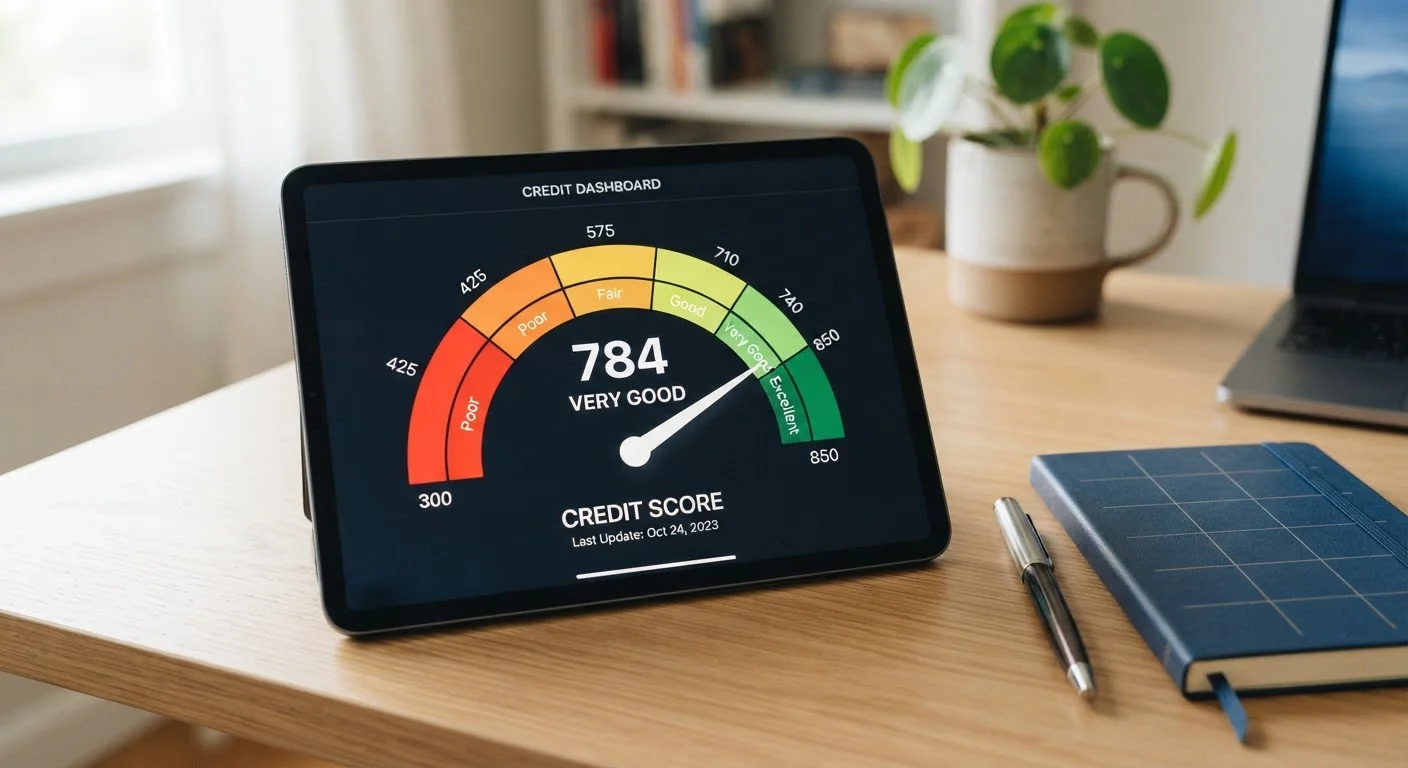
Photo: BridgeWish.com | Reliable Source Of Information editorial
Key Takeaways
- Credit scores run from 300 to 850; higher numbers signal lower lending risk.
- Scores are calculated from information in your credit report, not your income or assets.
- Multiple scoring models exist; lenders may use different versions depending on the loan type.
- A score alone doesn't determine approval-lenders also consider income and debt load.
- Checking your own score doesn't hurt it; only hard inquiries from lenders do.
What a Credit Score Actually Is
A credit score is a snapshot, translated into a single number, of how you've handled credit over time. It's produced by a mathematical model that reads the data in your credit report-payment history, account balances, account age, and more-and converts it into a risk estimate lenders can act on in seconds.
The 300-850 scale is the most common in the US, with higher numbers indicating a borrower who is statistically less likely to default. The score doesn't reflect your wealth, income, or savings balance. Two people can earn identical salaries yet carry very different scores based on their borrowing and repayment behavior.
To understand what feeds into that number, see our breakdown of the five factors that shape your credit score. And if you're unsure how a score differs from a credit report, this explainer on credit reports vs. credit scores clarifies the distinction.
FICO® vs. VantageScore: What's the Difference?
How the Score Range Breaks Down
Under the standard FICO® framework, scores fall into five general tiers:
- 300-579 - Poor: Borrowers in this range may struggle to qualify for most credit products, or face very high interest rates and security deposits.
- 580-669 - Fair: Approval is possible but terms are often less favorable. This range is sometimes called 'subprime.'
- 670-739 - Good: The majority of US consumers fall here. Most lenders view this as an acceptable risk level.
- 740-799 - Very Good: Borrowers typically qualify for competitive rates on mortgages, auto loans, and credit cards.
- 800-850 - Exceptional: The strongest borrower profile; lenders usually offer their most favorable terms.
For a closer look at how each tier affects real-world loan terms and deposits, the credit score ranges guide walks through the practical implications of each band.
716
Average US FICO® Score
According to FICO's published data, the average American credit score has hovered in the 'good' range in recent years, though individual scores vary widely.
~90%
Lenders using FICO® Scores
FICO reports that its scores are used in the vast majority of US lending decisions, making it the dominant scoring model in consumer credit.
7 years
Duration most negative items remain on report
Under the Fair Credit Reporting Act (FCRA), most derogatory marks-such as late payments or collections-must be removed after seven years.
Why Lenders Use Scores-and Their Limits
From a lender's perspective, reviewing years of financial records for every applicant is impractical. A credit score compresses that complexity into a standardized, quickly comparable number. Research by FICO and independent economists has consistently shown that higher scores correlate with lower default rates across large borrower populations-which is why the tool is so widely adopted.
That said, a score is not the whole picture. Most lenders also evaluate your debt-to-income ratio, employment stability, and the specific type of credit you're applying for. A person with a 720 score and a high debt load may be viewed less favorably than someone with a 700 score and strong cash flow. Scores are inputs, not verdicts.
“A credit score is simply a prediction of how likely you are to pay back a loan on time. It's built on your past behavior with credit, which makes understanding that history the most powerful tool a consumer has.”
— Consumer Financial Protection Bureau, US federal agency responsible for consumer financial education and protection
It's also worth noting that lenders often use industry-specific scoring models. A mortgage lender may pull a different FICO® version than an auto lender, which can produce slightly different numbers from the same underlying credit data.
How to Read Your Own Score Accurately
Because multiple scoring models exist, the number you see on a free credit monitoring app may not match what a specific lender pulls. That's normal. What matters more than chasing an exact figure is understanding the direction your score is moving and the factors influencing it.
Your credit report-available free at AnnualCreditReport.com from each of the three major bureaus-is the raw source data behind every score. Errors in that report directly affect your score. Reading your credit report carefully is the most reliable way to verify what lenders actually see.
Get Your Free Credit Reports Annually
One commonly misunderstood factor is credit utilization-how much of your available revolving credit you're using. It's one of the highest-weighted variables in most scoring models. Our guide to credit utilization explains how it's calculated and what ratio tends to support stronger scores.
This article is for general informational and educational purposes only and does not constitute personalized financial or credit advice. Consult a qualified financial professional for guidance specific to your situation.
Frequently Asked Questions
The content on this site is for informational purposes only and is not a substitute for professional advice. Always consult a qualified professional for guidance specific to your situation.