
Reading Your Credit Report Without Getting Lost

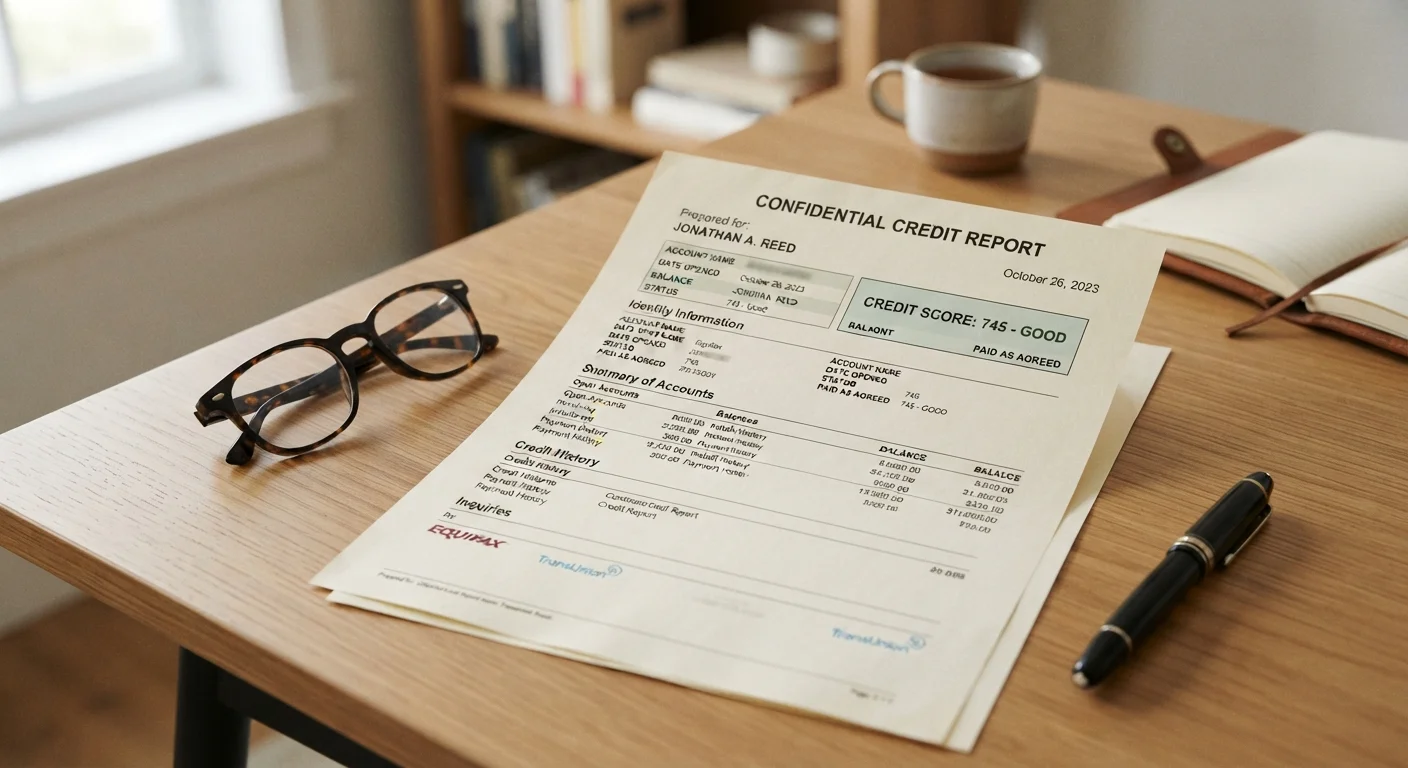
Photo: BridgeWish.com | Reliable Source Of Information editorial
Key Takeaways
- A credit report has five main sections: personal information, account history, public records, collections, and inquiries.
- Errors on credit reports are more common than many consumers realize - reviewing regularly is essential.
- Negative items like late payments typically remain on your report for seven years; bankruptcies may stay up to ten.
- Hard inquiries affect your score; soft inquiries do not - and both appear as separate sections on your report.
- You can dispute inaccurate information directly with each credit bureau at no cost.
Why Your Credit Report Deserves a Close Read
Your credit report is a factual record of how you've handled borrowed money - and lenders, landlords, and sometimes employers use it to evaluate you. Yet most people only glance at a report when something goes wrong. A credit report is dense with codes, dates, and creditor names, and a single error in the wrong field can drag down your credit score or cost you a loan approval.
It's worth understanding the difference upfront: your credit report is the raw data file; your credit score is a number calculated from that data. Credit reports and credit scores serve different purposes, and knowing how to read one directly puts you in control of the other. For a breakdown of what your score actually reflects, see credit scores decoded.
The walkthrough below takes you through each section of a standard report - what it contains, what the terminology means, and what to flag.
What you will need
AnnualCreditReport.com
The federally authorized site where US consumers can access free credit reports from all three major bureaus.
Printed or digital copy of your credit report
Your primary document to review section by section during this process.
Notepad or spreadsheet
Used to log any errors, unfamiliar accounts, or items requiring follow-up.
Section-by-Section Walkthrough
Follow these steps in order. A standard credit report from any of the three major bureaus - Equifax, Experian, or TransUnion - follows roughly the same structure, though formatting and label names may vary slightly between them.
Free Reports Only Through Official Channels
Locate and review the Personal Information section
The first section of your credit report lists identifying details: your name, current and previous addresses, date of birth, Social Security number (partially masked), and current or former employers. This data is sourced from creditors - not from government records - so minor variations in name spelling or old addresses are common and not automatically a problem.
What to look for: any address you don't recognize, a name that isn't a variant of yours, or an employer you've never worked for. These can be signs of a data mix-up or identity theft.
Work through the Accounts (Trade Lines) section
This is the largest and most important section. Every credit card, mortgage, auto loan, student loan, and personal loan you have - or have had - appears here as a trade line. For each account you'll see:
- Creditor name and account number (often partially masked)
- Account type (revolving, installment, mortgage)
- Date opened and date of last activity
- Credit limit or original loan amount
- Current balance
- Payment history - often shown as a month-by-month grid using codes (OK, 30, 60, 90, representing days late)
- Account status (open, closed, charged-off, transferred)
Scan for any account you don't recognize, any late-payment codes that don't match your records, and any balance discrepancies. This section most directly influences your credit score.
Check the Public Records section
Public records historically included bankruptcies, civil judgments, and tax liens. As of a change made by the three major bureaus, civil judgments and tax liens are no longer included in consumer credit reports from Equifax, Experian, and TransUnion. Today, bankruptcies are the primary public record you'll find here.
A Chapter 7 bankruptcy can remain on your report for up to 10 years from the filing date; a Chapter 13 bankruptcy typically stays for 7 years. Verify the filing date and chapter type are accurate if a bankruptcy appears.
Review the Collections section
When a creditor gives up collecting a debt, it often sells the account to a collections agency, which then appears separately on your report. Each collection entry shows the original creditor, the collection agency, the amount, and the date the account was first reported as delinquent (the original delinquency date).
That original delinquency date - not the date the account was sold to collections - determines the seven-year clock for removal. Watch for the same debt appearing twice: once as a charged-off trade line and again as a collection. While technically allowed, verify both entries reflect the same single debt to avoid inflated negative impact.
Examine the Inquiries section
Your report lists two types of inquiries. Hard inquiries occur when you apply for credit and a lender pulls your report. These can modestly affect your score and remain visible for two years. Soft inquiries - from employers, insurers, or your own checks - do not affect your score and are not seen by lenders reviewing your report.
Look for hard inquiries you don't recognize. An unfamiliar hard inquiry could mean someone applied for credit in your name without authorization. For a deeper explanation of how these two inquiry types differ, see hard vs. soft inquiries explained.
Document any errors and initiate disputes
After completing your review, list every item that appears inaccurate, unfamiliar, or outdated. For each one, note the creditor name, account number, and the specific error. Gather any supporting documentation (statements, payment receipts) before filing.
File disputes directly with the bureau reporting the error - you may need to dispute with more than one if the error appears across multiple reports. Submit disputes through each bureau's official online portal, by certified mail, or by phone. Once you're confident your report is accurate, use it alongside your annual credit report audit checklist to build a consistent review habit.
Review All Three Bureaus Together
Disputing Errors Is Your Legal Right
This article is for general informational and educational purposes only and does not constitute personalized financial, legal, or credit advice. Consult a qualified financial professional for guidance specific to your situation.
The content on this site is for informational purposes only and is not a substitute for professional advice. Always consult a qualified professional for guidance specific to your situation.