
The Snowball and Avalanche Methods: Two Paths Out of Debt

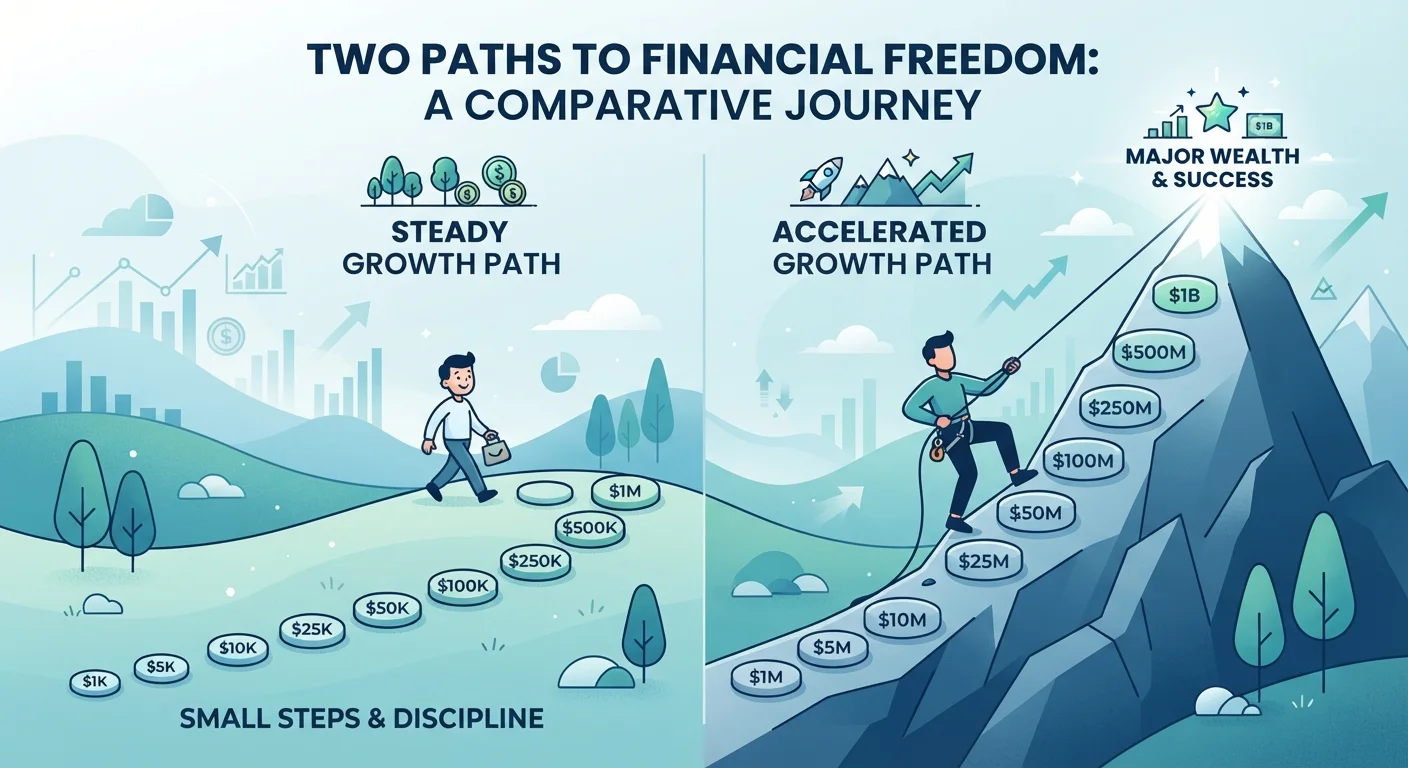
Photo: BridgeWish.com | Reliable Source Of Information editorial
Key Takeaways
- The snowball method targets your smallest balance first, building psychological momentum with quick wins.
- The avalanche method targets your highest interest rate first, minimizing total interest paid over time.
- Neither method requires extra income - both work by redirecting freed-up minimum payments toward the next debt.
- The avalanche typically costs less overall, but the snowball often produces better real-world follow-through.
- Your best strategy is the one you will actually stick with month after month.
How Each Method Actually Works
Both strategies share the same core mechanic: you pay minimum amounts on every debt, then direct any extra money toward one specific target debt. The difference is how you choose that target.
Debt Snowball: You rank your debts from smallest balance to largest, regardless of interest rate. Every available dollar beyond minimums goes toward the smallest balance until it's gone. When it's paid off, you roll that payment into the next-smallest debt - the "snowball" grows as it picks up speed. The approach was popularized by personal finance educator Dave Ramsey, though the core concept predates him.
Debt Avalanche: You rank your debts from highest annual percentage rate (APR) to lowest. Extra payments attack the most expensive debt first. Once that's eliminated, the freed payment cascades down to the next-highest-rate balance. Because high-interest debt compounds fastest, neutralizing it early reduces the total amount you repay over time.
To understand the basics of how interest and debt balances interact, see Credit & Debt From the Ground Up.
| Criterion | Debt Snowball | Debt Avalanche |
|---|---|---|
| Repayment order | Smallest balance first | Highest interest rate first |
| Total interest paid | Typically more | Typically less |
| Time to first payoff | Faster (small balances close quickly) | Slower if high-rate debt is large |
| Psychological reward | High - frequent account closures | Lower early on, stronger long-term math |
| Best for | Motivation-driven borrowers | Analytically disciplined borrowers |
| Complexity | Simple - rank by balance | Simple - rank by APR |
The Math vs. The Psychology
In a controlled comparison with identical debts, the avalanche method almost always produces a lower total interest cost. The gap depends on the spread between your rates and balances - sometimes it's modest, sometimes it's substantial.
~$1,000+
Potential interest savings with avalanche method
Estimated difference in total interest on a typical multi-card debt scenario where rate spreads are significant; actual savings vary by balance size and APR gap.
77%
Americans carrying some form of debt
According to Experian's 2023 Consumer Credit Review, a large majority of U.S. adults carry at least one form of consumer debt.
$6,500+
Average U.S. credit card balance
Experian's 2023 data put the average American's credit card balance above $6,500, underscoring why interest-rate strategy matters.
But personal finance research consistently highlights a gap between optimal strategy and actual behavior. A widely cited study by Northwestern Kellogg researchers found that consumers who focused on paying off individual accounts - rather than reducing total balances - were more likely to eliminate their debt entirely. The snowball's early payoffs trigger that account-closure effect repeatedly.
The practical implication: a slightly suboptimal strategy you execute flawlessly can outperform a mathematically superior one you abandon six months in. If you've hit walls before, understanding what derails debt payoff plans can help you choose the method better suited to your track record.
Picking Your Method - and Making It Work
Before choosing, take stock of your debts: list every balance and its corresponding APR. If your highest-rate debt also happens to be your smallest balance, both methods point to the same starting point - easy call. If your highest-rate debt is also your largest, the avalanche will demand patience before you see a single account close.
A few practical considerations:
- Minimum payments still matter. Both methods require you to maintain minimums on every account. Missing minimums triggers fees and credit score damage regardless of which strategy you follow.
- Your budget has to support extra payments. Neither method works without a surplus. Budgeting Basics offers straightforward frameworks for finding that extra room in your monthly cash flow.
- Windfalls accelerate either approach. Tax refunds, bonuses, or side income can be applied to your current target debt for a significant jump forward.
- Hybrid approaches exist. Some people start with the snowball to clear one or two small accounts quickly, then switch to avalanche for the remaining higher-rate balances. Managing Multiple Debts: Avalanche, Snowball, and Other Payoff Frameworks explores this and other combinations in depth.
When Neither Method Is Enough Alone
If your debt load feels unmanageable regardless of strategy, options like consolidation or professional counseling may be worth exploring first. Debt Consolidation: What It Does, What It Doesn't, and When It Makes Sense gives an honest look at when that route is and isn't appropriate.
This article is for general informational and educational purposes only and does not constitute personalized financial advice. Consult a qualified financial professional for guidance specific to your situation.
The content on this site is for informational purposes only and is not a substitute for professional advice. Always consult a qualified professional for guidance specific to your situation.