
The 50/30/20 Rule: A Framework for Budgeting and Saving

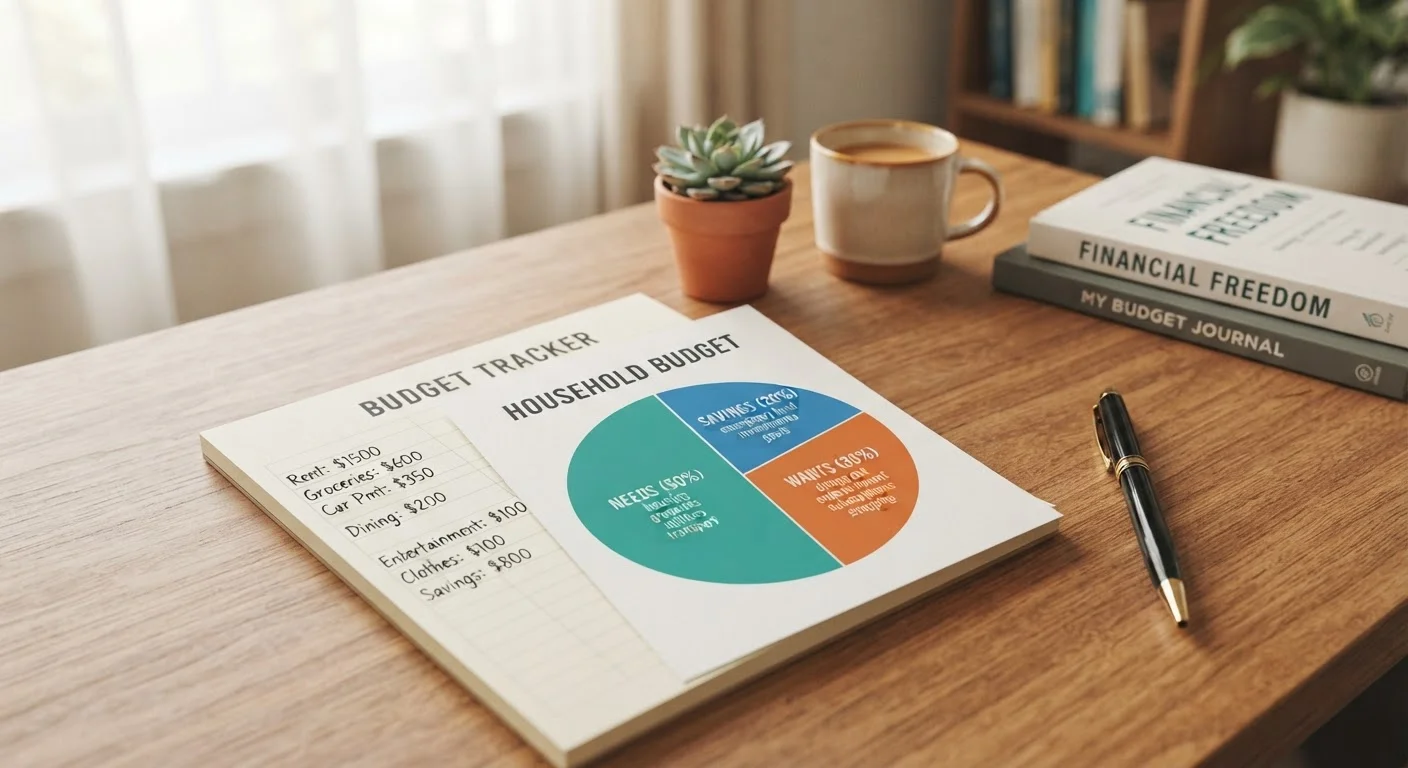
Photo: BridgeWish.com | Reliable Source Of Information editorial
Key Takeaways
- The 50/30/20 rule splits after-tax income into needs (50%), wants (30%), and savings or debt (20%).
- It is a starting framework, not a rigid formula — real households often need to adjust the percentages.
- The 20% savings category can cover emergency funds, retirement contributions, and debt beyond minimums.
- High housing costs in many US cities can make the 50% needs target difficult to hit.
- The framework works best as an entry point into budgeting, not a permanent set-it-and-forget-it system.
How the Three Categories Work
The 50/30/20 rule organizes your monthly take-home pay into three buckets. Understanding what belongs in each one is the first practical step.
50% — Needs
Needs are non-negotiable expenses: housing, utilities, groceries, health insurance, transportation to work, and minimum debt payments. The test is whether skipping the expense would put your housing, health, or employment at risk. If yes, it is a need.
30% — Wants
Wants are discretionary spending — things that improve your life but are not required for basic functioning. Streaming services, restaurant meals, gym memberships, vacations, and clothing beyond the basics all fall here. This is not a category to eliminate; it is a category to be intentional about.
20% — Savings and Debt Repayment
This bucket covers building financial reserves and reducing debt beyond minimum payments. A practical ordering for most households: build a small emergency fund first (commonly suggested as three to six months of expenses), then address high-interest debt, then contribute to retirement accounts. The right balance depends on your specific debt load and goals — a qualified financial adviser can help you prioritize.
For a deeper look at classifying expenses, see our guide on categorizing every dollar you spend.
37%
Median share of income spent on housing
According to the U.S. Bureau of Labor Statistics Consumer Expenditure Survey, housing regularly accounts for the largest single expense category for American households.
$1,000
Emergency fund shortfall for many households
Federal Reserve surveys have found that a significant share of US adults say they would struggle to cover an unexpected $400–$1,000 expense without borrowing or selling something.
20%
Target savings and debt repayment share
The 50/30/20 framework recommends this allocation to build financial resilience over time, though actual household savings rates in the US frequently fall below this benchmark.
Why This Framework Gets Traction
Most people who struggle with budgeting are not math-averse — they are overwhelmed by complexity. Tracking 40 spending categories is unsustainable for the average household. The 50/30/20 rule succeeds partly because it replaces that complexity with three numbers.
The framework also builds in a savings commitment automatically. Rather than saving whatever is left after spending — which, for many households, turns out to be nothing — it sets aside 20% before wants are addressed. That structural shift matters. Research on savings behavior consistently shows that automatic or pre-committed saving outperforms relying on willpower.
“The secret to getting ahead is getting started. The secret to getting started is breaking your complex, overwhelming tasks into small, manageable tasks, and then starting on the first one.”
— Mark Twain, Author and essayist
For households new to budgeting, the framework offers a low-friction starting point. It does not require budgeting software, a spreadsheet, or detailed receipt tracking. A monthly bank statement and a calculator are enough to get a first read on where you stand.
Where the Framework Falls Short
The 50/30/20 rule is a useful mental model, but it does not fit every household equally well. Three common friction points are worth knowing upfront.
High housing costs
In many US metro areas, rent or mortgage payments alone can consume 35–40% of take-home pay. If your housing cost already reaches 40%, keeping all other needs within the remaining 10% is essentially impossible. The framework does not break down gracefully for households in high-cost markets — it requires adjustment rather than strict adherence.
Lower incomes
For households earning below the national median, a much larger share of income goes to non-negotiable basics. Groceries, utilities, and transportation can easily exceed 50% of take-home pay, leaving little room for the 30% wants category to function as intended and making the 20% savings target aspirational rather than immediately achievable.
Variable income
Freelancers, gig workers, and anyone with irregular paychecks will find percentage-based budgeting harder to apply month to month. In those cases, budgeting against a conservative baseline income — and setting aside surpluses in good months — is often more practical.
Adjust percentages before abandoning the method
For households where the standard split does not fit, explore when and how to adapt the framework to your actual income and expense structure.
Putting It Into Practice
Applying the rule starts with one calculation: your monthly after-tax income. If your pay varies, use an average of the last three to six months. From there, multiply that figure by 0.50, 0.30, and 0.20 to get your three targets.
Next, compare your actual spending to those targets using a recent bank or credit card statement. Most people find one category significantly out of balance — usually needs or wants. That imbalance is the starting point, not a failure. The framework is diagnostic before it is prescriptive.
Small adjustments over several months tend to work better than sharp cuts. Reducing discretionary spending by $50 to $100 per month is sustainable; cutting it by 40% overnight rarely is.
Once you have a baseline, building a fuller household budget that accounts for irregular expenses — car repairs, medical bills, annual subscriptions — will help you stress-test the framework against real-life conditions.
The 50/30/20 rule is also worth comparing to other approaches. See how it differs in practice from zero-based budgeting to decide which method fits your planning style.
This article is for general informational purposes only and does not constitute personalized financial advice. Consult a licensed financial professional for guidance specific to your situation.
Frequently Asked Questions
The content on this site is for informational purposes only and is not a substitute for professional advice. Always consult a qualified professional for guidance specific to your situation.