
Dietary Patterns Across Cultures: What Traditional Eating Habits Teach Us

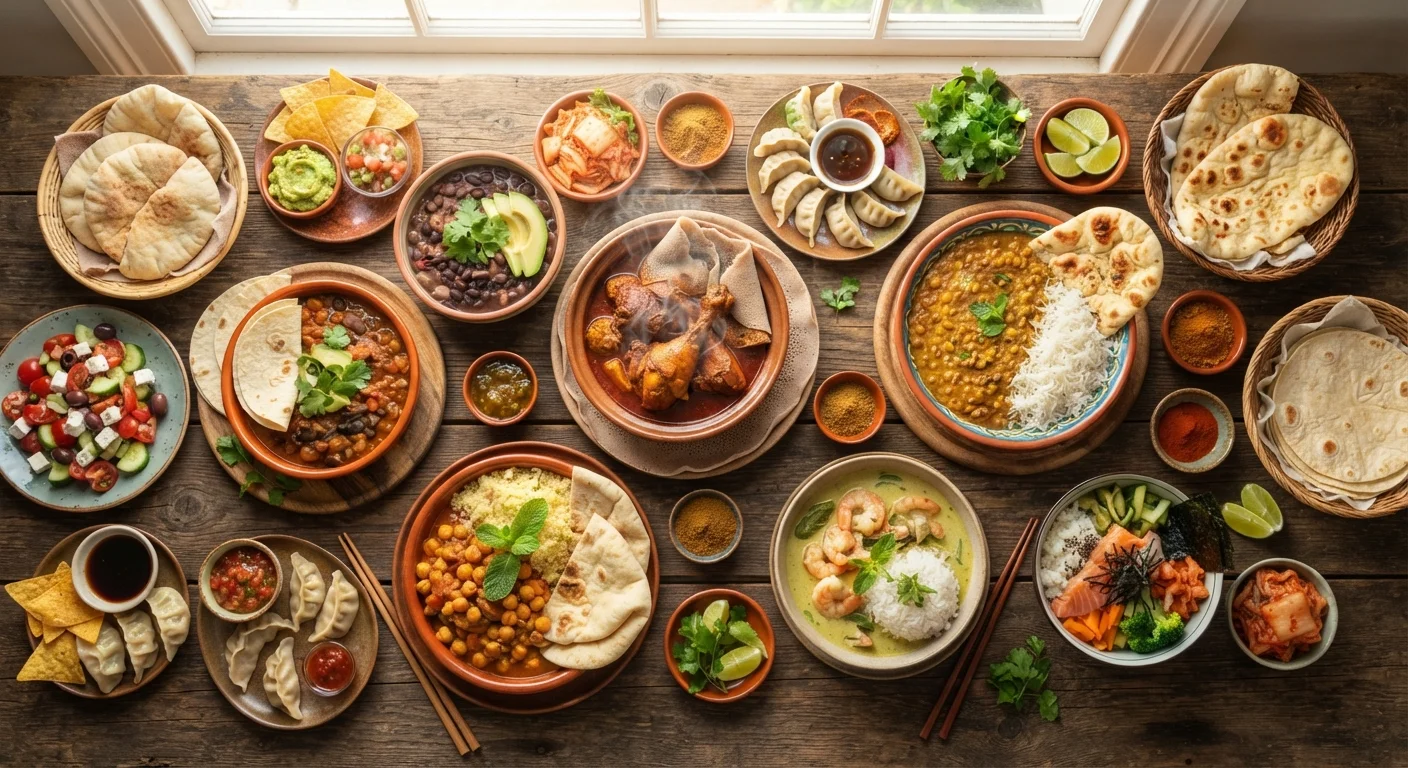
Photo: BridgeWish.com | Reliable Source Of Information editorial
Key Takeaways
- Many traditional diets share a structural similarity: a starchy staple paired with vegetables, legumes, or small amounts of protein.
- Cultural eating patterns often emphasize whole, minimally processed foods and communal meal practices.
- No single traditional diet is universally "best" — each reflects local ingredients, climate, and lifestyle.
- Observational research finds associations between certain traditional patterns and reduced chronic disease risk, though diet is one of many factors.
- Drawing practical lessons from global traditions can help you build more varied, balanced everyday meals.
What Traditional Eating Patterns Can Teach Modern Eaters
Long before nutrition science coined terms like "macronutrients" or "dietary patterns," communities around the world had already developed sophisticated ways of eating — shaped by geography, agriculture, seasonality, and culture. These traditions weren't designed with health optimization in mind, yet researchers studying long-lived populations and chronic disease rates often find that traditional diets share structural features worth paying attention to.
This isn't about romanticizing the past or claiming any one cuisine is superior. It's about noticing common threads: the types of foods prioritized, how meals are structured, and the role food plays socially. For a deeper look at how some of these patterns have been studied formally, see eating patterns research has consistently linked to long-term wellbeing.
Below are five traditional eating frameworks from different parts of the world, each with a distinct lesson to offer everyday American eaters.
Japanese Ichiju Sansai: One Soup, Three Sides
Traditional Japanese meals are often structured around ichiju sansai — literally "one soup, three sides" — served alongside a bowl of rice. The sides typically include a protein (tofu, fish, or egg), a cooked vegetable dish, and a pickled or fermented item like tsukemono. This structure naturally produces portion-conscious, varied meals without elaborate planning.
The lesson: built-in variety and moderation. Rather than centering a meal on a large protein portion, the Japanese framework treats protein as one component among several, with vegetables and fermented foods earning equal plate space. Research on Japanese dietary patterns, particularly in Okinawa, has noted an association between this style of eating and vegetable and legume diversity — though diet is one of many lifestyle factors involved.
Treating protein as one component among several naturally produces more balanced, varied meals.
West African Staple-and-Soup Traditions
Across much of West Africa, the foundational meal structure pairs a starchy staple — such as fufu (pounded yam or cassava), rice, or millet — with a rich, vegetable-heavy soup or stew. These soups often include leafy greens, tomatoes, onions, legumes, and modest amounts of fish, meat, or smoked protein for depth of flavor rather than bulk.
This approach mirrors what nutrition researchers describe as a "plant-forward" structure: the starch provides energy and satiety, while the soup delivers micronutrients, fiber, and flavor. It's also an efficient model for using whole, locally available ingredients with minimal waste. The nutrition basics hub covers why fiber-rich, plant-forward meals are widely associated with digestive and metabolic health.
West African stew traditions show how a small amount of protein can flavor an entire meal efficiently.
Mediterranean Mezze: Variety Over Volume
In Mediterranean cultures — spanning Greece, Lebanon, Turkey, and beyond — the mezze tradition spreads a meal across many small dishes: hummus, roasted vegetables, olives, flatbread, yogurt-based dips, and perhaps a little grilled fish or lamb. No single dish dominates; the meal is an assembly of modest portions that together provide nutritional breadth.
Beyond the ingredients themselves (which have been extensively studied), the structure matters: eating slowly, sharing food socially, and consuming a wide variety of plant foods in one sitting. These habits align closely with what's been studied in formal dietary frameworks — see popular diet patterns compared for more on the Mediterranean approach and the evidence behind it.
Mezze-style eating naturally encourages variety and slower, more mindful consumption.
South Asian Thali: Balanced by Design
The Indian thali — a round platter holding small portions of dal (lentils), vegetables, rice or bread, yogurt, and a pickle or chutney — is a centuries-old system for delivering a nutritionally complete meal in a single setting. Dal provides plant-based protein and fiber; vegetables add micronutrients; yogurt contributes calcium and probiotics; rice or roti supplies energy.
What's notable is how naturally the thali satisfies multiple nutritional categories without anyone consciously tracking macros. The combination of legumes with grains also forms a complementary protein profile — a practice that developed empirically across many cultures long before protein science existed. This is a practical example of the healthy eating basics principle of building meals from diverse food groups rather than optimizing a single nutrient.
The thali demonstrates that nutritional completeness can be built into meal structure rather than tracked separately.
Nordic Traditional Eating: Seasonal and Preservation-Focused
Before globalized food supply chains, Nordic communities in Scandinavia relied heavily on preserved foods — pickled fish, fermented dairy, cured meats, dried legumes, root vegetables, and foraged berries — alongside fresh seasonal produce in summer months. This wasn't minimalism by philosophy; it was practicality shaped by climate.
The result was a diet rich in omega-3 fatty acids (from fatty fish like herring and mackerel), fermented foods supporting gut microbiome diversity, and seasonal vegetables that varied throughout the year. Modern interest in the "New Nordic Diet" draws on these traditional principles, emphasizing local, seasonal, and whole-food choices. The core lesson for contemporary eaters: intentional use of preserved and fermented foods, and calibrating variety to what's actually in season, can meaningfully diversify nutrient intake.
Nordic preservation traditions show that seasonal and fermented foods can anchor a nutritionally diverse diet year-round.
Applying These Lessons to Your Own Plate
The most useful takeaway from studying global food traditions isn't a prescription — it's a framework. Across vastly different cultures, a few structural habits recur: building meals around plant staples, using animal products as accents rather than centerpieces, incorporating fermented or preserved foods for variety and gut health, and eating with others when possible.
Start With Structure, Not Ingredients
None of these traditions require exotic ingredients or dramatic overhauls. Small shifts — adding a legume-based side, swapping refined grains for whole ones a few times a week, or reducing portion sizes of meat — can move a typical American plate closer to patterns associated with balanced nutrition. The healthy eating basics hub offers practical starting points for building these habits gradually.
If you're also curious how structured modern diets compare to each other, Mediterranean, DASH, and plant-based eating compared walks through three widely studied approaches side by side.
This article is for general informational and educational purposes only and is not a substitute for personalized nutrition or medical advice. If you have specific dietary concerns or health conditions, consult a registered dietitian or qualified healthcare provider.
The content on this site is for informational purposes only and is not a substitute for professional advice. Always consult a qualified professional for guidance specific to your situation.