
Everything You Need to Know About Dietary Fat

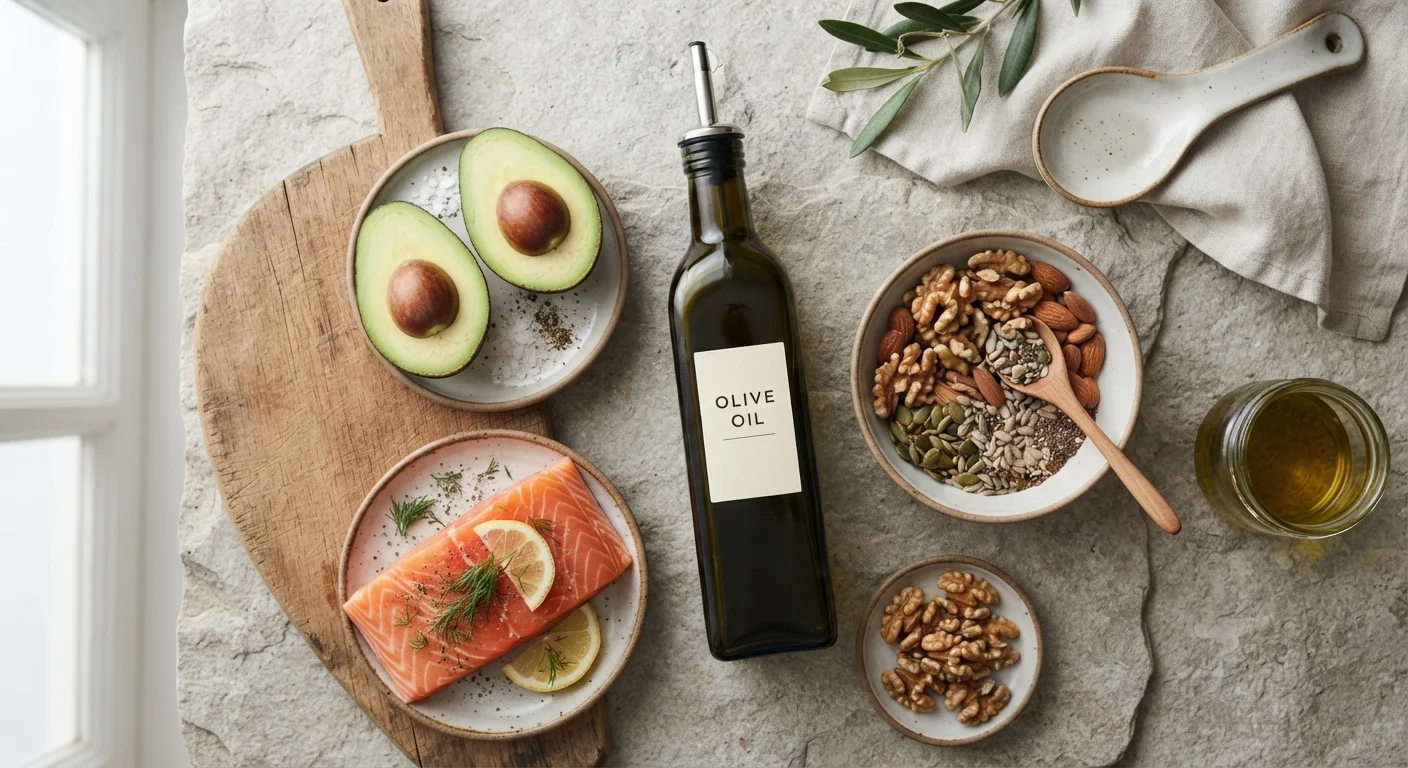
Photo: BridgeWish.com | Reliable Source Of Information editorial
Key Takeaways
- Not all fats are created equal — type matters more than total fat intake.
- Unsaturated fats found in foods like olive oil and nuts support cardiovascular health.
- Artificial trans fats are largely banned in the US and should be avoided entirely.
- Fat is essential for absorbing vitamins A, D, E, and K.
- Saturated fat should be consumed in moderation, not eliminated completely.
- Reading the Nutrition Facts label helps you identify and limit less beneficial fat types.
Why Fat Got a Bad Reputation
For much of the late 20th century, dietary fat was treated as the primary culprit behind heart disease and weight gain. Low-fat products flooded supermarket shelves, and many Americans replaced fat calories with refined carbohydrates — an exchange that nutrition science now views critically. The blanket advice to avoid fat was based on early research that did not sufficiently distinguish between fat types.
Decades of follow-up research have reshaped the picture considerably. As explored in our examination of common nutrition myths, the idea that eating fat is inherently bad is one of the most persistent — and most misleading — beliefs in popular diet culture. Understanding what kinds of fat you are eating is a far more useful frame than simply counting fat grams.
The Four Main Types of Dietary Fat
Fats are classified by their chemical structure — specifically, how hydrogen atoms are arranged along a carbon chain. This structure directly determines how the fat behaves in your body.
Saturated Fat
Found primarily in animal products (beef, butter, full-fat dairy) and some tropical oils (coconut, palm), saturated fat is solid at room temperature. Major health organizations, including the American Heart Association, recommend limiting saturated fat because higher intakes are associated with elevated LDL ("bad") cholesterol in many people. That said, the relationship is nuanced and continues to be studied.
Monounsaturated Fat (MUFA)
These fats — plentiful in olive oil, avocados, and almonds — are liquid at room temperature and solid when chilled. Regularly replacing saturated fat with MUFAs is associated with improved cholesterol profiles and reduced cardiovascular risk.
Polyunsaturated Fat (PUFA)
This category includes omega-3 and omega-6 fatty acids. Omega-3s, found in fatty fish (salmon, mackerel, sardines), walnuts, and flaxseed, are linked to reduced inflammation and heart-protective effects. Omega-6s, common in vegetable oils and processed foods, are also essential but most Americans already consume them in abundance.
Trans Fat
Artificial trans fats — created by partially hydrogenating vegetable oils — were once widespread in packaged snacks and fast food. The FDA banned partially hydrogenated oils in the US, phasing them out by 2020 due to clear evidence of cardiovascular harm. Small amounts of naturally occurring trans fats exist in some meat and dairy products, which appear to behave differently from artificial versions.
9 kcal/g
Energy provided per gram of fat
Fat is the most energy-dense macronutrient, providing more than twice the calories of carbohydrates or protein per gram.
~20–35%
Recommended fat as share of daily calories
The Dietary Guidelines for Americans suggest that fat should account for 20–35% of total daily caloric intake for most adults.
<10%
Saturated fat daily calorie limit (DGA guidance)
The Dietary Guidelines for Americans recommend keeping saturated fat intake below 10% of total daily calories.
What Fat Actually Does in Your Body
Fat is not metabolic deadweight. It is an essential macronutrient with critical functions that no other nutrient can fully replicate. For a broader look at how all three macronutrients work together, see our guide to macronutrients decoded.
- Energy storage and supply: Fat provides 9 calories per gram — more than twice the energy density of carbohydrates or protein — and serves as the body's primary long-term energy reserve.
- Fat-soluble vitamin absorption: Vitamins A, D, E, and K require dietary fat to be absorbed through the intestinal wall. A very low-fat diet can impair absorption of these nutrients even when intake is adequate.
- Cell membrane integrity: Every cell membrane in your body contains phospholipids — fat-based molecules — that regulate what enters and exits the cell.
- Hormone production: Cholesterol (a type of lipid) is the precursor for steroid hormones, including estrogen, testosterone, and cortisol.
- Brain function: Roughly 60% of the brain's dry weight is fat. DHA, an omega-3 fatty acid, is especially concentrated in neural tissue.
When cooking at high heat, choose an oil with a high smoke point — such as avocado or refined olive oil — rather than extra-virgin olive oil, which can degrade and lose beneficial compounds at very high temperatures.
Pair fat-soluble vitamin sources — like leafy greens or carrots — with a small amount of fat at the same meal to meaningfully improve absorption of vitamins A, E, and K.
This article provides general nutrition information and is not a substitute for personalized medical or dietary advice. Consult a registered dietitian or healthcare provider for guidance tailored to your health needs.
Fats to Prioritize and Fats to Limit
Current dietary guidance — reflected in the DGA — does not call for eliminating fat but for shifting the type consumed. As our overview of what carbs, protein, and fat actually do explains, cutting any macronutrient completely tends to create imbalances rather than solve them.
Don't Swap Fat for Refined Sugar
Emphasize
- Extra-virgin olive oil as a primary cooking and dressing fat
- Fatty fish two or more times per week as an omega-3 source
- Nuts, seeds, and avocados as everyday fat sources
Moderate
- Full-fat dairy and unprocessed red meat — not off-limits, but not the foundation of every meal
- Coconut oil — high in saturated fat; the evidence for unique health benefits remains limited
Minimize
- Heavily processed foods that may still contain trace amounts of partially hydrogenated oils
- Fried fast food, which concentrates less beneficial fats in single servings
Reading Labels and Making Practical Choices
The Nutrition Facts panel on US packaged foods lists total fat, saturated fat, and trans fat per serving. A few things to watch for:
- Check the trans fat line: A product can legally state "0g trans fat" if it contains less than 0.5g per serving. If "partially hydrogenated oil" appears in the ingredient list, the product contains artificial trans fat regardless of the label claim.
- Saturated fat as a proportion of total fat: If saturated fat accounts for the majority of a food's total fat, it is a less favorable fat source compared to a food where unsaturated fats dominate.
- Context matters: A handful of walnuts and a handful of chips may contain similar fat grams, but the type, accompanying nutrients, and degree of processing differ substantially.
A Simple Grocery Aisle Rule
Fat is one of the most misunderstood macronutrients precisely because the conversation collapsed a complex spectrum into a single villain. The practical takeaway is straightforward: build your fat intake around whole food sources rich in unsaturated fats, keep saturated fat moderate, and treat artificial trans fats as something to avoid. That framework aligns with decades of nutritional research — and it is one you can apply at every meal without a calculator.
The content on this site is for informational purposes only and is not a substitute for professional advice. Always consult a qualified professional for guidance specific to your situation.