
Macronutrients Explained: What Carbs, Protein, and Fat Actually Do

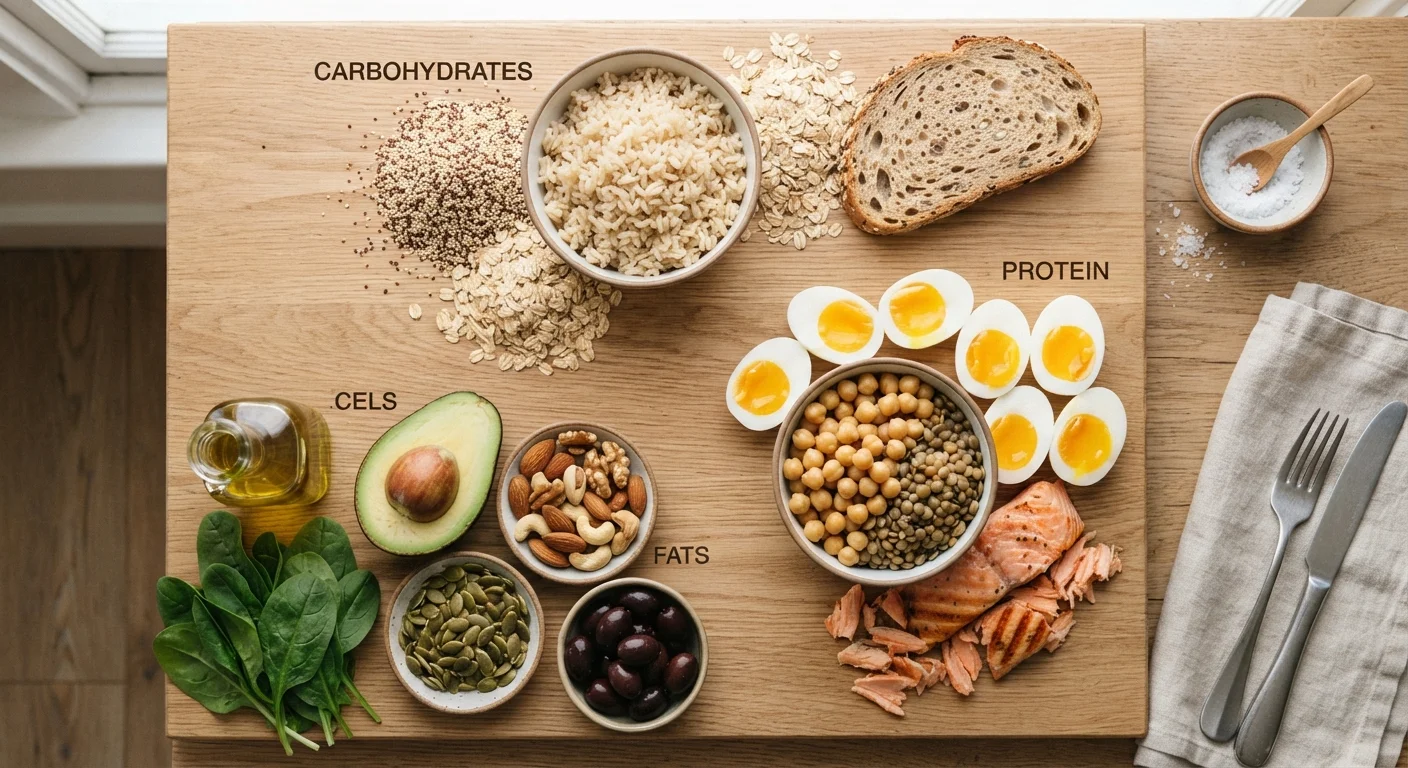
Photo: BridgeWish.com | Reliable Source Of Information editorial
Key Takeaways
- All three macronutrients — carbs, protein, and fat — serve essential roles the body cannot simply skip.
- Carbohydrates are the body's primary and most efficient energy source, especially for brain function.
- Protein supplies amino acids needed to build and repair tissues, including muscle and immune cells.
- Dietary fat supports hormone production, cell structure, and absorption of fat-soluble vitamins.
- Eliminating an entire macronutrient group is not recommended by mainstream nutrition science.
- Individual macronutrient needs vary based on age, activity level, and health status — consult a professional for personalized guidance.
Why Macronutrients Matter
Every food you eat is made up of some combination of carbohydrates, protein, and fat. These three macronutrients are the foundation of human nutrition — they provide the energy and raw materials your body uses around the clock, whether you're exercising, sleeping, or simply thinking. Understanding what each one does helps explain why no single food group deserves a permanent place on the avoid list.
Popular diets often frame one macronutrient as the villain: fat was demonized for decades, then carbohydrates took the blame, and now even protein gets scrutinized in some circles. But mainstream nutrition science is consistent: all three macronutrients are necessary, and the quality and source of each matters far more than whether you eat it at all. For a closer look at how common food myths have distorted public understanding, see our examination of nutrition myths.
45–65%
Recommended daily calories from carbohydrates
According to the Dietary Guidelines for Americans, published by the U.S. Departments of Agriculture and Health and Human Services.
10–35%
Recommended daily calories from protein
Per the Acceptable Macronutrient Distribution Ranges (AMDRs) established by the National Academies of Sciences, Engineering, and Medicine.
20–35%
Recommended daily calories from fat
Per the same AMDR framework — reflecting that fat is an essential, not optional, part of a healthy diet.
Carbohydrates: Your Body's Preferred Fuel
Carbohydrates are the body's fastest and most efficient energy source. When you eat carbs, your digestive system breaks them down into glucose — a simple sugar your cells use directly for fuel. Your brain is especially dependent on glucose; it consumes roughly 20% of the body's total energy despite making up only about 2% of body weight.
Carbohydrates come in two broad forms. Simple carbohydrates (found in fruit, milk, and added sugars) are digested quickly. Complex carbohydrates (found in whole grains, legumes, and vegetables) are broken down more slowly and typically come with fiber, vitamins, and minerals. Fiber — technically a carbohydrate — is not digested for energy but plays a critical role in gut health, blood sugar regulation, and cholesterol management.
The practical takeaway: choosing carbohydrates from whole, minimally processed sources is associated with better long-term health outcomes than avoiding them altogether.
Choose Carbs by Quality, Not Just Quantity
Protein: The Body's Builder
Protein is the primary structural material of the human body. It's assembled from chains of amino acids — smaller compounds the body uses to build and repair muscle tissue, produce enzymes and hormones, support immune function, and transport molecules through the bloodstream. Of the 20 amino acids involved in human physiology, nine are considered essential, meaning your body cannot make them and must obtain them from food.
Complete protein sources — such as eggs, meat, fish, dairy, and soy — supply all nine essential amino acids. Plant-based sources like lentils, chickpeas, quinoa, and nuts are valuable contributors, and eating a variety of them throughout the day covers essential amino acid needs for most people.
Protein also tends to promote satiety more effectively than the same number of calories from carbs or fat, which is one reason higher-protein diets are studied in the context of weight management. However, protein needs vary significantly by age and lifestyle — older adults and people who exercise regularly generally need more.
Fat: Far More Than a Source of Calories
Dietary fat has one of the worst reputations in nutrition history — and one of the least deserved. Fat is essential for absorbing the fat-soluble vitamins A, D, E, and K. It forms the membrane surrounding every cell in your body. It's a precursor to key hormones, including sex hormones and anti-inflammatory compounds. And it provides the most concentrated source of energy in the diet at 9 calories per gram.
The distinction that matters is type. Unsaturated fats — found in olive oil, avocados, fatty fish, and most nuts — are generally associated with reduced cardiovascular risk. Saturated fats, found in red meat and full-fat dairy, have a more complex evidence base and are worth consuming in moderation. Artificial trans fats, once common in processed foods, are now widely regulated due to clear links to cardiovascular harm.
For a thorough breakdown of fat types and their effects, see everything you need to know about dietary fat.
“Dietary fat is not the enemy. The type of fat you eat — and the overall pattern of your diet — matters far more than whether fat is on your plate at all.”
— Walter Willett, Professor of Epidemiology and Nutrition, Harvard T.H. Chan School of Public Health
The Danger of Cutting Out an Entire Macronutrient
Eliminating any macronutrient entirely — even temporarily — can have unintended consequences. Very low-carbohydrate diets can cause the body to enter ketosis, a metabolic state where fat is burned for fuel instead of glucose. While some people pursue this intentionally and under medical supervision, it is not appropriate for everyone and carries risks for certain groups, including people with diabetes or kidney conditions.
Extreme protein restriction can impair muscle maintenance and immune function. Severe fat restriction interferes with hormone production and vitamin absorption. These aren't theoretical concerns — they are documented consequences observed in clinical and research settings.
The current consensus from major health organizations is that a balanced diet — one that includes adequate amounts of all three macronutrients from quality sources — supports long-term health better than any approach that eliminates a whole category. For additional context on how macronutrient balance plays out in specific eating patterns, our intermittent fasting explainer offers a useful companion perspective.
Individual Needs Vary Significantly
This article is for general informational and educational purposes only and is not a substitute for professional medical or nutritional advice. Consult a registered dietitian or qualified healthcare provider before making significant changes to your diet.
Frequently Asked Questions
The content on this site is for informational purposes only and is not a substitute for professional advice. Always consult a qualified professional for guidance specific to your situation.