
Fiber: The Nutrient Most Americans Aren't Getting Enough Of

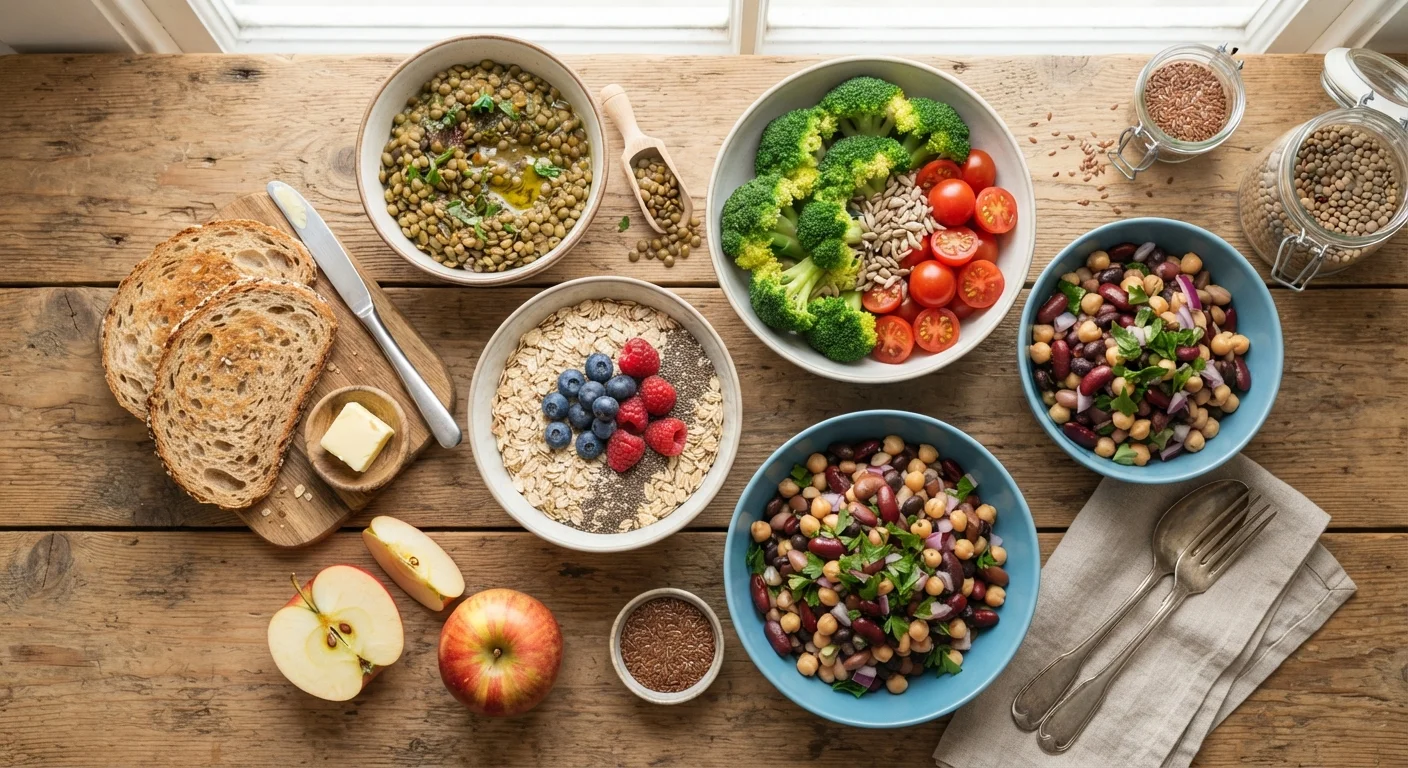
Photo: BridgeWish.com | Reliable Source Of Information editorial
Key Takeaways
- Most US adults consume roughly half the daily fiber amount that dietary guidelines recommend.
- Fiber comes exclusively from plant foods — fruits, vegetables, legumes, whole grains, nuts, and seeds.
- Soluble fiber helps manage blood sugar and cholesterol; insoluble fiber supports regular digestion.
- Low fiber intake is linked to constipation, blood sugar swings, and reduced gut microbiome diversity.
- Gradual increases in fiber intake, paired with adequate water, minimize digestive discomfort.
Why Fiber Matters More Than Most People Realize
Fiber rarely gets the marketing attention that protein or vitamins do, yet it quietly does more for everyday health than many higher-profile nutrients. It slows the rate at which sugar enters your bloodstream — helping to keep energy levels steadier after meals. It binds to cholesterol-rich bile acids in the gut, nudging them out of the body rather than back into circulation. And it feeds the trillions of bacteria living in your large intestine, a community that growing evidence links to immune function, mood, and inflammation levels.
Despite these well-established roles, data from the National Health and Nutrition Examination Survey consistently show that fewer than 10% of US adults meet daily fiber recommendations. For a deeper look at how fiber fits into healthy eating basics, the principles of balanced nutrition provide useful context.
~10%
US adults meeting daily fiber recommendations
According to data from the National Health and Nutrition Examination Survey, fewer than one in ten American adults reaches the fiber intake levels set by dietary guidelines.
15g
Average daily fiber intake for US adults
The average American consumes roughly 15 grams of fiber per day — approximately half the recommended 25–38 grams depending on age and sex.
25–38g
Recommended daily fiber intake for adults
The Dietary Guidelines for Americans recommend 25 grams daily for women and 38 grams daily for men, with adjustments for age and calorie intake.
Soluble vs. Insoluble: Two Types, Two Jobs
Understanding the two main types of fiber makes food choices easier to navigate.
- Soluble fiber dissolves in water and forms a thick gel in the digestive tract. This gel slows stomach emptying and blunts the rise in blood glucose after a meal. Oats, barley, apples, citrus fruit, and legumes are particularly good sources. Research published in peer-reviewed nutrition journals consistently links soluble fiber intake — especially beta-glucan from oats — to modest reductions in LDL ("bad") cholesterol.
- Insoluble fiber doesn't dissolve. It adds bulk and draws water into the colon, keeping stool soft and transit time moving. Whole wheat bran, vegetables, and the skins of many fruits are rich in insoluble fiber. This is the type most people associate with digestive regularity.
Most fiber-rich foods contain a mix of both, so eating a variety of plant foods covers both bases without needing to track each type separately.
Increasing Fiber? Go Slow and Drink Water
Where the Fiber Gap Comes From
The average American diet is built around refined grains, ultra-processed snacks, and animal proteins — all of which contain little to no fiber. When white bread replaces whole wheat, or when fruit juice stands in for whole fruit, fiber is one of the first things lost in processing.
This pattern shows up clearly in population data. Fiber is one of several nutrients flagged as a "nutrient of public health concern" in US dietary guidance — meaning the gap between average intake and recommended levels is wide enough to affect health outcomes at a population scale. Our companion piece on common nutrient gaps in American diets covers how fiber fits alongside other frequently under-consumed nutrients.
Practical Ways to Close the Gap
Increasing fiber intake doesn't require overhauling your entire diet at once. Gradual, consistent swaps tend to be more sustainable than dramatic shifts — and they're easier on your digestive system.
- Swap refined grains for whole grains. Choose whole wheat bread, brown rice, or oats in place of their refined counterparts. The fiber content difference is substantial: a slice of whole wheat bread contains roughly 2 grams of fiber versus less than 1 gram in white bread.
- Add legumes to existing meals. Stirring a half-cup of canned black beans into rice or tossing lentils into a soup adds 7–8 grams of fiber with minimal effort.
- Eat fruit whole rather than juiced. A medium orange provides about 3 grams of fiber; orange juice provides almost none.
- Don't peel when you don't have to. Apple skins, potato skins, and cucumber skins all contain fiber that's lost when removed.
Drink water as you increase fiber — adequate hydration helps insoluble fiber do its job effectively and prevents the cramping that can come from a rapid dietary shift. For broader guidance on building a balanced plate, the nutrition basics hub is a useful reference.
This article is for general informational purposes only and is not a substitute for advice from a registered dietitian or other qualified healthcare professional. Individual nutritional needs vary; consult a professional for personalized guidance.
Frequently Asked Questions
The content on this site is for informational purposes only and is not a substitute for professional advice. Always consult a qualified professional for guidance specific to your situation.