
What a Balanced Plate Actually Looks Like

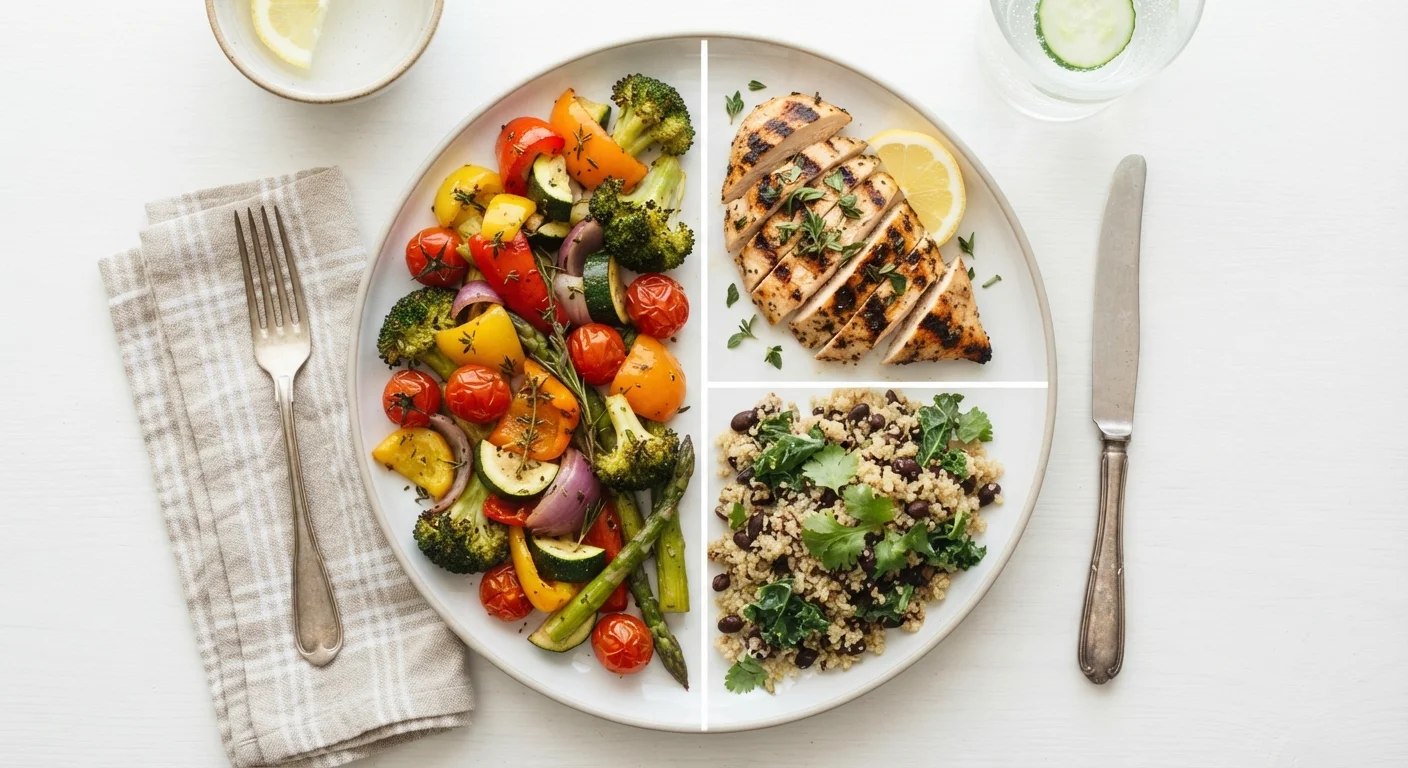
Photo: BridgeWish.com | Reliable Source Of Information editorial
Key Takeaways
- Half your plate should be vegetables and fruit at most meals.
- A quarter of your plate should come from lean protein sources.
- The remaining quarter is best filled with whole grains or starchy vegetables.
- Small amounts of healthy fats round out the meal without dominating it.
- You don't need to count calories — proportion and variety do the heavy lifting.
- The balanced plate model adapts to most dietary styles, including plant-based eating.
The Simple Framework Behind a Balanced Plate
Most people know they should "eat healthy," but the phrase doesn't tell you much when you're standing in front of the stove at 6 p.m. A balanced plate gives you a concrete, visual framework to work with — no calorie apps, no complicated charts required.
The foundation is straightforward: fill half your plate with vegetables and fruit, one quarter with a lean protein source, and one quarter with whole grains or starchy vegetables. Add a small amount of healthy fat, and you have the core structure of a nutritious meal.
This proportional approach is the basis of the USDA MyPlate model and is widely endorsed by nutrition professionals because it reflects how different food groups contribute different nutrients. Vegetables and fruit deliver fiber, vitamins, and minerals with relatively few calories. Protein supports tissue repair and satiety. Whole grains provide sustained energy. Together, they create a meal that nourishes without overloading any one nutrient category.
For a deeper dive into the principles that underpin this approach, explore how balanced plate principles hold up across eating styles.
Use Your Hand as a Portion Guide
Breaking Down Each Section of the Plate
Half: Vegetables and Fruit
This is the biggest section for a reason. Vegetables and fruit are nutrient-dense — packed with fiber, antioxidants, and micronutrients — while keeping overall calorie load in check. Aim for variety in color, since different pigments signal different beneficial plant compounds. Non-starchy vegetables like leafy greens, broccoli, bell peppers, and zucchini are especially good anchors for this half.
One Quarter: Lean Protein
Protein supports muscle, immunity, and the feeling of fullness that keeps you satisfied between meals. Good sources include poultry, fish, eggs, legumes (beans, lentils, chickpeas), tofu, and low-fat dairy. Red and processed meats can appear occasionally, but most dietary guidance suggests limiting them over the long term.
One Quarter: Whole Grains or Starchy Vegetables
This quarter provides energy through complex carbohydrates. Whole grains — such as brown rice, quinoa, oats, or whole-wheat bread — contain fiber and nutrients that are stripped away in refined grains. Starchy vegetables like sweet potatoes, corn, or peas can also fill this section. Understanding how portion size affects your eating is especially relevant here, since grains are easy to over-serve.
The Small Addition: Healthy Fats
Fats don't need their own plate section, but they belong in the meal. A drizzle of olive oil, a few avocado slices, or a scatter of nuts adds fat-soluble vitamins and supports long-term heart health. Keep amounts modest — fats are calorie-dense.
Balanced Plates Look Different for Everyone
Putting It Into Practice
The balanced plate model is flexible enough to fit almost any meal style. A grain bowl, a stir-fry, a taco, or a traditional plate dinner can all follow the same proportional logic. The key is thinking about what's in your meal and roughly what share each component takes up.
If a meal is missing an entire section — say, it's mostly grains with very little protein or vegetables — that's a signal to add something, not a reason to start over. Small adjustments made consistently across meals and days add up more than any single "perfect" plate.
For broader context on how food choices affect wellbeing, the Diet & Food Choices hub covers a wide range of eating patterns and their trade-offs. And for foundational nutrition concepts, the Nutrition Basics hub is a solid starting point.
This article is for general informational and educational purposes only and is not a substitute for advice from a registered dietitian or other qualified healthcare professional.
Frequently Asked Questions
The content on this site is for informational purposes only and is not a substitute for professional advice. Always consult a qualified professional for guidance specific to your situation.