
Why 'Eating Healthy' Feels So Confusing — And How to Cut Through It

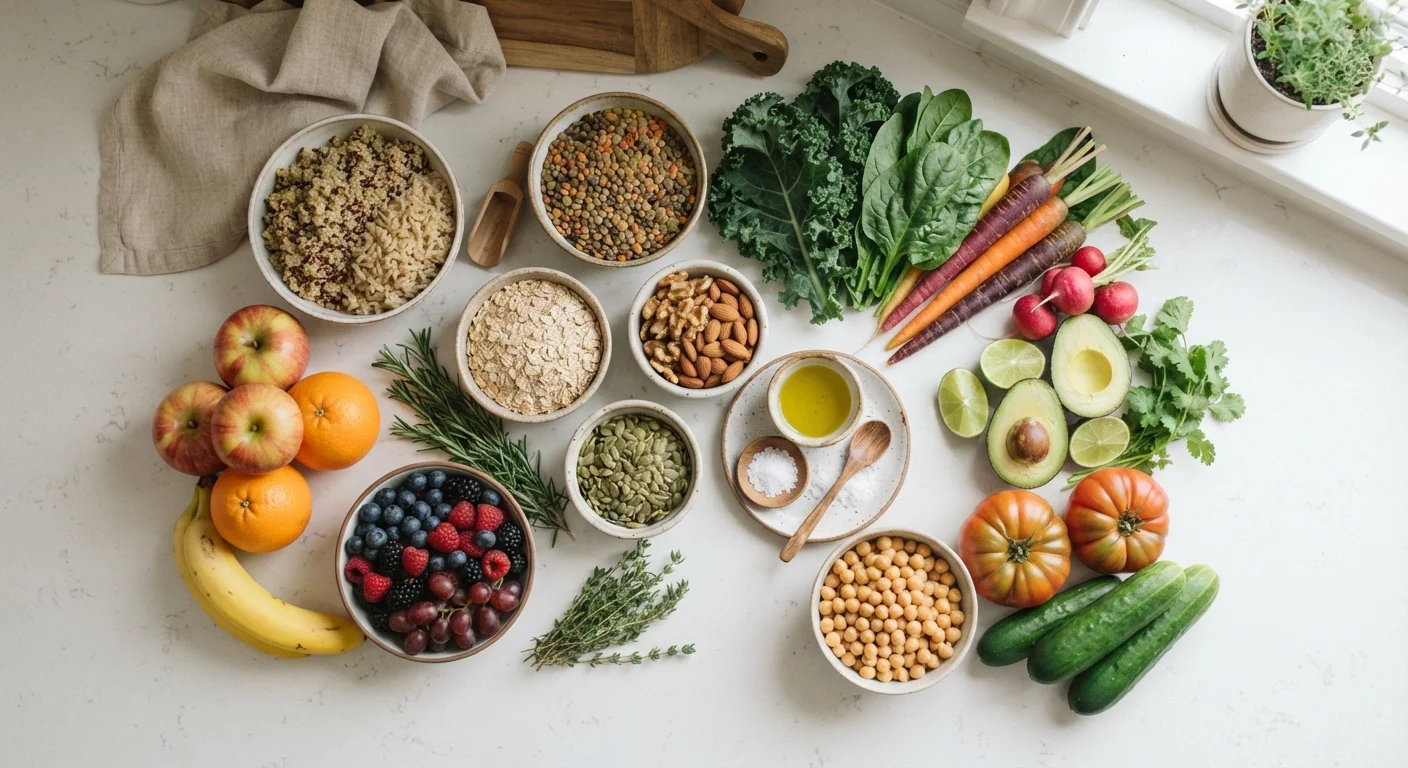
Photo: BridgeWish.com | Reliable Source Of Information editorial
Key Takeaways
- Conflicting headlines often reflect normal scientific debate, not fundamental reversals in nutrition knowledge.
- Most credible nutrition guidance converges on the same core foods: vegetables, fruits, whole grains, and lean proteins.
- Treating foods as entirely 'good' or 'bad' makes eating harder and less sustainable over time.
- Marketing language on packaging is designed to sell, not to guide sound nutrition decisions.
- Small, consistent habits matter far more than any single dietary overhaul or trending framework.
Why the Confusion Exists in the First Place
If eating well feels overwhelming, that's a reasonable response to the environment — not a personal failure. Americans are surrounded by diet trends, supplement marketing, conflicting headlines, and social-media wellness advice that shifts from week to week. A study one month headlines that a specific food raises disease risk; another month, a different study says the opposite. Readers walk away thinking nutrition science is hopelessly contradictory.
Most of that whiplash is overstated. The headlines often reflect small studies, nuanced findings, or genuine scientific debate at the margins — not wholesale reversals of what researchers broadly agree on. The core of credible nutrition guidance has actually stayed remarkably stable for decades: eat more vegetables, fruits, whole grains, and legumes; eat less ultra-processed food, added sugar, and sodium. The noise obscures that durable signal.
Understanding why confusion happens is the first step toward cutting through it. The mistakes below are the most common ways people get pulled off track — and the fixes are more straightforward than you might expect. For a deeper look at patterns that can undermine your goals, see common nutrition reasoning pitfalls.
Treating every new headline as a definitive dietary rule.
Labeling foods as entirely 'good' or 'bad' with no nuance.
Letting front-of-package marketing language drive food choices.
Chasing dietary frameworks as an all-or-nothing identity.
Focusing on individual nutrients rather than overall food quality.
Practical Principles to Anchor Your Decisions
Once you recognize the mistakes above, you need something concrete to replace them with. A few durable frameworks help.
Trending Diets Are Not Neutral Experiments
Think in patterns, not perfection. Dietary quality is determined by what you eat consistently over weeks and months, not by any single meal. One less-nutritious choice doesn't derail anything. One nutritious meal doesn't compensate for an otherwise poor pattern. That distinction relieves a lot of pressure and makes the whole endeavor more sustainable.
Use the plate as a guide. The USDA's MyPlate framework and similar visual tools suggest filling roughly half your plate with vegetables and fruit, a quarter with whole grains, and a quarter with lean protein — with dairy or dairy alternatives on the side. It's a flexible heuristic, not a rigid prescription, and it sidesteps the need to track individual nutrients obsessively.
Read labels as a check, not a verdict. Nutrition labels are useful, but they're one tool among many. Understanding what nutrition labels actually tell you can help you make more informed comparisons at the store without letting a single number define whether a food is acceptable.
Seek variety over optimization. No single food contains every nutrient you need, and chasing whichever ingredient is currently trending often crowds out the variety that makes a diet nutritionally complete. A wide range of minimally processed whole foods is a stronger foundation than any superfood.
If you're exploring whether a specific dietary approach is right for you — especially if you have a health condition — this is general educational information, not medical advice. A registered dietitian or your healthcare provider is the right partner for personalized guidance.
This article is for general informational purposes only and does not constitute medical or dietary advice. Consult a qualified healthcare professional before making significant changes to your diet, especially if you have an existing health condition.
The content on this site is for informational purposes only and is not a substitute for professional advice. Always consult a qualified professional for guidance specific to your situation.