
Reading a Nutrition Label Without Getting Confused

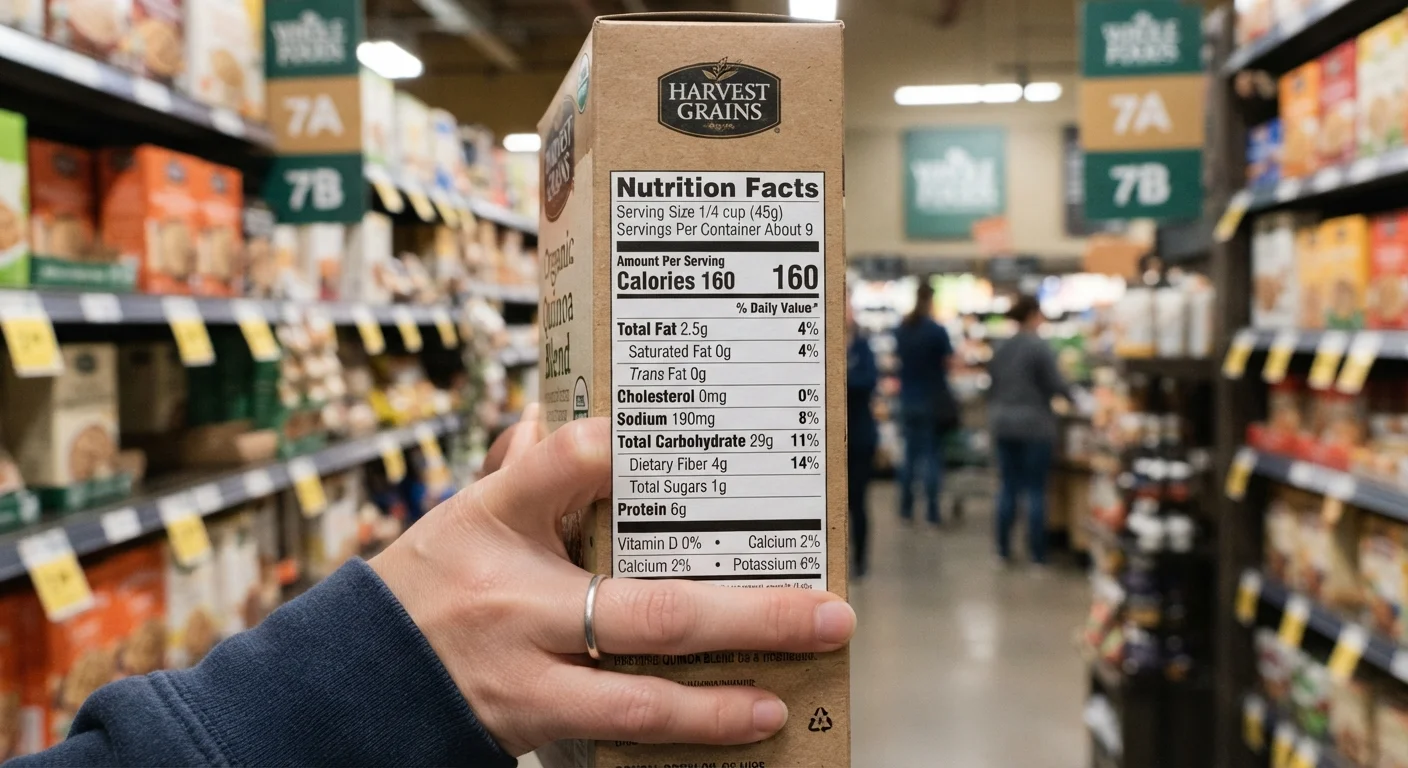
Photo: BridgeWish.com | Reliable Source Of Information editorial
Key Takeaways
- Serving size is the foundation of every number on the label — always check it first.
- % Daily Value tells you how much a nutrient contributes to a 2,000-calorie reference diet.
- Limit added sugars, saturated fat, and sodium; prioritize fiber, vitamins, and minerals.
- Ingredients are listed by weight, so the first few dominate the product.
- A 5% DV is considered low; 20% or more is considered high for any given nutrient.
Why the Nutrition Facts Panel Exists
The Nutrition Facts panel is a federally mandated format regulated by the FDA. It was first introduced in 1994 and significantly updated in 2020 to reflect current nutrition science — most notably by adding a line for added sugars and increasing the prominence of the calorie count. For a deeper look at how serving sizes, daily values, and ingredient order interact, see our guide to decoding the fine print on packaged food.
The panel's purpose is straightforward: give consumers a consistent, comparable snapshot of what is in a food product so they can make informed choices. Understanding its structure — rather than scanning for a single number — is what makes it genuinely useful. For foundational context on how nutrition fits into a balanced diet, the Nutrition Basics hub is a good starting point.
What you will need
How to Read the Label: Step by Step
Follow these steps with any packaged product in hand. The panel is standardized, so once you learn the layout, it applies to every item on the shelf.
FDA Nutrition Facts Label
The standardized panel on packaged foods that lists serving size, calories, and nutrient amounts.
Calculator or smartphone
Useful for multiplying per-serving values by the number of servings you actually consume.
Start with serving size and servings per container
The very top of the Nutrition Facts panel shows two things: the serving size (e.g., "1 cup" or "28g") and the number of servings per container. Every number that follows — calories, fat, sodium — applies to one serving only. If a container holds 3 servings and you eat the whole thing, multiply all values by 3.
Check the calorie count
Calories are displayed in large type just below the serving size line. This figure represents the total energy provided by one serving. Calories come from the three macronutrients — fat (9 calories per gram), carbohydrates (4 calories per gram), and protein (4 calories per gram). The label does not require a %DV for calories; it is simply a raw count.
Identify nutrients to limit
The next section lists nutrients most Americans tend to consume in excess. Look for:
- Total Fat — broken down into saturated fat and trans fat. Saturated fat should be kept in check; industrially produced trans fat should be avoided.
- Sodium — high intake is associated with elevated blood pressure risk.
- Added Sugars — distinct from naturally occurring sugars, added sugars contribute calories with minimal nutritional benefit.
For each of these, a lower %DV is generally preferable. Use the 5/20 rule as a quick benchmark.
Look for nutrients to prioritize
Below the nutrients to limit, the label lists nutrients many Americans under-consume:
- Dietary Fiber — supports digestive health and is associated with heart health benefits.
- Vitamin D, Calcium, Iron, and Potassium — nutrients the FDA identified as commonly under-consumed in the U.S. population.
For these, a higher %DV is a positive signal. Aim for foods that contribute meaningfully (10% DV or more) to these nutrients.
Understand % Daily Value (%DV)
% Daily Value (%DV) tells you what percentage of the recommended daily amount for a given nutrient one serving provides, based on a 2,000-calorie reference diet. It is not a personalized number — it is a standardized benchmark that makes comparing foods easier. A food providing 30% DV of sodium in one serving is high in sodium relative to daily guidance; one providing 4% DV of fiber is low in fiber.
Read the ingredient list
The ingredient list appears below the Nutrition Facts panel and is ordered by weight — the first ingredient makes up the largest portion of the product. A few practical rules:
- If a sugar (cane sugar, high-fructose corn syrup, honey, dextrose) appears in the first three ingredients, the food is high in added sugar.
- Whole grains should appear as the first ingredient in bread or cereal products.
- A shorter ingredient list generally indicates less processing, though this is not a universal rule.
Watch Out for Misleading Serving Sizes
The 5/20 Rule Makes Comparisons Easy
Labels Reflect a Reference Diet, Not Yours
This article provides general nutrition education and is not a substitute for personalized dietary advice from a registered dietitian or qualified healthcare professional.
Putting It All Together at the Grocery Store
Reading a label efficiently comes down to a quick three-step scan: serving size → nutrients to limit → nutrients to prioritize. Once you internalize that routine, comparing two cereals or two yogurts takes under a minute. The %DV column does most of the heavy lifting — it lets you evaluate foods without mental math.
Keep in mind that no single food defines a diet. A food high in sodium can still fit a balanced eating pattern if the rest of your day's choices are lower in sodium. The label gives you data; how you use that data across meals is the broader picture. For more on navigating labels with confidence, see our guide to nutrition label literacy.
The content on this site is for informational purposes only and is not a substitute for professional advice. Always consult a qualified professional for guidance specific to your situation.