
What 'Functional Fitness' Means and Why It's Relevant Past Your 40s

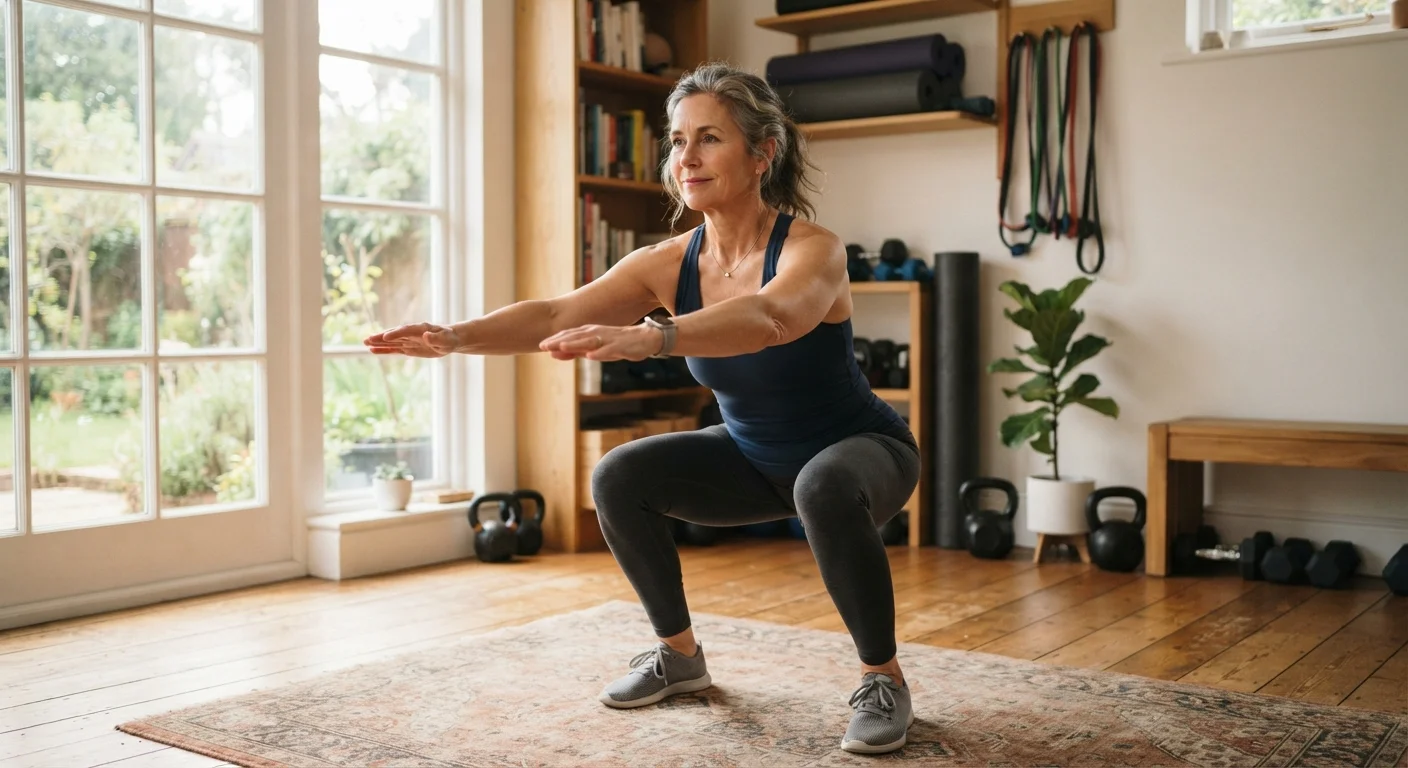
Photo: BridgeWish.com | Reliable Source Of Information editorial
Key Takeaways
- Functional fitness trains movement patterns used in daily life, not just isolated muscles.
- After 40, natural declines in muscle mass and balance make functional training especially important.
- Most functional exercises require little to no equipment and can be adapted for any fitness level.
- Consistent functional training is associated with reduced fall risk and greater independence as we age.
- Always consult a healthcare provider before starting a new exercise program, especially with existing health conditions.
What Sets Functional Fitness Apart from Conventional Exercise
Walk into most gyms and you'll see rows of machines that isolate single muscles — a leg extension here, a bicep curl there. These tools have their place, but they don't reflect how the human body actually moves through daily life. Functional fitness takes a different approach: it trains the patterns of movement your body relies on every day.
Think about what getting up from a low chair actually demands — your quads, glutes, core, and even your ankles are all coordinating together. A squat trains that exact pattern. Similarly, carrying groceries from the car mirrors a farmer's carry exercise. The workout becomes preparation for real life, not a separate activity disconnected from it.
This distinction matters because strength built in isolation doesn't always transfer. Someone who can do impressive amounts on a leg-press machine may still struggle to rise from the floor confidently. Common fitness myths often reinforce the idea that more isolated effort equals better results — functional training challenges that assumption directly.
A Simple Way to Test Your Functional Baseline
Why the 40s Mark a Meaningful Shift
Beginning around the fourth decade of life, the body undergoes gradual but measurable changes that make functional fitness more relevant, not less. Sarcopenia — the age-related loss of muscle mass — can begin as early as your 30s and accelerates after 60, but the process is already underway in midlife. Alongside muscle loss, joint mobility tends to decrease and balance becomes slightly less reliable.
These shifts don't happen overnight, which is partly why they're easy to ignore until a specific moment — a stumble on stairs, difficulty getting off the floor after playing with grandkids, or back pain after a minor lift — makes them obvious. Functional training directly addresses all three of these areas: it builds the muscle mass needed for strength, trains the range of motion required for safe movement, and challenges balance in ways that carry directly into everyday situations.
3–8%
Muscle mass lost per decade after age 30
According to research published in the Journal of Cachexia, Sarcopenia and Muscle, this rate accelerates to up to 15% per decade after age 70 without countermeasures like resistance training.
36 million
Falls reported among older adults each year in the US
The CDC reports that falls are the leading cause of injury in adults 65 and older, and that exercise programs targeting balance and strength are among the most effective prevention strategies.
58%
Reduction in fall risk with targeted exercise
A Cochrane Review of exercise interventions found that programs incorporating balance and functional training reduced fall rates in older adults by approximately 23–58%, depending on program design.
The good news is that muscle tissue remains adaptable at virtually any age. Research consistently shows that adults in their 60s, 70s, and beyond can gain meaningful strength and improve balance with structured training. Starting in your 40s simply gives you a longer runway.
For a closer look at how mobility and flexibility factor into this picture, see our guide to flexibility vs. mobility.
Core Movement Patterns to Know
Functional fitness is often organized around fundamental movement patterns rather than specific exercises. Understanding these patterns makes it easier to evaluate whether a workout is actually functional:
- Squat pattern: Bending at hips and knees to lower and rise — mirrors sitting, standing, and picking things up.
- Hinge pattern: Bending forward from the hips with a neutral spine — essential for safely lifting objects off the ground.
- Push and pull: Horizontal and vertical pushing and pulling movements — needed for opening doors, reaching overhead, or pulling yourself up.
- Carry: Walking while holding weight — a direct analogue to carrying bags, children, or equipment.
- Rotation and anti-rotation: Controlled twisting and resisting twisting — critical for the spine during everyday reaching and turning.
Most people already perform versions of these patterns daily without realizing it. Functional training makes them deliberate, progressive, and safe. For a deeper grounding in strength training principles that underpin these movements, our strength training fundamentals guide provides a solid foundation.
Getting Started Safely After 40
Starting or returning to exercise in midlife is genuinely worthwhile, and functional training is a forgiving entry point because it scales easily to current ability. Bodyweight versions of squats, hinges, and push movements build the same patterns as weighted versions — at a lower intensity that allows the body to adapt gradually.
A few practical principles are worth keeping in mind:
- Start with movement quality, not load. Performing a hinge with good form using only bodyweight is more valuable than rushing to add weight.
- Progress gradually. Add resistance or complexity only when current work feels controlled and comfortable.
- Include balance training. Single-leg stands, step-ups, and similar drills directly address the balance changes that come with aging.
- Rest matters. Recovery time between sessions is part of the adaptation process, not wasted time.
As with any new exercise program, it's worth speaking with your healthcare provider first — particularly if you have joint concerns, cardiovascular conditions, or have been inactive for an extended period. A certified fitness professional can also help tailor a program to your specific starting point.
Nutrition supports this work too. Our piece on how nutritional needs shift across life stages covers how dietary priorities evolve alongside physical ones in midlife and beyond.
This article is for general informational purposes only and does not constitute medical advice. Always consult a qualified healthcare professional before beginning a new exercise program, particularly if you have existing health conditions or concerns.
Frequently Asked Questions
The content on this site is for informational purposes only and is not a substitute for professional advice. Always consult a qualified professional for guidance specific to your situation.