
Why Telling Yourself to "Just Relax" Usually Backfires

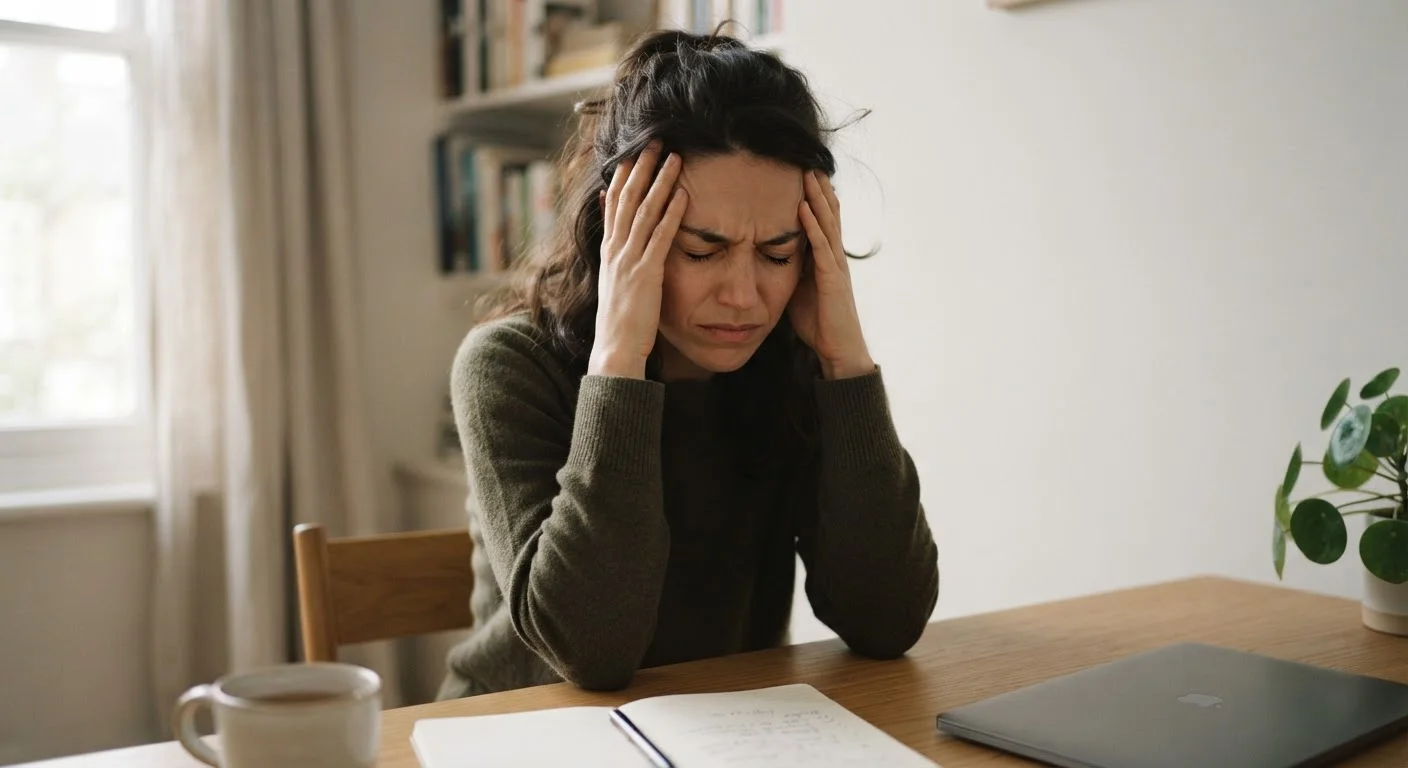
Photo: BridgeWish.com | Reliable Source Of Information editorial
Key Takeaways
- Instructing yourself to 'just relax' often increases rather than reduces anxiety.
- Emotional suppression is well-documented as a strategy that tends to amplify distress.
- Acknowledging what you feel—rather than fighting it—is a more effective starting point.
- Simple, evidence-informed techniques like paced breathing can reduce physiological arousal.
- Persistent or severe anxiety warrants a conversation with a qualified healthcare professional.
The Paradox of Forcing Calm
When anxiety spikes, the instinct to command yourself to calm down is almost universal. It seems straightforward: recognize the problem, instruct yourself to stop, move on. The trouble is that emotional suppression tends to produce the opposite of the intended effect.
Psychologists refer to this as the ironic process—the harder you try not to think or feel something, the more mentally available that thought or feeling becomes. Telling yourself 'don't be anxious' keeps anxiety as the central focus of your attention, effectively amplifying it rather than quieting it.
This isn't a character flaw or a sign that your anxiety is unmanageable. It's a predictable feature of how human minds work under pressure. Understanding this is the first step toward finding approaches that actually help. If you're noticing that everyday stress feels increasingly out of control, it may be worth reading about signs that stress has shifted into something more serious.
This Is Information, Not Medical Advice
Common Mistakes That Make Anxiety Worse
Most people dealing with anxiety aren't doing anything unreasonable—they're doing things that seem reasonable but happen to backfire. The mistakes below are among the most common, and recognizing them is genuinely useful. For a broader look at these patterns, ways people unintentionally make anxiety worse offers additional context.
Directly ordering yourself to calm down or stop being anxious.
Trying to distract yourself from anxiety by staying constantly busy.
Breathing faster or taking large gulping breaths when panicked.
Treating every anxious thought as a reliable report about real danger.
Relying exclusively on one-off quick fixes rather than building consistent habits.
~31%
U.S. adults affected by anxiety disorders
The National Institute of Mental Health estimates that about 31% of U.S. adults will experience an anxiety disorder at some point in their lives.
~57%
People who don't seek treatment for anxiety
Research consistently shows that a majority of people with anxiety disorders do not receive professional treatment, often relying instead on self-management strategies alone.
What to Do Instead
Replacing unhelpful patterns requires more than willpower—it requires a different framework for relating to anxious feelings. A few well-supported principles can guide that shift:
- Acknowledge before you act. Simply naming what you feel ('I'm anxious about this presentation') tends to reduce reactivity more effectively than arguing with the feeling or pushing it away.
- Work with your body, not against it. Paced breathing, gentle movement, and grounding techniques (like noticing five things you can see) give the nervous system something concrete to do rather than asking it to simply stop.
- Accept imperfect calm. The goal isn't to feel nothing. Mild anxiety is a normal human signal; the aim is to avoid letting it spiral, not to eliminate it entirely.
If anxiety persists or worsens despite your best efforts, that's a signal worth taking seriously—not a personal failure. A qualified mental health professional can offer personalized guidance that general information simply cannot replicate.
This article is for general informational and educational purposes only and does not constitute medical or mental health advice. Always consult a qualified healthcare professional regarding concerns about your mental health.
The content on this site is for informational purposes only and is not a substitute for professional advice. Always consult a qualified professional for guidance specific to your situation.