
Macronutrients Explained: What Carbs, Protein, and Fat Actually Do

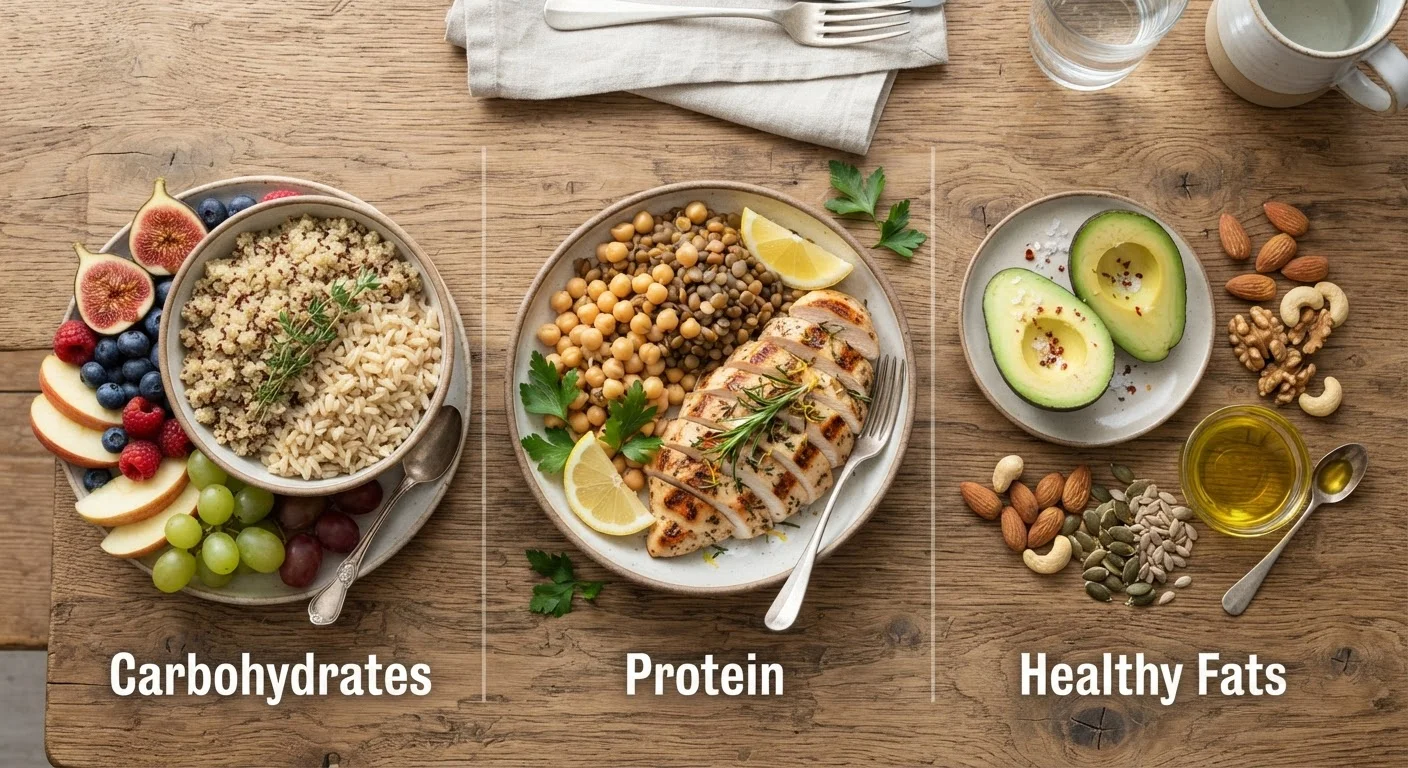
Photo: BridgeWish.com | Reliable Source Of Information editorial
Key Takeaways
- Carbohydrates are your body's primary and preferred fuel source, especially for the brain.
- Protein provides the raw materials needed to build, repair, and maintain nearly every tissue in the body.
- Dietary fat supports hormone production, vitamin absorption, and long-term energy storage.
- All three macronutrients are necessary — eliminating any one entirely can create real nutritional gaps.
- Food quality within each macronutrient category matters as much as the amount you consume.
Carbohydrates: Your Body's Preferred Fuel
Carbohydrates are the nutrients your body converts most readily into glucose — the primary energy currency your cells run on. Your brain alone relies almost exclusively on glucose to function, which is why very low-carb eating can initially cause brain fog or fatigue.
Carbohydrates come in two broad forms. Simple carbohydrates — found in fruit, milk, and refined sugars — break down quickly. Complex carbohydrates — found in whole grains, legumes, and vegetables — digest more slowly and deliver fiber alongside energy. Fiber supports digestive health, helps maintain steady blood sugar, and contributes to feelings of fullness.
Quality matters here. A bowl of oatmeal and a sugary pastry both contain carbohydrates, but their effects on energy, fullness, and blood sugar differ considerably. Prioritizing whole, minimally processed carbohydrate sources is a well-supported dietary habit. For a deeper look at common misconceptions around this macronutrient, see our guide to common nutrition myths.
Choosing Better Carbohydrate Sources
Protein: The Body's Builder and Maintainer
Protein's most recognized role is building muscle, but it does far more than that. Every enzyme in your body is a protein. Your immune antibodies are proteins. Hormones like insulin are proteins. Hair, skin, and connective tissue all depend on protein for their structure.
Protein is made up of smaller units called amino acids. Of the 20 amino acids the body uses, nine are classified as essential — meaning your body cannot synthesize them and must obtain them from food. Animal proteins (meat, poultry, fish, eggs, dairy) typically contain all nine essential amino acids in adequate proportions, making them complete proteins. Most plant proteins are lower in one or more essential amino acids, but eating a variety of plant foods across the day addresses this effectively.
Protein also plays a role in satiety — research consistently shows it is the most filling macronutrient per calorie. This makes adequate protein intake relevant not only for muscle maintenance but also for managing appetite.
10–35%
Recommended calorie share from protein
The Dietary Reference Intakes established by the National Academies of Medicine set the Acceptable Macronutrient Distribution Range for protein at 10–35% of total daily calories for adults.
45–65%
Recommended calorie share from carbohydrates
The same Acceptable Macronutrient Distribution Ranges framework places carbohydrates at 45–65% of total daily caloric intake for adults, reflecting their role as the primary fuel source.
20–35%
Recommended calorie share from fat
Dietary fat is recommended to make up 20–35% of total daily calories for adults, according to the National Academies of Medicine — enough to support vitamin absorption and hormone function.
Dietary Fat: More Essential Than Its Reputation Suggests
Fat spent decades as the dietary villain, but the science tells a more nuanced story. Dietary fat is essential for absorbing fat-soluble vitamins — A, D, E, and K — which cannot enter your bloodstream without it. Fat also forms the structural layer of every cell membrane in your body and is the raw material for many hormones.
The type of fat matters significantly. Unsaturated fats — found in olive oil, avocados, nuts, seeds, and fatty fish — are broadly associated with cardiovascular and metabolic health benefits. Trans fats, largely eliminated from the US food supply through regulatory action, are associated with harm and are best avoided. Saturated fat (found in red meat, butter, and coconut oil) remains an area of active research; current mainstream guidance generally recommends moderate intake.
For a comprehensive breakdown of fat types and how they behave in your body, see our detailed guide to dietary fat.
Fat Is Calorie-Dense — Context Matters
Why Balance Across All Three Macronutrients Matters
Popular diets often push people toward eliminating or severely restricting one macronutrient — fat in the 1990s, carbohydrates in the 2000s and 2010s. But each macronutrient performs functions the others cannot fully replace. Cutting carbs drastically can impair brain function and reduce dietary fiber. Cutting fat severely can limit vitamin absorption and hormone health. Inadequate protein accelerates muscle loss, particularly as we age.
Current evidence from nutritional science supports a dietary pattern that includes all three macronutrients, with emphasis on food quality rather than obsessive tracking. The Mediterranean dietary pattern — rich in vegetables, whole grains, legumes, fish, and olive oil — is one of the most studied examples of this balanced approach.
If you are curious about how these concepts compare across different framings, this plain-English macronutrient guide offers a useful companion read.
This article is for general informational and educational purposes only and does not constitute medical or nutritional advice. Please consult a qualified healthcare professional or registered dietitian before making significant changes to your diet.
Frequently Asked Questions
The content on this site is for informational purposes only and is not a substitute for professional advice. Always consult a qualified professional for guidance specific to your situation.