
Reading a Nutrition Facts Label Without the Confusion

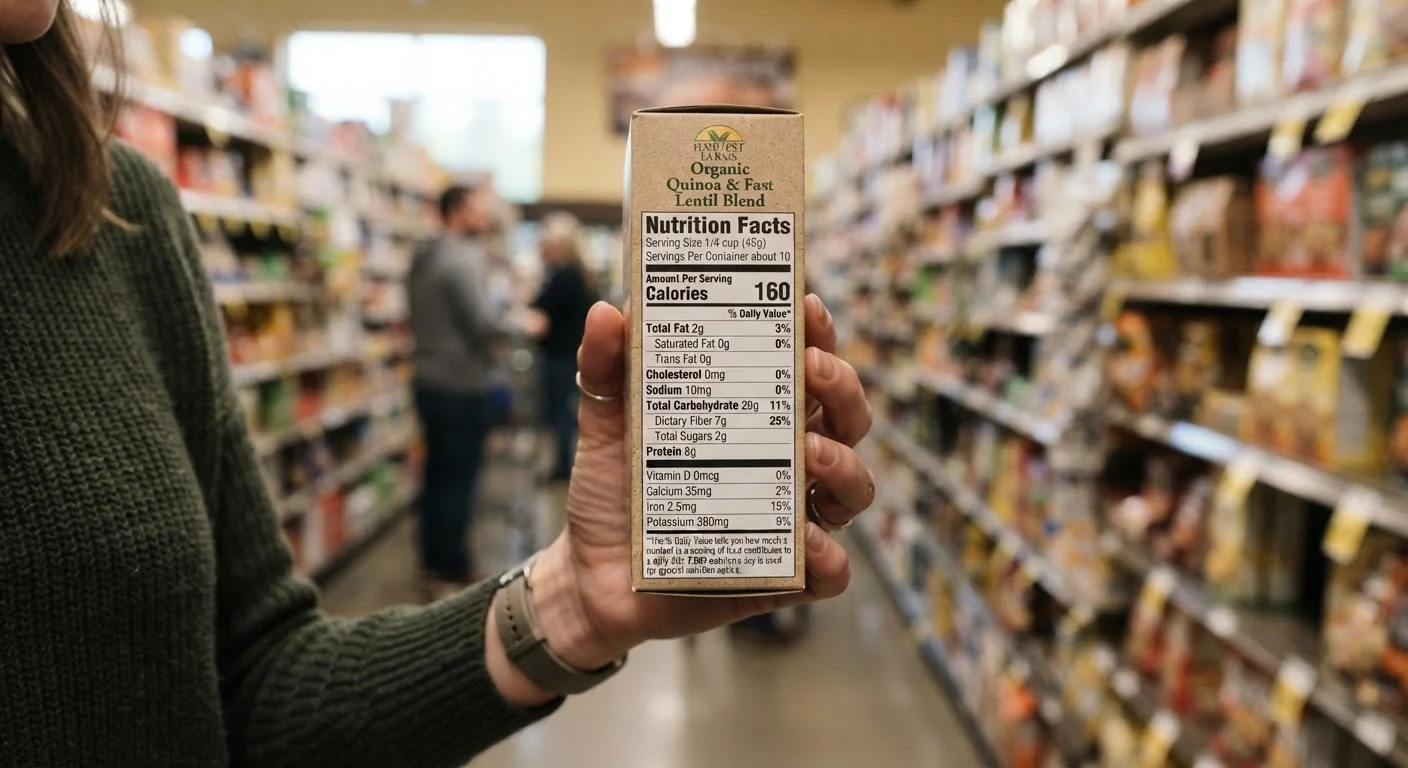
Photo: BridgeWish.com | Reliable Source Of Information editorial
Key Takeaways
- Serving size is the foundation of every number on the label — always check it first.
- % Daily Value tells you how much a nutrient contributes to a standard 2,000-calorie diet.
- Limit saturated fat, sodium, and added sugars; prioritize fiber, vitamins, and minerals.
- The ingredient list is ordered by weight, so the first few ingredients matter most.
- Calorie counts apply per serving, not per package — a detail many shoppers overlook.
Why the Nutrition Facts Label Exists
The Nutrition Facts panel is a standardized tool regulated by the U.S. Food and Drug Administration (FDA). Its purpose is straightforward: give consumers enough information to make informed dietary choices. Despite good intentions, the label packs a lot of data into a small space, and without a clear reading strategy, it's easy to zero in on the wrong number or misread a figure entirely.
Understanding the label is a foundational skill in healthy eating basics. Once you know what each section means and how the numbers relate to each other, grocery decisions become noticeably more confident. This guide walks through the panel section by section so nothing gets overlooked.
What you will need
How to Read Every Section of the Label
Work through the label from top to bottom using the steps below. Each section builds on the one before it, so sequence matters.
Find the serving size and servings per container
The serving size appears at the very top of the panel in bold. It reflects an amount people typically eat in one sitting, as defined by the FDA — not necessarily a recommended portion. Directly below it, the servings per container tells you how many of those portions are in the whole package.
Every number that follows — calories, fat, sodium, everything — applies to that single serving. If you eat two servings, you double every value on the label.
Note the calories per serving
Calories measure the total energy one serving provides. This number is displayed prominently because energy balance is central to many health goals. Keep in mind that calories alone don't reflect nutritional quality — 200 calories from oats and 200 calories from a cookie carry very different nutrient profiles.
Review the nutrients to limit
The label highlights three nutrients most Americans consume in excess:
- Saturated fat — linked in research to cardiovascular risk when eaten in large amounts
- Sodium — most adults consume more than the recommended daily amount
- Added sugars — distinct from naturally occurring sugars found in fruit or dairy; listed separately since 2020 FDA label updates
The % Daily Value column next to each tells you how much of a recommended daily limit one serving uses up, based on a 2,000-calorie reference diet.
Check the nutrients to get enough of
Below the nutrients to limit, the label lists nutrients many Americans fall short on:
- Dietary fiber — supports digestive health and sustained energy
- Vitamin D, calcium, iron, and potassium — nutrients with public health significance
Aim for higher % DV values in these categories. A food with 20% DV or more of fiber per serving is a meaningful source.
Scan the ingredient list
Ingredients are listed in descending order by weight, so whatever appears first makes up the largest portion of the food. A product listing sugar or refined flour as the first or second ingredient is primarily made of that ingredient, regardless of what the front label claims.
A shorter ingredient list generally means less processing, though length alone isn't a definitive quality marker. Look for whole food ingredients near the top and be aware of multiple names for added sugars — sucrose, high-fructose corn syrup, dextrose, and maltose are all forms of added sugar. For more detail on what ingredient order reveals, see how each section of the FDA panel works.
Use the 5/20 Rule as a Quick Guide
Common Misreads and How to Avoid Them
Even careful shoppers make predictable mistakes. The most frequent is treating the calorie count as applying to the whole package when it applies only to one serving. A bag of chips labeled 150 calories contains far more if it holds three servings.
A second common error is ignoring the % Daily Value (DV) column. The FDA's guideline is practical: 5% DV or less is considered low for a nutrient; 20% DV or more is considered high. This benchmark lets you compare products quickly without mental math.
Marketing claims on the front of a package — words like "natural," "light," or "multigrain" — are not regulated the same way the Nutrition Facts panel is. Always flip the package and verify the panel rather than relying on front-of-pack language. For a deeper dive into how those terms can be misleading, see nutrition label literacy.
Front-of-Pack Claims Are Not Regulated Like the Panel
This article is for general informational purposes only and is not a substitute for personalized dietary advice from a qualified healthcare provider or registered dietitian.
The content on this site is for informational purposes only and is not a substitute for professional advice. Always consult a qualified professional for guidance specific to your situation.