
Fixed-Rate vs. Adjustable-Rate Mortgages: Weighing Your Options

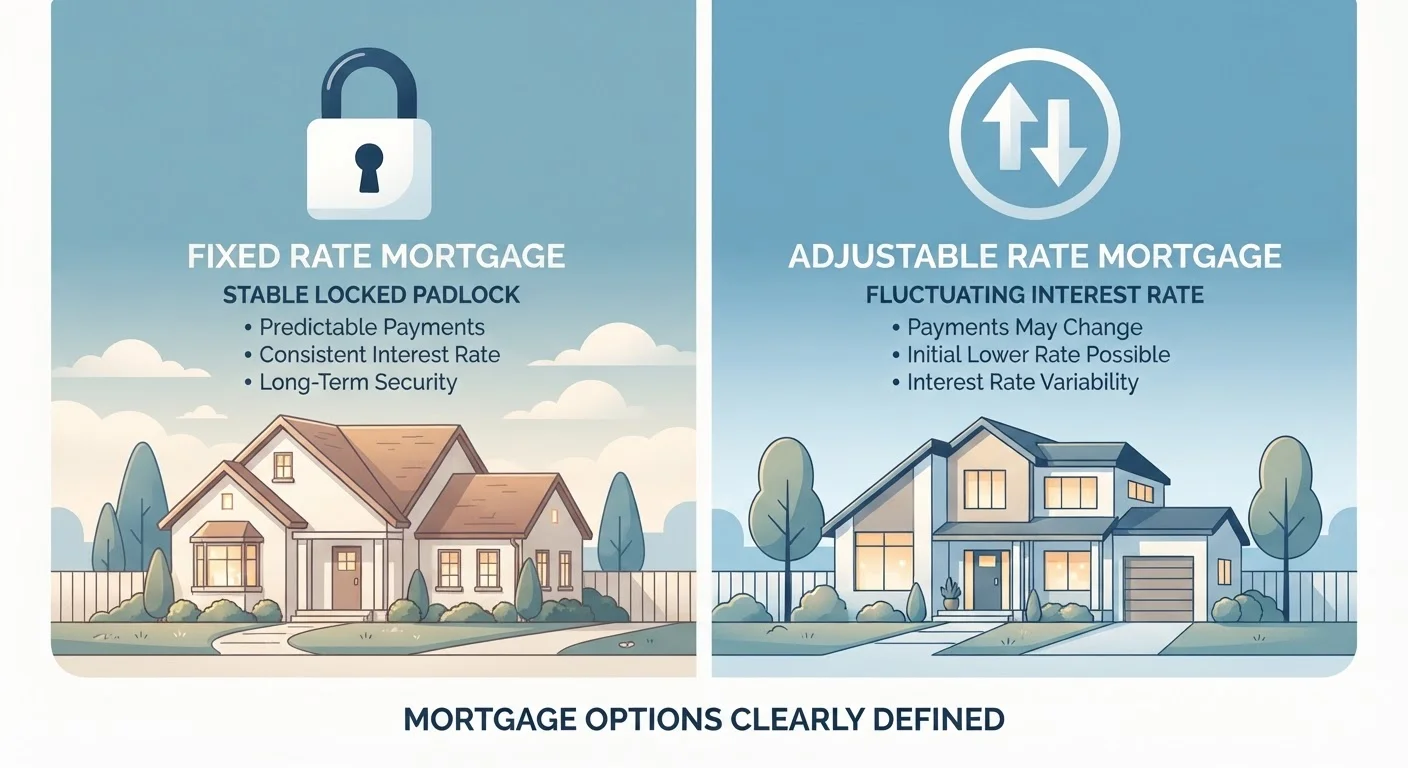
Photo: BridgeWish.com | Reliable Source Of Information editorial
Key Takeaways
- Fixed-rate mortgages keep your interest rate and monthly payment the same for the entire loan term.
- Adjustable-rate mortgages (ARMs) start with a lower introductory rate that can rise or fall after an initial period.
- Your choice should reflect how long you plan to stay in the home and your tolerance for payment uncertainty.
- ARMs carry meaningful risk if rates rise significantly after the fixed introductory period ends.
- Consulting a licensed mortgage professional can help you evaluate which structure fits your financial situation.
How Each Mortgage Type Works
A fixed-rate mortgage locks in a single interest rate for the life of the loan — typically 15 or 30 years. Your principal and interest payment stays the same every month, regardless of what happens in the broader interest rate environment. This makes budgeting straightforward. See how this type of stability compares to other financial commitments in our guide to fixed vs. variable expenses.
An adjustable-rate mortgage (ARM) works differently. It starts with a fixed introductory rate — often lower than prevailing fixed rates — for a set period, commonly 5, 7, or 10 years. After that initial window closes, the rate adjusts periodically (often annually) based on a market index, plus a lender margin. A "7/1 ARM," for example, holds its rate fixed for seven years, then adjusts once per year thereafter.
ARMs typically include rate caps that limit how much the interest rate can change at each adjustment and over the life of the loan. Even so, monthly payments can increase meaningfully once the adjustment period begins. For a deeper look at how loan structures and lender evaluation work across credit products, our auto loans explainer offers useful context on how lenders assess risk and set rates.
Comparing Fixed and Adjustable Rates Side by Side
The table below summarizes the key differences between fixed-rate and adjustable-rate mortgages across criteria that matter most to homebuyers.
| Fixed-Rate Mortgage | Adjustable-Rate Mortgage | |
|---|---|---|
| Interest rate | Stays the same throughout the loan | Fixed initially, then adjusts periodically |
| Monthly payment stability | Fully predictable | Can increase or decrease after intro period |
| Initial rate level | Typically higher than ARM intro rate | Often lower during introductory period |
| Rate risk | None — rate is locked | Risk of significant increases at adjustment |
| Best time horizon | Long-term ownership (10+ years) | Shorter ownership or refinance plans |
| Budget planning ease | Very easy — no surprises | Harder after adjustment period begins |
| Common loan terms | 15-year, 30-year | 5/1, 7/1, 10/1 ARM structures |
Keep in mind that these comparisons are general in nature. Actual rates, caps, and terms vary by lender, loan program, and market conditions. Always review the full loan estimate — a standardized document lenders are required to provide — before making any decision.
When a Fixed-Rate Mortgage Makes More Sense
A fixed-rate loan tends to be the more straightforward choice when you plan to own the home for a long time. Because the rate never changes, you're protected from rising interest rate environments that would increase an ARM payment.
Fixed-rate mortgages also simplify long-range financial planning. Knowing your housing payment won't change allows you to budget with confidence for other goals — retirement savings, education costs, or building an emergency fund. This connects directly to concepts covered in our budgeting basics hub: predictable fixed expenses are generally easier to manage within a household plan.
Get a Loan Estimate for Both Options
One trade-off: if you lock in a fixed rate during a period of elevated rates and rates later decline significantly, you'd need to refinance — incurring closing costs — to capture a lower payment. This adds a layer of timing risk to the fixed-rate option that's worth acknowledging.
When an Adjustable-Rate Mortgage May Be Worth Considering
An ARM can be a rational choice if you have a clear, credible plan to sell or refinance the home before the introductory rate period ends. For example, a buyer who is confident they'll relocate for work within five years may find a 5/1 ARM — with its lower initial rate — saves money compared to a 30-year fixed during that window.
ARMs may also appeal to buyers who expect their income to grow substantially and can absorb higher payments if rates adjust upward, or those purchasing in a high-rate environment who anticipate refinancing into a fixed product when conditions improve. However, these scenarios involve genuine uncertainty.
Don't Rely on Assumptions About Future Rates
It's also worth understanding how ARMs fit within the broader landscape of rent-vs-own decisions. Just as month-to-month leases trade stability for flexibility, ARMs trade payment certainty for a lower initial cost — and both come with trade-offs that depend heavily on your personal timeline.
Questions to Ask Before You Choose
Before choosing a loan structure, work through these key questions honestly:
- How long do you realistically plan to stay in the home? Under five years may favor an ARM; a decade or more typically favors a fixed rate.
- How much payment variability can your budget absorb? If a significant rate increase would strain your finances, a fixed rate offers important protection.
- What does the full loan estimate show? Compare the APR, not just the interest rate, across loan types to see the true cost.
- What are the ARM's caps? Understand the initial cap (first adjustment limit), periodic cap (subsequent adjustments), and lifetime cap (maximum rate increase over the loan's life).
This is general financial education, not personalized advice. A licensed mortgage professional or HUD-approved housing counselor can help you evaluate your specific income, credit profile, and goals before you commit to either structure. You can also explore how your credit profile affects your loan options through our credit and debt hub.
This article provides general educational information about mortgage loan types and is not financial or legal advice. Mortgage terms vary by lender and market conditions. Consult a licensed mortgage professional or financial advisor before making decisions about your home loan.
The content on this site is for informational purposes only and is not a substitute for professional advice. Always consult a qualified professional for guidance specific to your situation.