
HVAC Filters, Coils, and Airflow: What Homeowners Should Understand

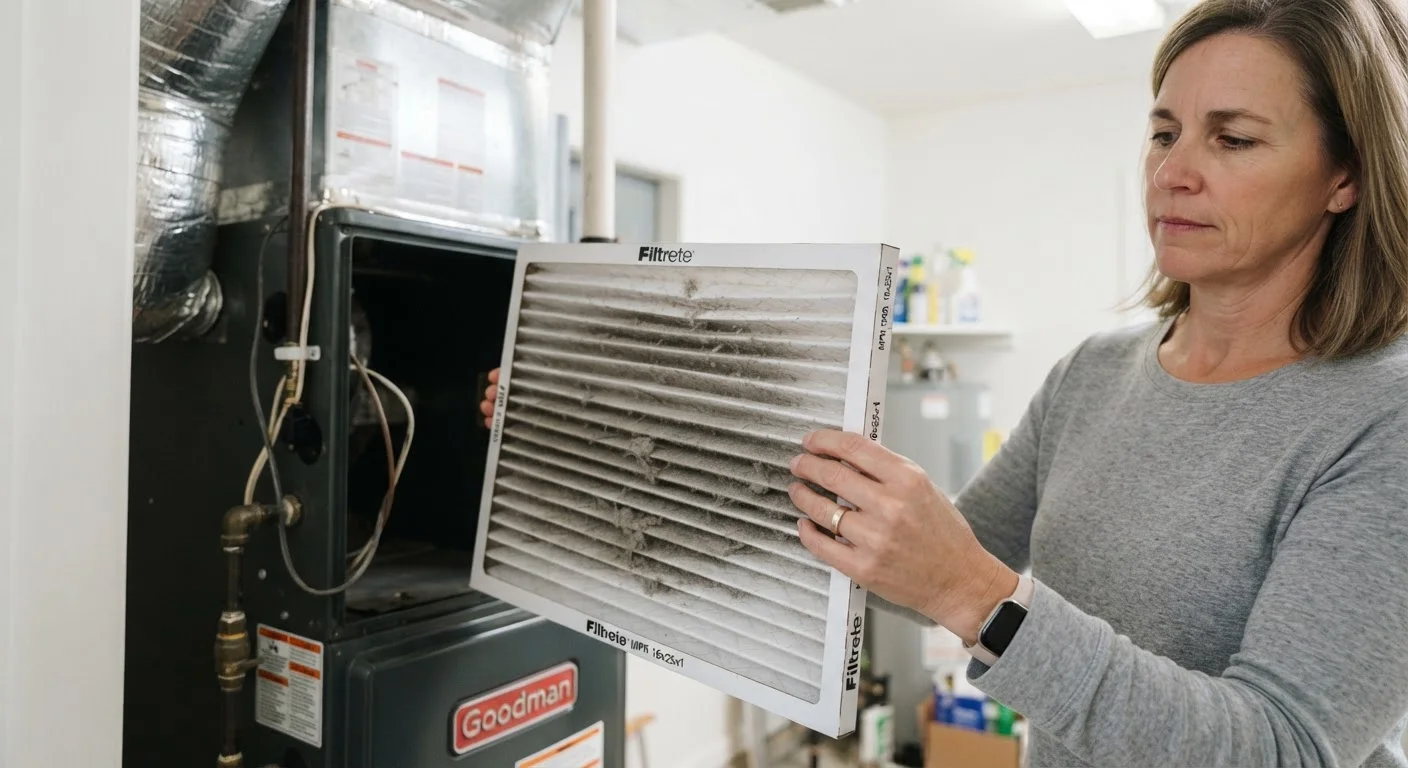
Photo: BridgeWish.com | Reliable Source Of Information editorial
Key Takeaways
- Replacing your air filter on schedule is the single highest-impact DIY task for HVAC health.
- Dirty evaporator and condenser coils reduce efficiency and can cause system failure if left unaddressed.
- Blocked vents and closed registers restrict airflow and stress the blower motor.
- Most homeowners can handle filter changes, vent cleaning, and outdoor unit clearance.
- Refrigerant handling, electrical work, and coil chemical cleaning require a licensed HVAC technician.
How Your HVAC System Moves Air
Your heating and cooling system — whether it's a furnace paired with central air conditioning or a heat pump — works by circulating air through a loop: drawing air in, conditioning it, and pushing it back out through ducts into your living spaces. Three components sit at the center of that loop: the filter, the coils, and the blower fan. When any one of them is compromised, the whole system works harder for worse results.
Return air vents pull indoor air back to the air handler. That air passes through the filter, then flows over the evaporator coil (which removes heat and humidity in cooling mode), and is pushed by the blower through supply ducts to each room. Meanwhile, the outdoor unit's condenser coil releases the extracted heat outside. Understanding this path makes it far easier to diagnose problems and know which tasks are genuinely within a homeowner's reach.
MERV Rating
A standardized scale (1–16 for residential use) rating how effectively an air filter captures particles — higher numbers filter smaller particles but restrict more airflow.
Evaporator Coil
The indoor coil that absorbs heat from your home's air during cooling. Cold refrigerant flowing through it causes moisture in the air to condense and drain away.
Condenser Coil
The outdoor coil that releases the heat extracted from inside your home into the outside air. It sits inside the outdoor unit alongside the compressor.
Static Pressure
The resistance the blower fan must overcome to push air through your duct system. Clogged filters or closed vents raise static pressure and stress the equipment.
Condensate Drain
A pipe that carries water produced by the evaporator coil to a floor drain or outside. Algae and debris can block it, causing water to back up near the air handler.
Refrigerant
The fluid that cycles between the indoor and outdoor coils, absorbing heat in one location and releasing it in another. Handling it legally requires EPA certification.
Filters: The First Line of Defense
The air filter sits between the return air duct and the air handler. Its job is to catch dust, pollen, pet dander, and other airborne particles before they coat internal components. A clogged filter doesn't just reduce air quality — it forces the blower to work against increased resistance, raising energy use and accelerating wear.
Filters are rated by their MERV (Minimum Efficiency Reporting Value) score. A higher number means finer filtration, but also more airflow resistance. For most homes, a MERV 8–11 filter strikes a reasonable balance. Very high-efficiency filters (MERV 13 and above) are appropriate only for systems specifically designed to handle the added restriction — using one in an incompatible unit can starve the coil of airflow, causing it to freeze in cooling mode.
Replacement frequency depends on filter thickness, household occupancy, and pets. A thin 1-inch filter in a home with two dogs may need monthly replacement; a 4-inch media filter in a single-occupant home may last up to a year. When in doubt, pull the filter and hold it up to light — if you can't see light through it, replace it.
Set a Filter Reminder Right Now
Coils and Why They Get Dirty
Even with a functioning filter, some particles reach the coils over time. The evaporator coil — located inside the air handler — operates at cold temperatures, causing moisture to condense on it. That moisture acts like adhesive for dust, gradually building an insulating layer that reduces the coil's ability to transfer heat. The result is reduced cooling capacity and, if buildup is severe, ice formation on the coil.
The condenser coil sits in your outdoor unit and is exposed to the elements. Cottonwood seeds, grass clippings, leaves, and general grime can mat against the fins, blocking airflow through the coil and causing the compressor to run hotter than designed. Over time, high operating temperatures shorten compressor life.
Coil maintenance is why professional tune-ups matter. A technician can measure system pressures and temperatures to assess coil performance before visible problems appear. See the seasonal maintenance calendar for when to schedule these visits alongside other home upkeep tasks.
Don't Let Ice Build Up on the Coil
What You Can Do Yourself
Several HVAC maintenance tasks are straightforward, require no special tools or licenses, and make a measurable difference:
- Replace the air filter on the schedule appropriate for your home. Keep a few spare filters on hand so the task stays convenient.
- Clear supply and return vents of furniture, rugs, and curtains. Blocked registers restrict airflow and create pressure imbalances.
- Keep the outdoor unit clear. Maintain at least 18–24 inches of clearance around the condenser, and trim back any vegetation seasonally. Rinse the fins gently with a garden hose — spray from the inside out if possible, never with a pressure washer.
- Check and clear the condensate drain line. The evaporator coil produces condensate that drains through a PVC line. Pouring a small amount of diluted white vinegar down the access port periodically can help prevent algae buildup. If you notice standing water near the air handler, the line may be clogged.
- Inspect visible ductwork in accessible areas like the basement or attic for obvious gaps, disconnected joints, or torn insulation.
These tasks, combined with consistent filter replacement, handle the majority of routine HVAC upkeep. For context on how these fit into your broader home care schedule, see the annual home maintenance guide.
When to Call a Licensed Technician
Some HVAC work is regulated, requires specialized equipment, or carries safety risks that make professional service non-negotiable:
- Refrigerant handling: Checking or adding refrigerant (commonly called Freon, though newer systems use different refrigerants) requires EPA certification. Low refrigerant isn't a consumable issue — it signals a leak that must be found and repaired.
- Electrical components: Capacitors, contactors, and control boards can hold dangerous charges even when power is off. Leave these to a qualified technician.
- Chemical coil cleaning: Evaporator coil cleaning typically involves no-rinse coil cleaners applied inside a closed air handler. Done incorrectly, it can damage fins or introduce moisture problems.
- Duct sealing and balancing: Significant duct leakage requires pressure testing and professional sealing — not tape alone.
- Unusual noises or smells: Grinding, banging, or burning smells warrant a service call before running the system further.
Plan for professional service at least once a year — twice is better, aligned with the start of heating and cooling seasons. Like other major home systems, staying ahead of problems is almost always more cost-effective than reactive repair. The same principle applies across home maintenance: see how HVAC care connects to other safety checks in our guide to smoke alarms, CO detectors, and fire extinguishers.
This article is for general informational and educational purposes only. HVAC systems vary by manufacturer, age, and installation. Always follow your equipment manufacturer's guidance and consult a licensed HVAC professional before performing any work beyond basic filter replacement and exterior cleaning.
Frequently Asked Questions
The content on this site is for informational purposes only and is not a substitute for professional advice. Always consult a qualified professional for guidance specific to your situation.