
Plumbing Basics Every Homeowner Should Understand

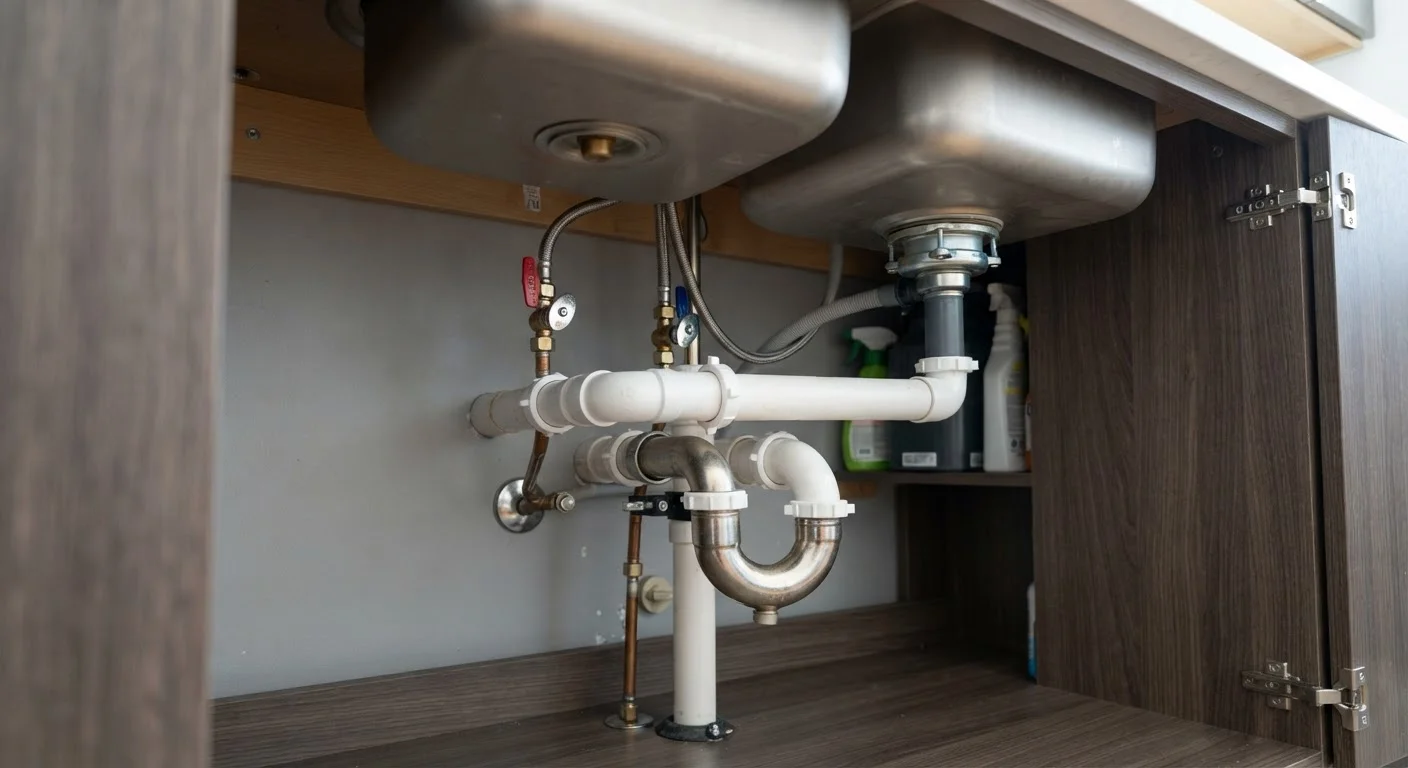
Photo: BridgeWish.com | Reliable Source Of Information editorial
Key Takeaways
- Your home has two separate plumbing systems: one that brings fresh water in and one that carries waste out.
- Knowing the location of your main shut-off valve can prevent serious water damage in an emergency.
- Homeowners can safely handle minor tasks like unclogging drains and replacing faucet aerators.
- Work involving gas lines, sewer mains, or water heaters typically requires a licensed plumber.
- Seasonal maintenance — like insulating pipes before winter — helps prevent costly repairs.
How Your Home's Plumbing System Works
Your home's plumbing operates as two distinct systems working in tandem. The supply system delivers pressurized fresh water from a municipal main or private well to every faucet, appliance, and fixture in the house. The drain-waste-vent (DWV) system relies on gravity to carry used water and waste out to a sewer or septic system. These systems never mix — and understanding that separation is the foundation of plumbing literacy.
Water enters your home through a single main supply line and passes through a master shut-off valve before branching off to cold-water lines throughout the house. A separate branch feeds the water heater, which then supplies hot water to the same fixtures. The DWV system uses sloped pipes to guide waste downward while vent pipes — typically exiting through the roof — allow sewer gases to escape safely and prevent suction that would empty your drain traps.
Supply system
The pressurized network of pipes that delivers fresh, clean water from a public main or private well to faucets and appliances throughout your home.
Drain-waste-vent (DWV)
The gravity-fed system that carries used water and waste out of the house while vent pipes allow sewer gases to safely exit through the roof.
P-trap
A curved section of pipe beneath every drain that holds standing water, forming a barrier that prevents sewer gases from entering your living spaces.
Shut-off valve
A valve that stops water flow either to the entire house (main shut-off) or to a single fixture, allowing repairs without disrupting the whole system.
Water pressure (psi)
The force at which water moves through your pipes, measured in pounds per square inch. Most homes operate safely between 40 and 80 psi.
Aerator
A small mesh screen screwed onto a faucet spout that mixes air into the water stream to reduce flow rate and minimize splashing.
Key Components Every Homeowner Should Know
Familiarity with these core components makes maintenance far less intimidating:
- Main shut-off valve: Usually located where the supply line enters the house — near the foundation, in a crawl space, or in a utility room. Closing it stops all water flow to the home. Locate it before you need it.
- Individual fixture shut-offs: Small valves under sinks and behind toilets that let you cut water to a single fixture without affecting the whole house.
- P-trap: The curved pipe beneath every sink drain. It holds a small amount of water that blocks sewer gases from entering living spaces.
- Water meter: Installed by your utility provider, it measures consumption and can reveal hidden leaks.
- Pressure regulator: If your home has one, it keeps supply pressure within a safe range — typically between 40 and 80 psi. Excessively high pressure stresses pipes and appliances.
- Water heater: Either a storage tank that continuously heats water or a tankless (on-demand) unit. Both require periodic maintenance to function efficiently.
Knowing where these components are — not just that they exist — is what lets you respond quickly to a problem. Consider labeling your shut-off valves so any household member can act in an emergency. For a broader look at how this kind of knowledge connects to ownership costs, see common home maintenance misconceptions that can quietly drain your budget.
Label Your Shut-Off Valves Now
Routine Maintenance You Can Do Yourself
Many plumbing tasks fall well within the reach of a careful homeowner. Here's what you can generally handle without professional help:
- Unclogging drains: A cup plunger clears most sink and tub clogs. A drain snake handles blockages further down the line. Avoid chemical drain cleaners for routine use — they can degrade older pipes over time.
- Replacing faucet aerators and showerheads: These screw on and off by hand or with basic tools. Cleaning or replacing a mineral-clogged aerator restores water flow instantly.
- Fixing a running toilet: In most cases, the flapper (the rubber seal at the bottom of the tank) is worn and needs replacing — a part available at any hardware store for a few dollars.
- Insulating exposed pipes: Before winter, wrap pipes in unheated areas like garages, crawl spaces, and attics with foam pipe insulation. This reduces the risk of freezing and bursting.
- Checking for slow leaks: Periodically inspect under-sink cabinets, around the base of toilets, and near the water heater for moisture, rust stains, or mineral deposits.
- Flushing the water heater: Sediment accumulates at the bottom of tank water heaters over time. Draining a few gallons annually helps maintain efficiency — follow the manufacturer's instructions and take appropriate safety precautions with hot water.
Don't Skip Safety Steps With Hot Water
When to Call a Licensed Plumber
Knowing your limits protects both your home and your safety. Some plumbing work carries real risk if done incorrectly, and in many jurisdictions it must be permitted and performed by a licensed professional. Call a plumber for:
- Any work involving gas lines connected to water heaters or appliances — gas work is regulated and dangerous when mishandled.
- Sewer line problems, such as recurring backups across multiple drains, which often indicate a blockage or break in the main line.
- Water heater installation or replacement, which typically requires permits and must meet local codes.
- Low water pressure throughout the house, which can signal pipe corrosion, a failing pressure regulator, or a supply-side issue.
- Visible pipe corrosion, pinhole leaks, or wet spots inside walls or ceilings — these warrant professional diagnosis before the damage spreads.
- Any new pipe runs or fixture additions, including adding a bathroom or relocating a sink.
If you are unsure whether a task crosses the DIY line, our guide on when to DIY versus hire a licensed professional walks through the decision in detail. And if you're evaluating a home to purchase, what first-time buyers need to know before house hunting covers how to assess plumbing condition during the inspection process.
This article is for general informational and educational purposes only. Plumbing codes and permit requirements vary by location. Always verify local regulations with your municipal building department and consult a licensed plumber for work beyond basic maintenance.
Frequently Asked Questions
The content on this site is for informational purposes only and is not a substitute for professional advice. Always consult a qualified professional for guidance specific to your situation.