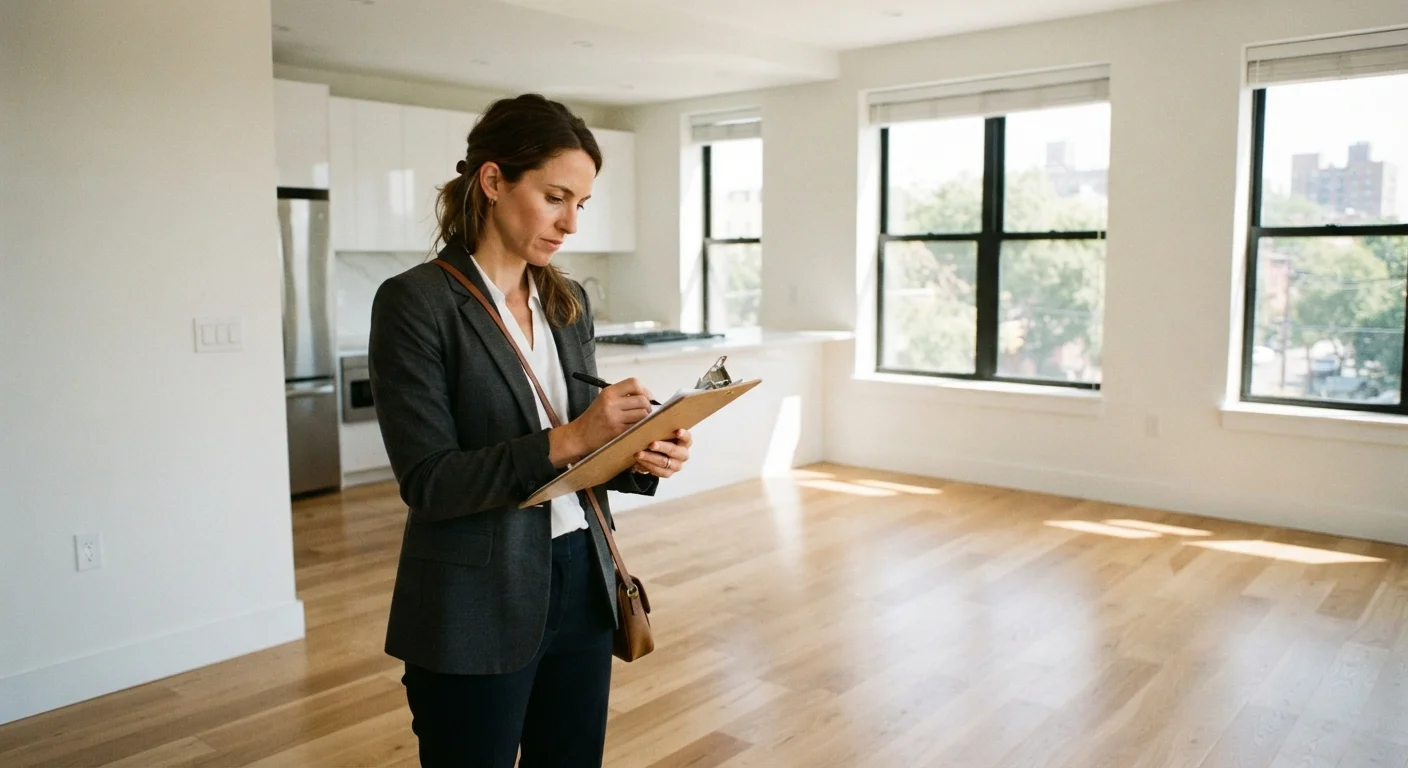
Photo: BridgeWish.com | Reliable Source Of Information editorial
Use this room-by-room checklist to document existing damage and ask the right questions before signing a lease or paying a deposit.
Key Takeaways
Document all existing damage in writing and with photos before signing anything.
Test every switch, outlet, faucet, and appliance during your walkthrough — not after.
Ask the landlord specific questions about utilities, policies, and maintenance procedures.
A pre-signing walkthrough is legally distinct from a move-in inspection — both matter.
Never pay a security deposit without receiving a written receipt and a copy of the lease.
Why This Walkthrough Matters Before the Lease Is Signed
Most renters know to inspect a unit on move-in day, but the walkthrough you do before signing serves a different and equally important purpose: it gives you the information you need to decide whether to rent at all, and what conditions to request in writing before you're legally bound.
If you're new to renting, the guide to your first rental covers what to expect from applications, deposits, and lease terms. This checklist picks up where that leaves off — inside the unit, clipboard in hand.
Bring a phone for photos and video, a notepad for notes, and ideally a second person. Plan to spend at least 30 minutes, even if the unit looks clean at first glance.
Required
Smartphone with camera
Take timestamped photos and video of every room to create a visual record of pre-existing conditions.
Required
Phone charger or small USB device
Plug into outlets throughout the unit to quickly verify they are live and functioning.
Required
Notepad and pen
Record landlord responses, defect observations, and items to follow up on in writing.
Optional
Printed condition report form
A structured form for logging the condition of each room that can be countersigned by the landlord.
Optional
Small flashlight
Inspect under sinks, inside closets, and in dim corners where phone cameras miss detail.
Room-by-Room Inspection Checklist
Work through every area systematically. If the landlord or property manager rushes you, that itself is worth noting. A landlord comfortable with transparency will give you the time you need.
Preparation — Before You Arrive
Charge your phone and bring a portable charger so you can photograph every room without running out of battery.Must
Download or print a blank condition report form to fill out on-site.Should
Bring a notepad to record landlord responses to your questions verbatim.Should
Request the walkthrough during daylight hours so you can see surfaces clearly without relying on artificial lighting.Should
Walls, Floors, and Ceilings
Photograph all visible scuffs, holes, stains, or water marks on walls and ceilings in every room.Must
Check flooring for scratches, chips, soft spots, or loose tiles — pay attention to corners and under windows where water damage often starts.Must
Look up at ceilings for signs of staining, peeling paint, or bubbling that may indicate a past or active leak.Must
Kitchen
Turn on every burner and the oven to confirm they heat correctly; open and close all cabinet doors to check hinges and alignment.Must
Run the faucet fully and check under the sink for moisture, staining, or active drips that signal a plumbing issue.Must
Test the refrigerator (if included) by checking that both the fridge and freezer compartments are cold.Must
Run the dishwasher through a short cycle if one is included and watch for leaks around the door seal.Should
Inspect the range hood filter and exhaust fan — a clogged or broken fan affects air quality and fire safety.Nice to have
Bathrooms
Flush the toilet and confirm it fills properly; check around the base for soft flooring that could indicate a past leak.Must
Run the shower and bath faucets on both hot and cold, and note how long hot water takes to arrive.Must
Check grout, caulk, and tile around the tub and shower for mold, cracks, or gaps — these can worsen quickly.Must
Test the bathroom exhaust fan to confirm it actually moves air; poor ventilation accelerates mold growth.Should
Electrical, Heating, and Windows
Plug a phone charger into every outlet in every room to verify each one is live and functioning.Must
Flip every light switch and confirm the fixture it controls — document any that don't work.Must
Test the heating and cooling system by running both modes; note any unusual sounds or smells.Must
Open and close every window to confirm locks, screens, and seals are intact — broken seals cause drafts and higher utility bills.Should
Locate the circuit breaker panel and confirm it is labeled and accessible.Nice to have
Safety Equipment and Entry
Confirm that smoke detectors are present in required locations and press the test button on each one.Must
Verify that carbon monoxide detectors are installed if the unit uses gas appliances or an attached garage.Must
Test all door locks, deadbolts, and window locks from both sides to confirm they engage fully.Must
Ask about the building's entry security — key fob, intercom, or keyed access — and whether locks are changed between tenants.Should
Photograph Everything Before Signing
Even minor pre-existing damage — a scuff on a baseboard, a stained ceiling tile — can be charged back to you at move-out if you have no evidence it existed before your tenancy. Take timestamped photos of every imperfection, share them with your landlord by email the same day, and keep a copy for yourself. This single habit prevents the most common deposit disputes.
After your walkthrough, if issues surface that the landlord agrees to fix, get that commitment in writing — either as an addendum to the lease or a signed letter — before you hand over any funds.
Questions to Ask Before You Leave
A physical inspection tells you the condition of the unit. But several critical factors only emerge through direct conversation. If a landlord is evasive or unable to answer basic questions about utilities or maintenance, treat that as a red flag.
Never Pay Without a Written Receipt
Some landlords or property managers ask for a cash deposit or application fee before paperwork is finalized. Always insist on a written, signed receipt for any money you hand over, and never pay the full security deposit before you have a signed copy of the lease in hand. Paying without documentation gives you little legal recourse if a dispute arises.
Watch for Signs of Pest Activity
Check inside cabinets, behind appliances, and along baseboards for droppings, nesting material, or evidence of roaches or mice. Ask the landlord directly whether the unit or building has had pest issues in the past 12 months. Many states require landlords to disclose known infestations — knowing the answer before you sign is far better than discovering one after.
Once you've signed and moved in, your best protection is documentation. Learn how to handle maintenance requests the right way so issues get resolved promptly and you have a paper trail. And when your tenancy eventually ends, a move-out deposit guide can walk you through what landlords are and aren't allowed to deduct.
Home Editorial Team is the collective byline for our editorial team and contributor network. Articles published under this byline or an editorial pen name are researched, written, and reviewed according to our editorial standards for clarity, consistency, and independence before publication.
The content on this site is for informational purposes only and is not a substitute for professional advice. Always consult a qualified professional for guidance specific to your situation.