
Resource Guarding in Dogs: Recognizing the Signs Before They Escalate

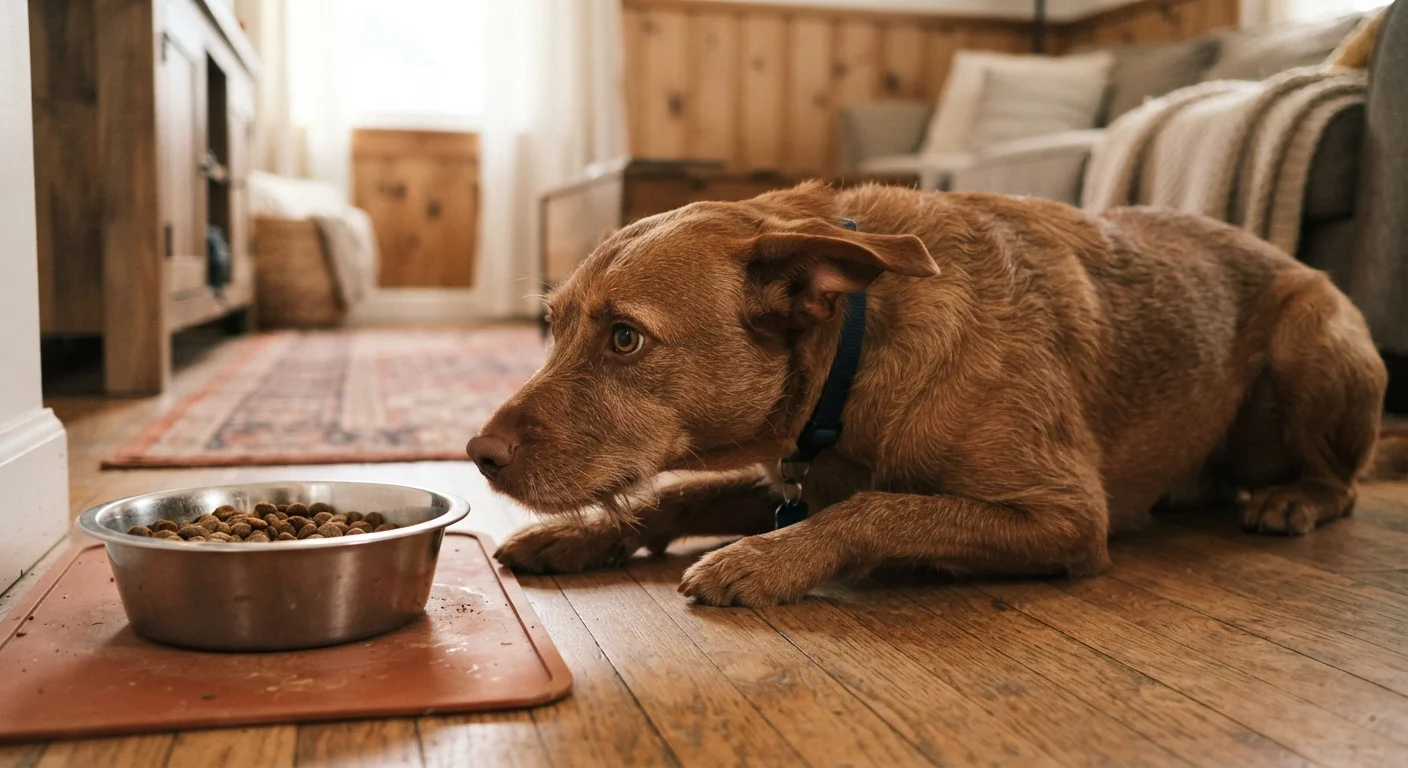
Photo: BridgeWish.com | Reliable Source Of Information editorial
Key Takeaways
- Resource guarding is a normal dog behavior rooted in instinct, not dominance or spite.
- Early signs include stiffening, hard stares, and eating faster — not just growling.
- Punishing a growl can suppress the warning signal and make bites more likely.
- Systematic desensitization and counter-conditioning are the most effective humane approaches.
- Severe or escalating guarding warrants guidance from a certified professional behaviorist or veterinarian.
What Resource Guarding Actually Looks Like
Most owners recognize the obvious version: a dog that growls when someone approaches their bowl. But guarding behavior usually starts much more quietly, and catching it early is what prevents escalation.
Early warning signs include:
- Stiffening of the body — the dog freezes or becomes very still near a valued item
- Hard stare — a fixed, unblinking gaze directed at the perceived threat
- Eating faster — gulping food more quickly when someone nearby approaches
- Side-eye or whale eye — showing the whites of the eyes while keeping head low over the item
- Hovering or covering — positioning the body directly over the resource
If these subtler signals go unnoticed or are ignored, behavior may escalate to growling, snapping, or lunging. Understanding this progression is a core part of reading canine body language accurately.
Guarding Isn't Always About Food
Why Dogs Guard — The Instinct Behind the Behavior
Resource guarding isn't defiance or manipulation. For dogs, it's an evolutionary holdover: animals that protected their food and valued possessions were more likely to survive. Domestic dogs still carry this wiring, even when there's zero real competition for resources at home.
Anxiety is at the heart of most guarding behavior. The dog genuinely believes something important might be taken away. Framing it as a communication of discomfort rather than aggression changes how you respond — and that shift matters enormously. Fear and aggression can look alike, and conflating them often leads to responses that make things worse.
It's also worth checking whether a sudden change in guarding behavior could signal physical discomfort. Animals in pain sometimes become more defensive about their space and resources — something explored further in our article on subtle signs your pet may be in pain.
“The growl is a gift. It's the dog's way of saying 'I'm uncomfortable' before the situation becomes dangerous. Our job is to listen to that message and change what's causing it — not silence the warning.”
— Jean Donaldson, Founder of the Academy for Dog Trainers and author of 'Mine! A Practical Guide to Resource Guarding in Dogs'
Humane Approaches That Actually Help
The goal isn't to force a dog to tolerate having things taken from them — it's to change how the dog feels about someone approaching their valued item. Two research-backed techniques are most useful here:
Counter-Conditioning
Pair the approach of a person with something the dog finds highly rewarding. Walk toward the dog's bowl, drop in a high-value treat, then walk away. Repeat consistently. Over time, your approach becomes a predictor of good things — not a threat.
Desensitization
Gradually reduce the dog's emotional response by starting at a distance that doesn't trigger guarding and very slowly closing that gap over many sessions. Never push past the dog's threshold — if they stiffen or stare, you've moved too fast.
Practice 'Trade' With Low-Stakes Items First
What not to do: avoid taking items away to 'prove you're in charge,' reaching into the bowl while the dog eats to 'get them used to it,' or punishing growling. These approaches tend to suppress warning signals while increasing underlying anxiety — a combination that raises bite risk rather than reducing it. This aligns with what behavioral science tells us about dominance-based myths.
When to Bring in a Professional
Mild guarding — a dog that stiffens briefly but settles — can often be managed with the techniques above, practiced carefully and consistently by a calm, informed owner. But some situations call for professional guidance:
- The dog has snapped at or bitten a person or another animal
- Guarding has escalated rapidly or appeared suddenly in an adult dog
- Children or vulnerable individuals are in the home
- Multiple resources are being guarded across many contexts
A certified applied animal behaviorist (CAAB) or a veterinary behaviorist (Dip ACVB) can assess the full picture and design a tailored behavior modification plan. Your veterinarian is also a good first call — they can rule out pain or medical contributors and refer you appropriately. For a broader look at behavioral signals worth discussing with your vet, see behavioral changes that deserve a closer look.
This article is for general informational purposes only and does not constitute professional veterinary or behavioral advice. Always consult a qualified veterinarian or certified animal behaviorist for guidance specific to your dog's needs.
Frequently Asked Questions
The content on this site is for informational purposes only and is not a substitute for professional advice. Always consult a qualified professional for guidance specific to your situation.