
Signs Your Dog May Be Reacting Out of Fear, Not Aggression

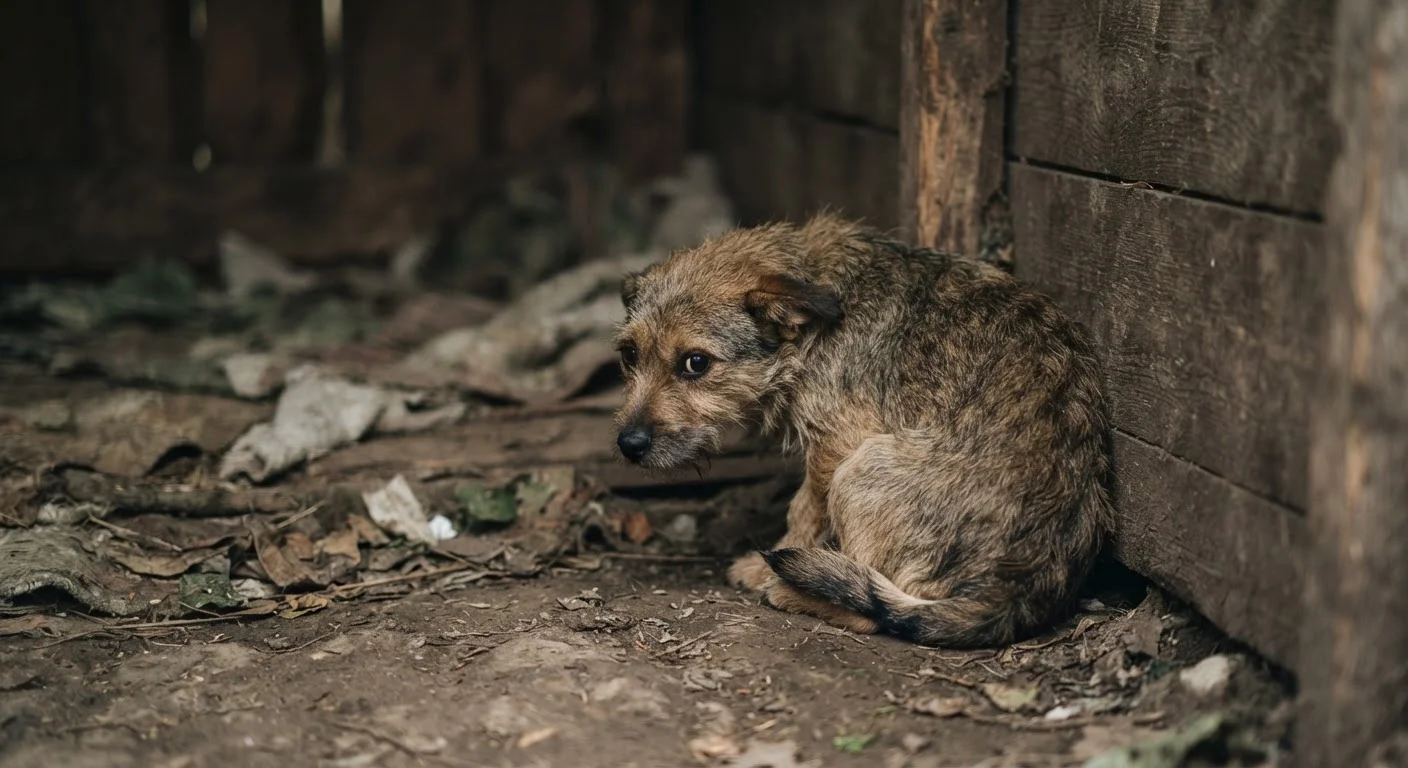
Photo: BridgeWish.com | Reliable Source Of Information editorial
Why the Distinction Matters
When a dog growls, snaps, or lunges, many owners instinctively label the behavior as aggression. But a significant portion of reactive behavior in dogs is rooted in fear, not hostility. Misreading the motivation leads to responses — punishment, dominance-based correction — that can make the underlying problem worse, not better.
Fear-based reactions follow a predictable emotional arc: the dog perceives a threat, feels it cannot escape, and escalates through warning signals until the trigger moves away. Understanding this pattern helps owners intervene earlier, more calmly, and more effectively. It also changes the training conversation entirely — from "how do I stop this behavior" to "how do I help my dog feel safer."
See our guide to the FAS scale for a structured framework veterinarians and behaviorists use to assess emotional distress in animals.
Key Body Language Cues That Suggest Fear
Dogs communicate distress through posture, facial expression, and movement long before any overt reaction occurs. Learning to read these signals early is one of the most valuable skills an owner can develop.
Fear reactivity
A pattern of behavior in which a dog responds to perceived threats with barking, lunging, or snapping — driven by fear rather than offensive intent. The dog is trying to create distance from the trigger, not assert dominance.
Calming signals
Subtle behaviors — such as yawning, lip licking, or looking away — that dogs use to communicate discomfort and de-escalate tension. First described systematically by Norwegian dog trainer Turid Rugaas.
Counter-conditioning
A training technique that pairs a feared stimulus with something positive (such as high-value treats) at a manageable intensity, gradually changing the dog's emotional association from negative to neutral or positive.
Whale eye
A body language signal where a dog turns its head away from a threat while keeping its eyes fixed on it, revealing the white sclera. It indicates discomfort and is often a precursor to escalation.
Distance-increasing behavior
Any behavior — growling, barking, lunging, snapping — aimed at making a perceived threat move farther away. It is characteristic of fear-based reactivity rather than offensive aggression.
Desensitization
Gradual, controlled exposure to a trigger at a level the dog can tolerate without reacting, with the goal of reducing the fear response over time. Usually combined with counter-conditioning.
Posture and Movement
- Tail tucked low or pressed against abdomen — a submissive, fearful posture rather than a confident one
- Body weight shifted backward or crouching — the dog is trying to make itself smaller and may be looking for an exit
- Whale eye (showing whites of the eyes) — the head is turned away while the eyes stay locked on the perceived threat
- Yawning, lip licking, or nose licking out of context — these are calming signals that indicate stress, not contentment
Facial and Vocal Signals
- Ears pinned flat against the head — distinct from the forward-pricked ears of a confident or alert dog
- Panting without heat or exercise — a physical sign of emotional arousal
- High-pitched or broken growl — fear growls often sound different from a low, steady warning growl
- Snapping with mouth closed or with a quick retreat — the dog is warning, not committing to a bite
It's worth noting that these signals can overlap with pain-related behavior. If your dog's reactivity has appeared suddenly, subtle signs of pain may be worth ruling out with your veterinarian.
How Fear Reactions Differ From Confident Aggression
Truly offensive aggression — the kind rooted in resource guarding, predatory drive, or redirected frustration — typically looks very different from fear-based reactivity. Confident dogs approaching offensively tend to hold a stiff, forward-leaning posture, tail raised and rigid, ears forward, gaze direct and hard. The dog is moving toward the trigger, not bracing against an escape being blocked.
Fear-reactive dogs, by contrast, often display a mixed signal pattern: they may lunge or bark explosively, but their body language underneath tells a different story — crouching, spinning, or immediately retreating once the trigger is gone. This is sometimes called "distance-increasing behavior" by behaviorists: the dog is trying to make the scary thing go away, not assert control over it.
Resource guarding is one common example where owners sometimes confuse the two — growling over food or toys can look similar on the surface but involves different triggers and different intervention strategies.
Suppressed Warning Signals Are a Hidden Risk
Many dogs display a combination of both fear and frustration — especially dogs that have been punished for growling in the past and have had their warning signals suppressed. If you're unsure, a certified veterinary behaviorist or credentialed animal behaviorist is the most reliable source of assessment.
What to Do — and What to Avoid
Once you recognize that fear is likely driving the behavior, your response strategy shifts significantly.
Helpful approaches
- Increase distance from the trigger immediately rather than pushing through the reaction
- Stay calm and neutral — dogs read owner anxiety, and escalating your own energy can confirm that something threatening is nearby
- Use counter-conditioning over time — pairing the feared trigger with something genuinely positive (treats, play) at a distance the dog can tolerate
- Work with a certified professional — a Certified Professional Dog Trainer (CPDT-KA) or a board-certified veterinary behaviorist can build a structured desensitization plan
Approaches to avoid
- Punishment or corrections during a fear response — this confirms the dog's sense of threat and can accelerate reactivity
- Flooding (forcing exposure to the trigger) — without careful professional guidance, this approach risks worsening the fear significantly
- Dismissing warning signals — growling is communication; suppressing it without addressing the underlying emotion removes the dog's ability to warn before escalating
For a broader look at behavioral myths that often shape how owners interpret their dogs, see common pet behavior myths.
This article is for general educational purposes only. For personalized guidance on your dog's behavior, please consult a qualified veterinary professional or certified animal behaviorist.
The content on this site is for informational purposes only and is not a substitute for professional advice. Always consult a qualified professional for guidance specific to your situation.