
Why Dogs Pull on the Leash — and What's Actually Happening in Their Heads

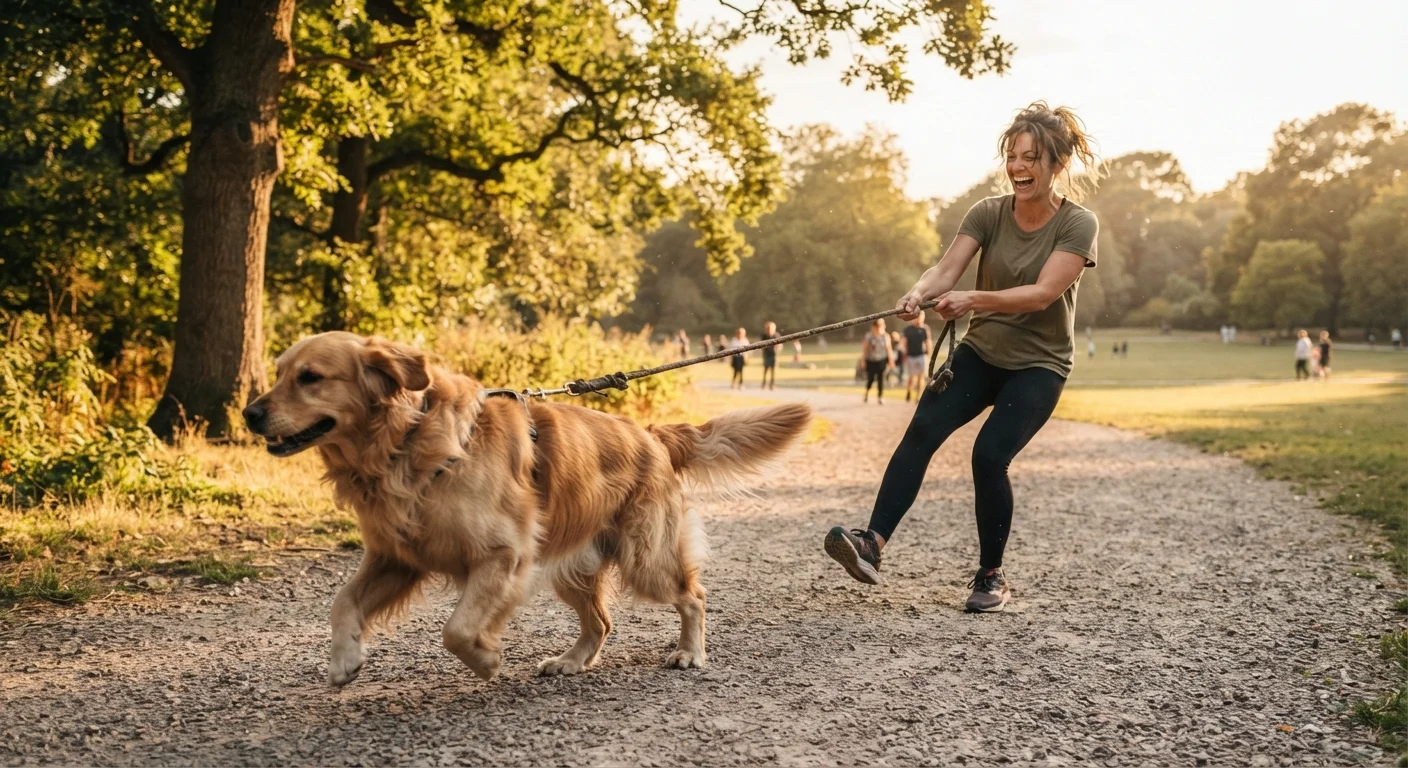
Photo: BridgeWish.com | Reliable Source Of Information editorial
Key Takeaways
- Dogs pull on the leash because of instinct and excitement, not defiance or dominance.
- The opposition reflex means pulling back on the leash can accidentally encourage more pulling.
- Sniffing and exploration are cognitively enriching for dogs and a core motivation behind pulling.
- Consistent, reward-based training is more effective than correction-based methods for loose-leash walking.
- Understanding the 'why' behind pulling makes training sessions calmer and more productive for both dog and owner.
It's Not Defiance — It's Instinct
If your dog bolts ahead the moment you clip the leash, you're not dealing with a disobedient animal. You're dealing with a dog being entirely, completely dog-like. Dogs are naturally faster than humans, and their sensory world — particularly their sense of smell, which is estimated to be 10,000 to 100,000 times more sensitive than ours — makes every walk a cascade of compelling information.
When a dog hits the end of the leash and feels resistance, something called the opposition reflex kicks in. This is an involuntary response where animals push or pull against applied pressure. It means that when you pull back, your dog may instinctively pull harder — not out of spite, but because that's how their nervous system is wired.
Understanding this takes the frustration out of the equation. Your dog isn't challenging your authority. They're responding to their biology. See our overview of common pet behavior myths for more examples of instinct being mistaken for defiance.
What's Going On in Your Dog's Head
Walk time is genuinely exciting for most dogs. After hours indoors, the outside world represents freedom, novelty, and mental stimulation. The anticipation alone can send a dog's arousal level sky-high before the front door even opens.
Sniffing — often dismissed as dawdling — is actually one of the most cognitively enriching activities a dog engages in. Urine marks, scent trails, and environmental odors tell dogs who has been nearby, what they ate, and how they were feeling. A dog that pulls toward a fire hydrant isn't being stubborn; they're reading a social newspaper.
“Dogs do what works. If pulling has a history of getting them what they want, they'll keep doing it. Change what works, and you change the behavior.”
— Dr. Karen Overall, Board-certified veterinary behaviorist and author of clinical behavioral medicine texts
Pulling has also often been accidentally reinforced. Every time a dog pulled forward and reached the interesting thing — the other dog, the patch of grass, the dropped food — the behavior was rewarded. Over hundreds of walks, that pattern becomes deeply grooved. This is a reinforcement history issue, not a character flaw.
For owners wondering whether fear or anxiety might also be driving their dog's behavior on walks, recognizing fear-based reactions is a useful skill to develop alongside leash training.
Why Dominance-Based Explanations Miss the Mark
For decades, pulling was explained through a dominance lens: the dog is trying to be the 'pack leader' and must be corrected into submission. This framing has been broadly questioned and challenged by modern animal behavior research.
Attributing leash pulling to dominance leads owners toward correction-heavy approaches — leash jerks, prong collars, alpha rolls — that can increase a dog's stress and anxiety without addressing the underlying cause. The evidence behind dominance theory is worth examining before choosing a training approach.
Try 'Penalty Yards' Instead of Corrections
Instead, the behavioral science points clearly toward management and positive reinforcement: teach the dog what does earn forward movement, rather than punishing the pulling itself.
What Effective Loose-Leash Training Actually Looks Like
The goal of loose-leash walking isn't military precision — it's a walk where neither end of the leash is uncomfortable. Here are the core principles that animal trainers and behaviorists consistently recommend:
- Reward the position you want. Mark and reward your dog frequently for walking near your side with a loose leash. The reward should come often enough that staying close becomes more appealing than pulling.
- Remove the reward for pulling. When the leash goes taut, stop moving entirely or turn and walk the other direction. Forward movement only resumes with a loose leash.
- Start in low-distraction environments. Practicing in your living room or a quiet yard before attempting a busy street sets your dog up to succeed.
- Build in sniff breaks. Allowing your dog to stop and sniff on cue reduces the frantic pulling toward every interesting smell. A dog who knows sniff time is coming is a calmer walker.
10,000–100,000x
How much more sensitive a dog's nose is versus a human's
According to estimates from veterinary and sensory biology research, this extraordinary sensitivity explains why the outdoor world is so overwhelmingly stimulating for dogs.
~80%
Of dog owners report leash pulling as a problem behavior
Leash pulling is consistently ranked among the top behavioral concerns cited in pet owner surveys conducted by veterinary and humane organizations.
A certified professional dog trainer (CPDT) can tailor an approach to your specific dog's history and triggers. For deeper insight into what's driving your dog's behavior in general, understanding behavioral triggers is a helpful starting point.
Frequently Asked Questions
The content on this site is for informational purposes only and is not a substitute for professional advice. Always consult a qualified professional for guidance specific to your situation.