
Dry Kibble vs. Wet Food: How to Think About the Tradeoffs for Your Pet

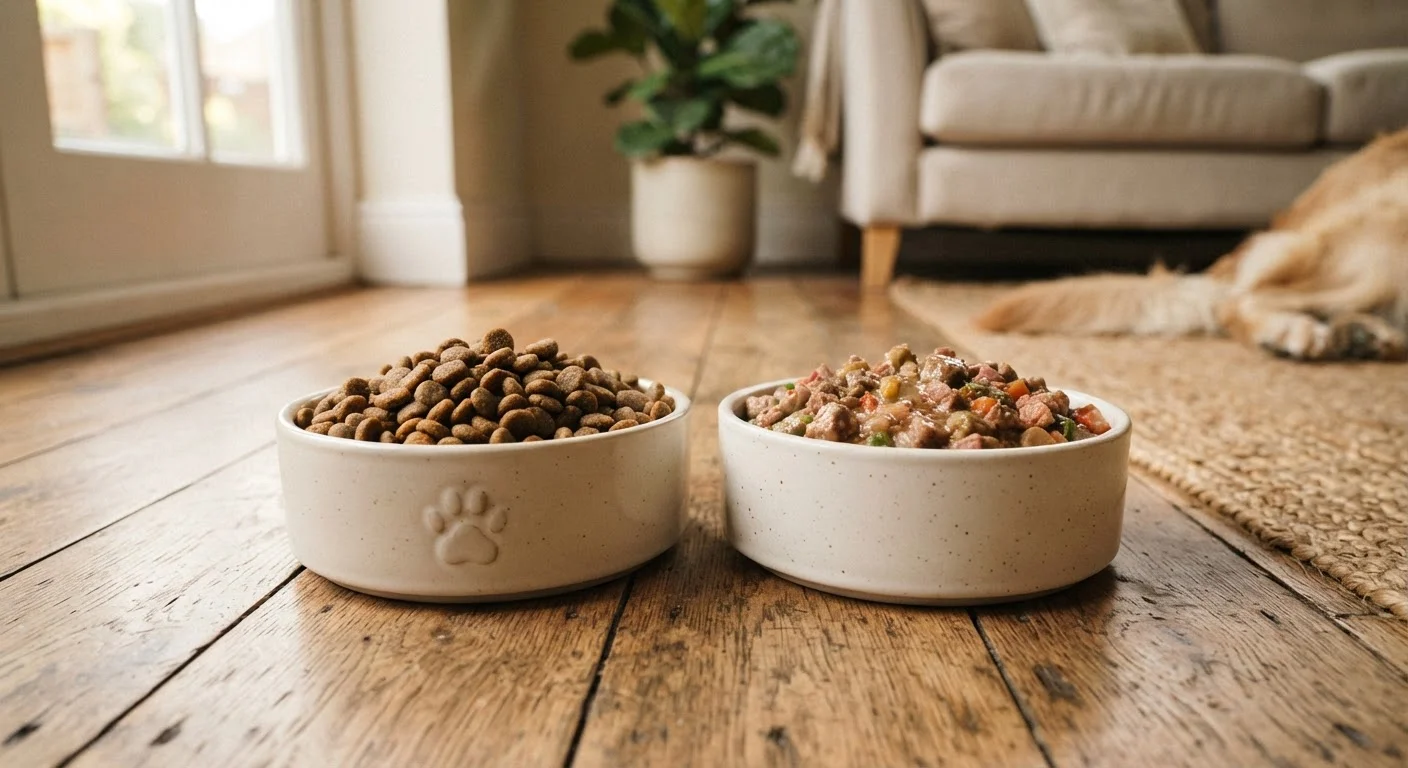
Photo: BridgeWish.com | Reliable Source Of Information editorial
Key Takeaways
- Wet food delivers significantly more moisture, which supports urinary and kidney health in cats and dogs.
- Dry kibble is generally more affordable, easier to store, and more convenient for free-feeding routines.
- Neither format is universally superior — the right choice depends on your pet's health, age, and preferences.
- Many veterinarians suggest a mixed approach can offer the benefits of both formats.
- Always check that any food carries an AAFCO nutritional adequacy statement for your pet's life stage.
What Actually Differs Between the Two Formats
The most fundamental difference between dry kibble and wet food is moisture content. Dry kibble typically contains around 6–10% water, while wet food contains roughly 70–80%. That gap matters far more than most owners realize — especially for cats, who have a naturally low thirst drive and often rely on food as their primary water source.
Beyond hydration, the two formats can vary in protein density, caloric content per gram, and how they're processed. Wet food often contains a higher proportion of animal-based protein relative to its weight, though this is partly because it carries more water. On a dry matter basis (stripping out moisture for a fair comparison), the nutritional profiles can be much closer than the labels suggest. For a deeper look at how to interpret those labels, see our guide on reading pet food labels.
| Criterion | Dry Kibble | Wet Food |
|---|---|---|
| Moisture content | ~6–10% | ~70–80% |
| Cost per serving | Generally lower | Generally higher |
| Storage convenience | Shelf-stable, easy to store | Refrigerate once opened |
| Palatability for picky eaters | Variable | Often higher |
| Suitable for dental health | Modest mechanical benefit | No mechanical benefit |
| Best for hydration support | No | Yes |
| Ease of portion control | Easy to measure | Requires care once opened |
Practical Tradeoffs Worth Knowing
Cost and convenience are real factors. Dry food is typically less expensive per calorie and can sit out in a bowl for hours without spoiling, making it suitable for free-feeding. Wet food must be refrigerated once opened and used within a day or two — and it costs more per serving. For multi-pet households or owners with tight schedules, these logistics matter.
Dental health is often cited as a reason to favor kibble, with the idea that crunching dry food helps scrape tartar from teeth. However, veterinary dental organizations note that the evidence supporting this benefit is limited — the mechanical action is modest at best, and it doesn't replace dedicated dental care like brushing or professional cleanings. Don't let this assumption be the sole reason you avoid wet food.
A Note on Mixing Both Formats
It's also worth noting that neither format is inherently healthier across the board. What matters most is the overall nutritional quality and whether the food is appropriate for your pet's life stage. Separating format preference from nutritional fact is something the veterinarian-reviewed nutrition myths guide covers in more depth.
When Your Pet's Health Should Guide the Choice
Certain medical conditions make one format clearly preferable. Pets prone to urinary crystals, kidney disease, or chronic dehydration often do better with wet food's higher moisture content. Conversely, pets with diabetes may benefit from the lower carbohydrate content sometimes found in wet or high-protein foods — though this is something to discuss with your veterinarian, not a general rule to apply on your own.
For pets with no specific health concerns, the honest answer is that a high-quality food in either format — confirmed by an AAFCO nutritional adequacy statement — is likely to serve them well. Many owners find that mixing a portion of wet food into daily kibble works practically and keeps mealtimes interesting for their pet. Your veterinarian or a board-certified veterinary nutritionist is the best resource if your pet has complex dietary needs. For broader context on pet health and vet care, including when feeding questions become medical ones, our hub covers the essentials.
This article is for general informational purposes only and is not a substitute for professional veterinary advice. Always consult your veterinarian before making significant changes to your pet's diet, especially if your pet has an existing health condition.
The content on this site is for informational purposes only and is not a substitute for professional advice. Always consult a qualified professional for guidance specific to your situation.