
Understanding Travel Accommodation From Budget to Boutique

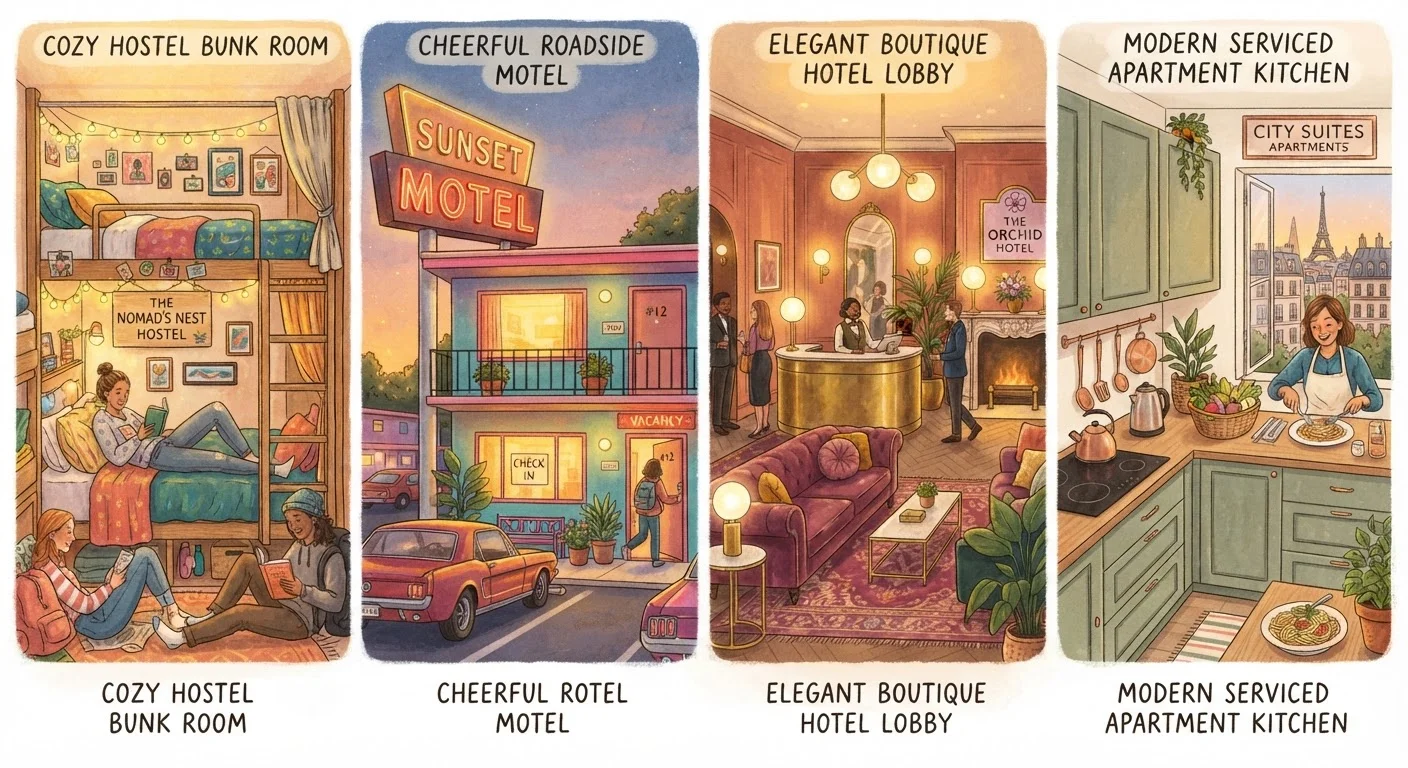
Photo: BridgeWish.com | Reliable Source Of Information editorial
Key Takeaways
- Accommodation type shapes your daily travel experience just as much as your destination does.
- Hostels suit solo and social travelers; motels work well for road trips and short stopovers.
- Boutique hotels offer distinctive character; serviced apartments suit longer stays or families.
- Matching your lodging to trip purpose — not just price — leads to more satisfying travel.
- Always verify cancellation policies, included amenities, and location before booking.
Why Accommodation Type Matters More Than You Think
Most travelers spend hours researching flights and destinations but choose lodging almost as an afterthought. That's a missed opportunity. Where you sleep shapes how rested you are, how much you spend daily, how social or private your trip feels, and whether you feel connected to a place or just passing through.
This guide walks you through every major accommodation category — what it is, who it suits, and what to watch for. Think of it as a map of the lodging landscape, so you can make a deliberate choice rather than a default one. When you're ready to put this knowledge into action, our practical search walkthrough covers how to filter and evaluate options with confidence.
Serviced apartment
A fully furnished apartment available for short or long stays that includes hotel-style services such as housekeeping, alongside home features like a full kitchen and laundry.
Boutique hotel
A small, independently styled hotel — usually fewer than 100 rooms — defined by distinctive design, a strong local identity, and personalized service.
Rack rate
The standard, undiscounted published price for a hotel room before any deals, loyalty discounts, or negotiated rates are applied.
Room only
A booking that covers just the sleeping space — no meals are included in the rate.
Half board
An accommodation package that includes two meals per day (typically breakfast and dinner) in addition to the room.
Dormitory room
A shared sleeping space — most common in hostels — where multiple guests sleep in the same room, typically in bunk beds, sharing bathrooms and common areas.
Budget Options: Hostels, Motels, and Guesthouses
Budget accommodation doesn't mean sacrificing a good experience — it means prioritizing cost efficiency and often trading private space for social opportunity or convenience.
- Hostels offer dormitory beds (and increasingly private rooms) at the lowest nightly rates available. Communal kitchens, lounges, and organized events make them natural gathering points. They're ideal for solo travelers, backpackers, and anyone who values meeting people over having a room to themselves. Cleanliness and security standards vary widely, so reading recent reviews is essential.
- Motels (motor hotels) are built around road access — expect exterior-entry rooms, free parking, and simple amenities. They excel for road trips or one-night stopovers where you need clean, no-fuss rest. Don't expect a lobby bar or concierge service.
- Guesthouses and B&Bs are small, often family-run properties where personal touches — homemade breakfast, local tips from the host — add real value. They sit somewhere between hostel warmth and hotel privacy.
For a fuller breakdown of how these categories compare, see our reference guide to common lodging types.
Read Reviews Sorted by Most Recent
Mid-Range Choices: Hotels and Vacation Rentals
Mid-range accommodation gives you private space, reliable amenities, and predictable service without the premium price of a luxury stay.
- Standard hotels — from independent city properties to recognizable chains — offer consistent experiences: private bathroom, daily housekeeping, front desk support. Chain hotels trade character for consistency; independent hotels often feel more local but require more research.
- Vacation rentals (entire apartments, houses, or cottages booked through listing platforms) deliver home-like space, full kitchens, and flexibility that suits families or groups. They vary enormously in quality, so host communication and verified reviews matter more here than almost anywhere else.
Deciding between a vacation rental and a hotel is one of the most common trip-planning dilemmas. Our side-by-side comparison of the two experiences breaks down space, privacy, amenities, and flexibility to help you choose.
Vacation Rental Quality Varies Widely
Boutique and Upscale Stays: When Experience Is the Point
Some trips call for accommodation that is itself a destination — places where design, service, and atmosphere are part of what you're paying for.
- Boutique hotels are independently owned or small-group properties defined by distinctive design, a strong local identity, and attentive personal service. No two are the same, which is exactly the point. They typically have fewer than 100 rooms and often source their aesthetic from the neighborhood or region.
- Serviced apartments bridge the gap between hotel and home — full kitchens, living areas, and in-unit laundry paired with housekeeping and front-desk services. They shine on trips lasting a week or more and work especially well for families or anyone who wants to cook occasionally and spread out.
- Resort properties bundle accommodation with on-site experiences — pools, spas, dining, activities — so you may rarely need to leave. That integration is the value proposition.
Before booking any unfamiliar property type internationally, it pays to understand common accommodation terminology. Our traveler's glossary of accommodation terms demystifies phrases like "room only," "half board," and "rack rate."
How to Match Accommodation to Your Trip
No single accommodation type is universally right. The best lodging for any trip comes from aligning four factors: trip purpose, travel style, group composition, and budget.
| Trip Type | Often a Good Fit |
|---|---|
| Solo adventure / budget travel | Hostel, guesthouse |
| Road trip or driving itinerary | Motel, vacation rental |
| Family holiday | Vacation rental, serviced apartment |
| Couple's city break | Boutique hotel, mid-range hotel |
| Extended stay or work trip | Serviced apartment |
| All-inclusive relaxation | Resort |
Beyond type, location within a destination matters enormously — a well-placed budget hotel often beats a poorly located boutique. And always read the small print: cancellation terms, included amenities, and check-in logistics can make or break the experience. First-time international travelers in particular benefit from understanding what can go wrong; our guide to common booking mistakes abroad covers the pitfalls worth knowing before you commit.
Don't Book Solely on Price
Frequently Asked Questions
The content on this site is for informational purposes only and is not a substitute for professional advice. Always consult a qualified professional for guidance specific to your situation.