
The Complete Guide to Packing for Any Type of Trip

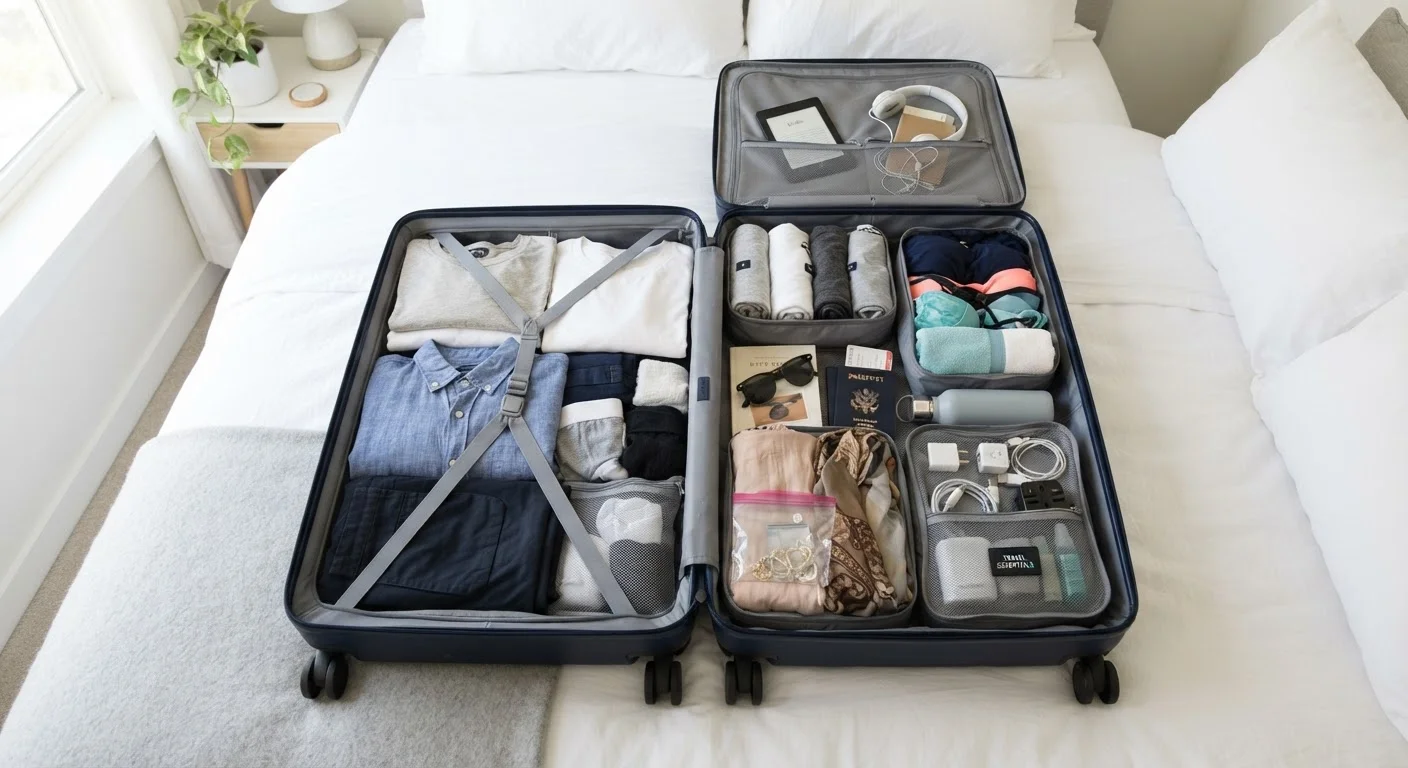
Photo: BridgeWish.com | Reliable Source Of Information editorial
Key Takeaways
- Match your luggage size to your trip length — bigger isn't always better.
- A capsule wardrobe of neutral, mix-and-match pieces reduces baggage without sacrificing options.
- TSA's 3-1-1 liquids rule applies to carry-ons; solid toiletries bypass it entirely.
- Packing cubes and a written list are the two highest-impact packing habits travelers can adopt.
- Always verify current entry document requirements with official government sources before departing.
Choose the Right Luggage for Your Trip
The single biggest packing mistake travelers make is reaching for the largest bag they own. More space almost always means more weight — and more regret at the airport. Instead, let your trip type and length drive the decision.
- Weekend trips (1–3 nights): A personal item or small carry-on backpack is usually plenty.
- Short trips (4–7 nights): A standard carry-on (typically 22" x 14" x 9" for most U.S. carriers) keeps you mobile and skips checked bag fees.
- Longer trips (1–4 weeks): A medium checked bag or carry-on plus personal item combo works well for most travelers.
- Extended travel (1+ month): Opt for a bag you can comfortably carry and wash clothes along the way.
Hard-shell suitcases protect fragile items better; soft-sided bags flex into overhead bins more easily. Backpack-style luggage shines in cities with cobblestones or uneven terrain. Before you go, pair your luggage choice with a solid destination and accommodation plan — our Destinations & Stays hub can help you think through what your specific trip will actually demand.
Build a Smarter Packing List
A written packing list isn't just for anxious travelers — it's the tool that separates people who arrive prepared from those who improvise at a pharmacy abroad. Start your list at least a week before departure so you can add items as you think of them.
Organize by category: clothing, toiletries, electronics, documents, and trip-specific gear. Then cut ruthlessly. Ask yourself: Will I use this more than once? If not, leave it.
Start Your Packing List Early
Don't forget your documents category. Passports, travel insurance cards, and visas are easy to overlook during the excitement of packing. Our document checklist guide covers everything you need organized before any trip.
Create a "never forget" list of items you've previously left behind — phone charger, medications, adapters — and tape it inside your suitcase lid. You'll thank yourself every single trip.
Pack your bag, then leave it for 24 hours before your departure day. You'll almost always pull two or three things out once you see it with fresh eyes.
Clothing Strategy: Versatility Over Volume
Clothing typically eats 60–70% of available luggage space. A capsule wardrobe approach — selecting neutral pieces that mix and match into multiple outfits — dramatically reduces that footprint without leaving you under-dressed.
- Stick to two or three base colors (navy, grey, black, white) and add one accent color.
- Choose fabrics that resist wrinkles and dry quickly: merino wool and synthetic blends travel particularly well.
- Plan outfits, not individual items. Three bottoms and five tops can yield up to 15 combinations.
- Re-wear where appropriate. Jeans, outerwear, and shoes are prime candidates for multiple-day use.
For longer trips, build laundry into your itinerary rather than trying to pack for every single day. Most accommodations — hotels, rentals, and hostels — have laundry access or a nearby laundromat. The Trip Planning hub has additional guidance on organizing your itinerary to make logistics like this seamless.
Navigating TSA Rules and Security
Understanding U.S. Transportation Security Administration (TSA) guidelines before you pack saves time, stress, and the heartbreak of having items confiscated at the checkpoint.
Know the 3-1-1 Liquids Rule Before You Pack
The 3-1-1 liquids rule applies to all carry-on bags: liquids, gels, and aerosols must be in containers of 3.4 oz (100 ml) or less, all fitting in one quart-sized clear bag, with one bag per passenger. This includes toiletries, hand sanitizer, and even peanut butter. Items exceeding these limits will be removed at screening.
A few strategies make compliance easier:
- Switch to solid toiletries (shampoo bars, solid sunscreen, toothpaste tablets) — they're not subject to liquid restrictions and often last longer.
- Pack full-size toiletries in your checked bag if you're checking luggage anyway.
- Remove electronics larger than a cell phone and place them in a bin separately during screening.
TSA rules are subject to change, and certain items have nuanced rules (e.g., lithium batteries, medication). Always verify current guidelines at tsa.gov before you fly.
Packing Systems That Actually Work
How you pack matters as much as what you pack. Two methods consistently help travelers fit more while staying organized:
- Packing cubes
- Fabric organizers that compress and categorize your clothes by type or outfit. They make unpacking faster and keep the suitcase tidy throughout your trip.
- The rolling method
- Rolling clothes (rather than folding flat) reduces wrinkles and typically saves 15–20% more space, especially for casual fabrics like t-shirts and jeans.
~$30–$35
Average U.S. airline checked bag fee (one way)
Fees vary by airline and fare class; carry-on-only travel avoids this cost entirely on most domestic routes.
50 lbs
Standard checked bag weight limit (most U.S. carriers)
Exceeding this threshold typically triggers overweight fees of $100 or more per bag on major U.S. airlines.
For carry-on-only travelers, place heaviest items (shoes, toiletry bag) at the bottom near the wheels, medium items in the middle, and lightest on top. Stuff socks inside shoes to reclaim dead space. Place items you'll need at security or upon landing — laptop, travel documents, jacket — in your personal item for easy access.
Gear and Toiletries: The Essentials Only
Specialty gear and toiletries have a way of multiplying. Apply the same "will I use this more than once?" test here. A universal travel adapter, a power bank, and a lightweight day bag cover the needs of most trips without adding significant weight.
For toiletries, consider what's genuinely easier to bring versus buy at your destination. Sunscreen, basic medications, and specialty products are worth packing. Hotel shampoo exists everywhere — personal shampoo often isn't worth the liquid allowance.
Entry Requirements Change — Always Verify
Keep a permanent "go bag" of duplicated travel-size toiletries that stays packed between trips. This eliminates the scramble of moving items from your bathroom cabinet each time and reduces the chance of forgetting something.
“The goal of packing is not to bring everything you might need — it's to bring only what you know you'll use. Every extra pound is a decision you'll regret by day two.”
— Rick Steves, Travel author and host of public television travel programs
A well-organized packing system also pairs naturally with a well-organized document folder. Before zipping up, do a final scan: passport, ID, insurance card, any required visas or health records. See our full documents guide for a complete pre-departure checklist.
The content on this site is for informational purposes only and is not a substitute for professional advice. Always consult a qualified professional for guidance specific to your situation.