
Reading a Vehicle History Report Without Getting Confused

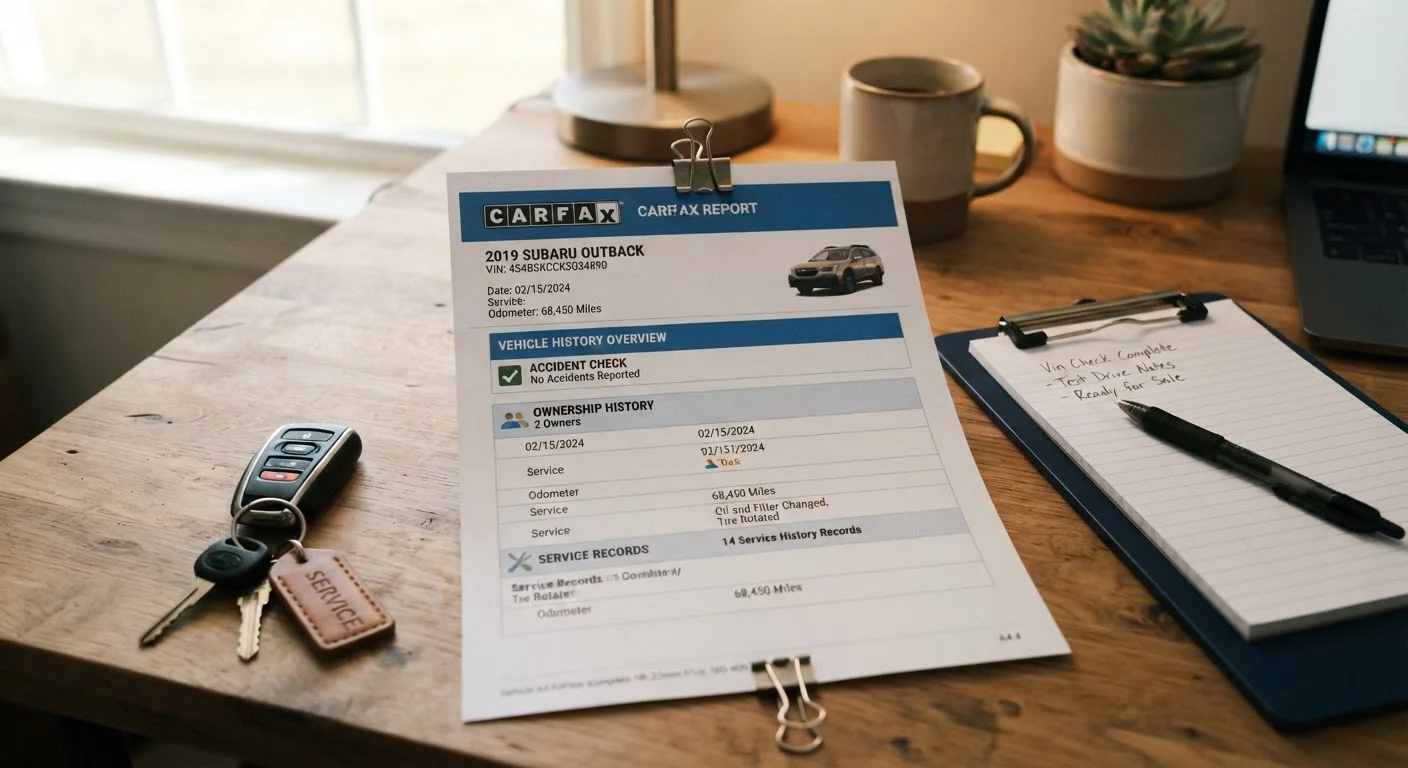
Photo: BridgeWish.com | Reliable Source Of Information editorial
Key Takeaways
- A vehicle history report is organized into distinct sections - each one tells a different part of the car's story.
- Title brands like 'salvage' or 'flood' are among the most important red flags to identify.
- Odometer rollback indicators and ownership gaps are warning signs that warrant deeper investigation.
- History reports rely on reported data - unreported incidents will not appear, so they have real limitations.
- A pre-purchase inspection by a qualified mechanic adds critical context a report alone cannot provide.
What a Vehicle History Report Actually Contains
A vehicle history report aggregates data from government agencies, insurance companies, auto auctions, and repair databases, then ties it to a specific vehicle using its VIN - the 17-character code stamped on the dashboard and door frame. Understanding the report's structure makes it far easier to interpret.
Most reports are divided into these core sections:
- Title history: Records every time the vehicle received a new title, in which state, and under what status. Look for brands like salvage, flood, junk, lemon law buyback, or rebuilt - each signals a significant event in the car's past.
- Ownership history: Shows how many owners the vehicle has had and sometimes whether it was personal or fleet/rental use. Frequent ownership changes in a short period can indicate recurring problems.
- Odometer readings: Pulls mileage data from state inspections, title transfers, and service records. A reading that drops between entries is a strong indicator of odometer tampering.
- Accident and damage records: Reflects collisions reported to insurers or state agencies. Severity levels vary - a minor fender scratch is not the same as a structural frame hit.
- Service and maintenance records: Logged from dealerships and some independent shops. Regular, documented service history is a positive signal, though gaps aren't automatically disqualifying.
- Open recalls: Identifies any safety recalls that have not been completed on the vehicle. This is actionable - open recalls represent unresolved safety issues.
For a broader look at how title documents and liens connect to ownership, see our plain-language guide to titles and liens.
What you will need
How to Read the Report Step by Step
Follow these steps when you pull up a report. Rushing through the summary page and skipping the detail sections is one of the most common mistakes buyers make.
Locate and verify the VIN
Before purchasing any report, confirm the VIN on the physical vehicle matches the one in the listing. Check the dashboard plate (visible through the windshield on the driver's side), the driver's door jamb sticker, and ideally the engine block. A mismatch is an immediate red flag that warrants stopping the process entirely.
Check the title history section first
Open the report and go directly to title history before reading anything else. Identify whether any title brands are present. A salvage title means the vehicle was declared a total loss by an insurer. A rebuilt or reconstructed title means it was repaired and re-inspected after that declaration. A flood title indicates water damage serious enough to trigger a total-loss ruling. These brands significantly affect the vehicle's insurability, resale value, and long-term reliability.
Review odometer entries in chronological order
Scan every odometer entry from oldest to newest. The mileage should increase consistently over time. A reading that is lower than a previous entry - even by a small amount - is a potential indicator of odometer fraud, which is a federal offense under the Truth in Mileage Act. Also note whether the reported mileage aligns with the vehicle's age and claimed usage history.
Examine accident and damage records carefully
For each accident entry, note the reported damage location (front, rear, side), severity category, and whether airbags deployed. Airbag deployment typically indicates a significant collision force. Look for multiple accidents in a short timeframe and for any structural or frame damage designations, which are the most consequential for long-term safety.
Check for open safety recalls
The report will flag any National Highway Traffic Safety Administration (NHTSA) recalls that remain open - meaning the required repair has not been completed. You can also verify this independently using the NHTSA's free VIN lookup tool at nhtsa.gov. An open recall doesn't mean you should walk away, but it does mean you should factor the repair into your negotiation and confirm who will complete it.
Note the number of owners and usage type
A vehicle used as a rental, fleet, or taxi typically accumulates mileage faster and under more varied conditions than a private-owner car. The report may categorize prior use; if it doesn't, the ownership history combined with mileage-per-year calculations can give you useful context. More than three or four owners in under a decade is worth questioning, though it's not automatically a dealbreaker.
A Clean Report Is Not a Clean Bill of Health
Once you've worked through the report, use it alongside a physical inspection - not instead of one. History reports only capture events that were officially reported or recorded. A car that was in a cash-settled accident or repaired by an owner without involving insurance may show a clean history with hidden damage. Always have a qualified mechanic perform a pre-purchase inspection before finalizing any used vehicle purchase.
For the questions you should ask after reviewing the report, our guide on what to clarify before signing a purchase agreement walks through the contract details worth scrutinizing.
What the Report Cannot Tell You
No vehicle history report is a complete picture of a car's condition. Knowing the blind spots prevents overconfidence in a clean report.
- Unreported accidents: Private-party repairs settled without insurance involvement leave no data trail.
- Mechanical condition: The report won't tell you whether the transmission is slipping or the engine burns oil. That requires a hands-on inspection.
- Quality of repairs: A reported accident followed by a repair entry says nothing about how well or how properly the repair was done.
- Future reliability: History is descriptive, not predictive. A car with one moderate accident and thorough repairs may outlast a car with a clean history but deferred maintenance.
For a deeper look at what these reports capture - and where they consistently fall short - see Vehicle History Reports: What They Reveal and What They Miss.
Before signing anything, cross-reference the report findings with our pre-purchase verification checklist to make sure every important box is ticked.
Cross-Check Service Records Against Mileage
The content on this site is for informational purposes only and is not a substitute for professional advice. Always consult a qualified professional for guidance specific to your situation.