
Buying & Owning

What to Verify Before Signing a Used Car Purchase Agreement

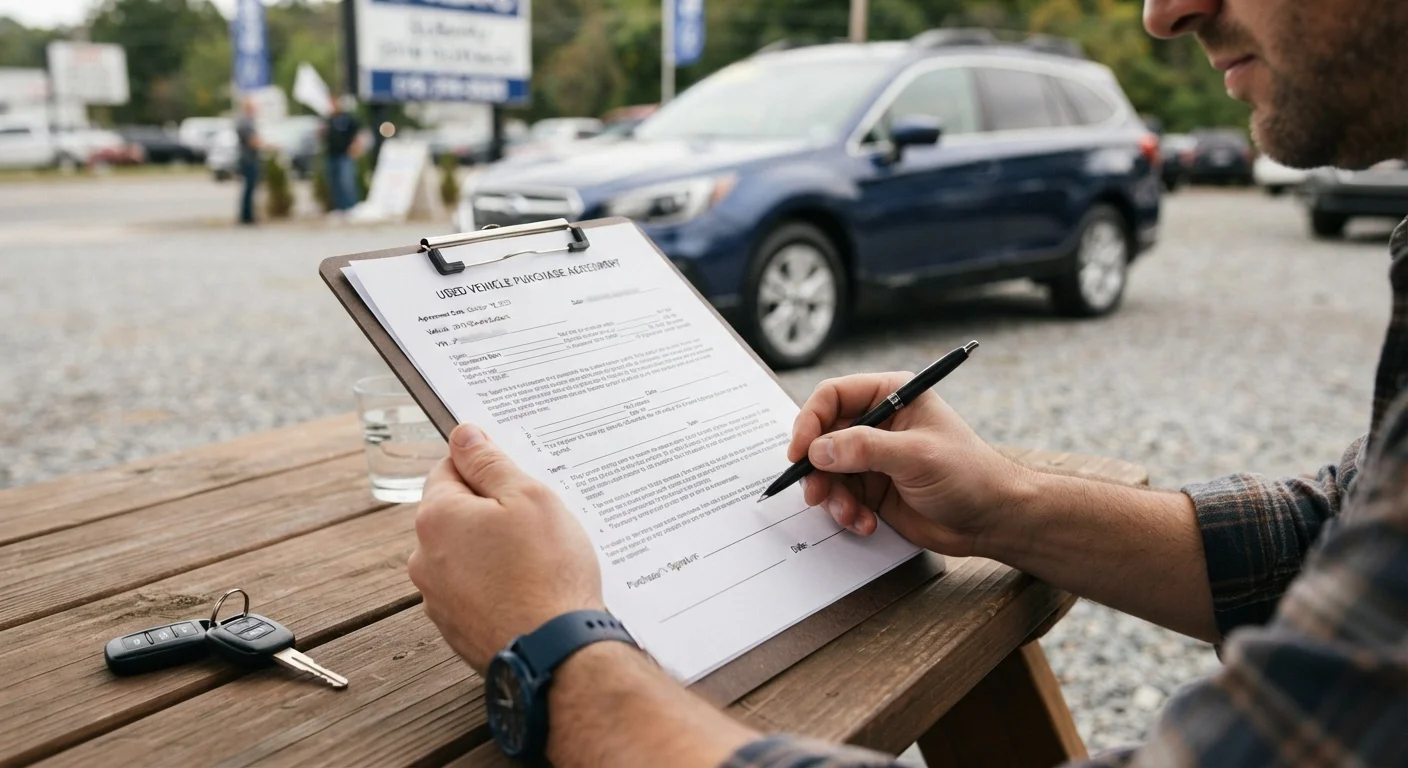
What to Verify Before Signing a Used Car Purchase Agreement

Photo: BridgeWish.com | Reliable Source Of Information editorial

A practical checklist of what to review — title history, odometer disclosure, fees, and warranty terms — before any used car purchase.

Key Takeaways

  • A clean vehicle history report does not guarantee a problem-free car — always pair it with a mechanical inspection.
  • Dealers are required by federal law to display a Buyers Guide disclosing warranty terms on used vehicles.
  • Scrutinize every fee line on the contract; some fees are negotiable or may be added without explanation.
  • Verify the VIN on the contract matches the VIN on the vehicle dashboard and title before signing.
  • Never take possession of a vehicle before financing is fully finalized and confirmed in writing.

Why the Purchase Agreement Deserves Your Full Attention

A used car purchase agreement is a legally binding contract. Once signed, reversing its terms is difficult — and in most states, dealers are not required to offer a cooling-off period for vehicle sales. The minutes you spend reviewing every line before signing can prevent costly disputes, hidden fees, and ownership problems that follow you long after you leave the lot.

Whether you're buying from a dealership or a private seller, the documents in front of you represent the full legal record of the transaction. This checklist walks you through the most consequential items to verify so nothing is missed. For those considering a private-party deal, our guide to buying from a private seller covers the full process in detail.

Federal Law Requires a Buyers Guide on Used Vehicles

Under FTC regulations, dealers are required to display a Buyers Guide on every used vehicle offered for sale. This document discloses whether the car is sold as-is or with a warranty, and what systems are covered. If a dealer cannot produce this form, that is a significant compliance concern worth investigating before proceeding.

Tools to Have Ready Before You Review the Contract

Being prepared before you sit down at the signing table makes the review process faster and more reliable. These are the resources worth having on hand.

Required

NMVTIS-Approved Vehicle History Report Provider

Pull a report to check for salvage/flood titles, odometer discrepancies, and prior ownership history.

Required

Independent Pre-Purchase Inspection

Have a licensed mechanic evaluate the vehicle's mechanical condition before you commit to buying.

Optional

State DMV Fee Schedule

Verify what your state legally charges for title transfer and registration so you can spot inflated fee line items.

Optional

Loan Amortization Calculator

Cross-check the dealer's financing figures against independently calculated monthly payment and total cost of the loan.

If you haven't yet scheduled a mechanical inspection, our article on what a pre-purchase inspection actually covers explains what inspectors look for and why the investment is worthwhile.

The Verification Checklist

Work through each group methodically. Don't rush — a dealer or private seller who pressures you to sign quickly is a reason to slow down, not speed up. If you have questions about specific contract terms before you reach this stage, see our companion piece on questions worth asking before you sign.

Title and Ownership Verification

Confirm the seller's name on the title matches the person or entity selling you the car — mismatches can cause serious transfer delays. Must
Check the title for any lien holder listed; a lien means an outstanding loan must be satisfied before ownership can transfer cleanly. Must
Verify the VIN on the physical title, the dashboard (visible through the windshield), and the purchase agreement all match exactly. Must
Review a vehicle history report (such as those from NMVTIS-approved providers) for branded titles — salvage, flood, or rebuilt designations significantly affect value and insurability. Must

Odometer and Condition Disclosure

Confirm the odometer disclosure statement on the contract matches the actual reading on the instrument cluster at the time of sale. Must
Check the vehicle history report for odometer rollback flags — a reading that drops between report entries is a serious red flag. Must
Request a written disclosure of any known defects, accident history, or prior damage the seller is aware of. Should
Arrange a pre-purchase inspection by an independent, qualified mechanic before signing if you haven't already done so. Must

Fees, Price, and Contract Terms

Compare the out-the-door price on the contract against the agreed sale price, and question any fees that weren't discussed upfront. Must
Identify which fees are government-mandated (registration, title transfer, sales tax) versus dealer-added (documentation fees, administrative charges) — the latter may be negotiable. Should
Verify that no add-on products (GAP coverage, paint protection, extended service contracts) appear on the contract without your explicit agreement. Must
If financing through the dealer, confirm the APR, loan term, monthly payment, and total repayment amount are accurately reflected in the finance contract. Must

Warranty and As-Is Terms

Locate the federally required Buyers Guide form and read whether the vehicle is sold 'as-is' or comes with a dealer warranty — understand what is and isn't covered. Must
If a warranty is included, confirm its terms (duration, covered components, deductible) are written into the contract — verbal promises are not enforceable. Must
Check whether any remaining factory powertrain or bumper-to-bumper warranty transfers to you, and verify the expiration date or mileage limit. Should
For private-party sales, confirm in writing that the sale is 'as-is' so there is no ambiguity about post-sale liability. Should

Final Steps Before Signing

Do not sign any contract that contains blank fields — draw a line through unfilled spaces or request a corrected form. Must
Request a complete copy of every document you sign for your personal records before leaving the lot or completing the transaction. Must

Never Sign a Spot-Delivery Agreement Blindly

Some dealers allow buyers to take a vehicle home before financing is finalized — a practice sometimes called 'spot delivery.' If the financing later falls through or the terms change, you may be required to return the vehicle or accept less favorable loan terms. Insist that all financing is confirmed in writing before you drive off the lot.

Verbal Promises Are Not Legally Binding

Anything a salesperson says verbally — about repairs that will be made, warranties that are included, or fees that will be waived — must appear in the written contract to have any legal weight. If it isn't in writing, assume it isn't part of the deal.

Once the transaction is complete, your focus shifts to ownership. Our car maintenance hub provides practical guidance on keeping your newly purchased vehicle running safely and reliably.

This article is for general informational and educational purposes only and does not constitute legal, financial, or professional advice. Consult a qualified professional for guidance specific to your situation.

Autos Editorial Team

BridgeWish.com | Reliable Source Of Information

Autos Editorial Team is the collective byline for our editorial team and contributor network. Articles published under this byline or an editorial pen name are researched, written, and reviewed according to our editorial standards for clarity, consistency, and independence before publication.

Car MaintenanceBuying & OwningSafe Driving
View author profile

The content on this site is for informational purposes only and is not a substitute for professional advice. Always consult a qualified professional for guidance specific to your situation.